When people in Saigon ask me why I keep going back to Hong Kong, they expect me to talk about shopping or dim sum. My real answer is hiking. Hong Kong is surprisingly green, and the best time to explore its trails is winter, when the summer heat and humidity are gone and the air on the ridges is cool and dry. On my latest trip, with Lunar New Year just around the corner, I finally walked the most famous trail of them all: Dragon’s Back.
It is short, well marked and ends at a beach, which makes it the perfect first hike in Hong Kong even if you are not a regular hiker.
About the Trail
Dragon’s Back is part of Hong Kong Trail Section 8 on the southeast corner of Hong Kong Island. The name comes from the ridge between Shek O Peak and Wan Cham Shan, which rises and falls like the spine of a dragon. It has been named one of the best urban hikes in Asia, and a few years ago CNN put it on a list of the world’s best hiking trails.
The full route from To Tei Wan to Big Wave Bay is about 8.5 kilometres. Guides suggest three to four hours with photo stops. I am a slow walker who stops for every view, and I still finished in just under three hours.
Getting to the Start
Take the MTR to Shau Kei Wan station and walk to the bus terminus through Exit A3. From there, bus 9 towards Shek O drops you at the To Tei Wan stop on Shek O Road. The fare was under HK$10 (≈ $1.30 USD) with an Octopus card. Red minibuses from Exit A2 also stop there.
Use the toilets next to the bus stop. There is nothing else until Big Wave Bay at the end.
I would also recommend grabbing breakfast in Shau Kei Wan first. The neighbourhood is full of old-style cafes serving milk tea and toast, and it is much cheaper than eating in Central.
The Climb Up to the Ridge
From the trailhead sign the path climbs gently through three sections of stone steps. The third one is the steepest, but none of it is difficult. At a small pavilion turn right, and about five minutes later you pop out above the trees with the sea wind in your face.
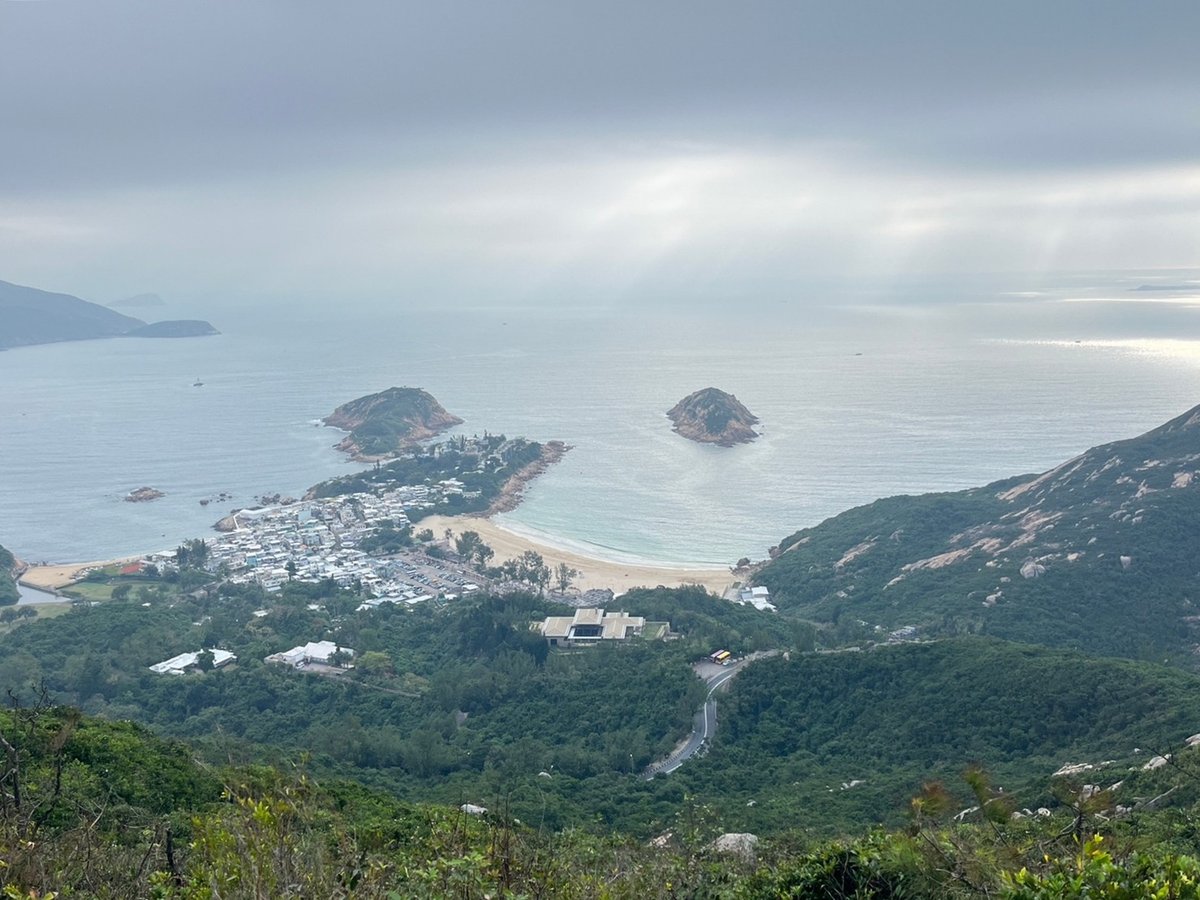 View from Dragon's Back over Shek O village, its beach and two small islands on a cloudy winter day
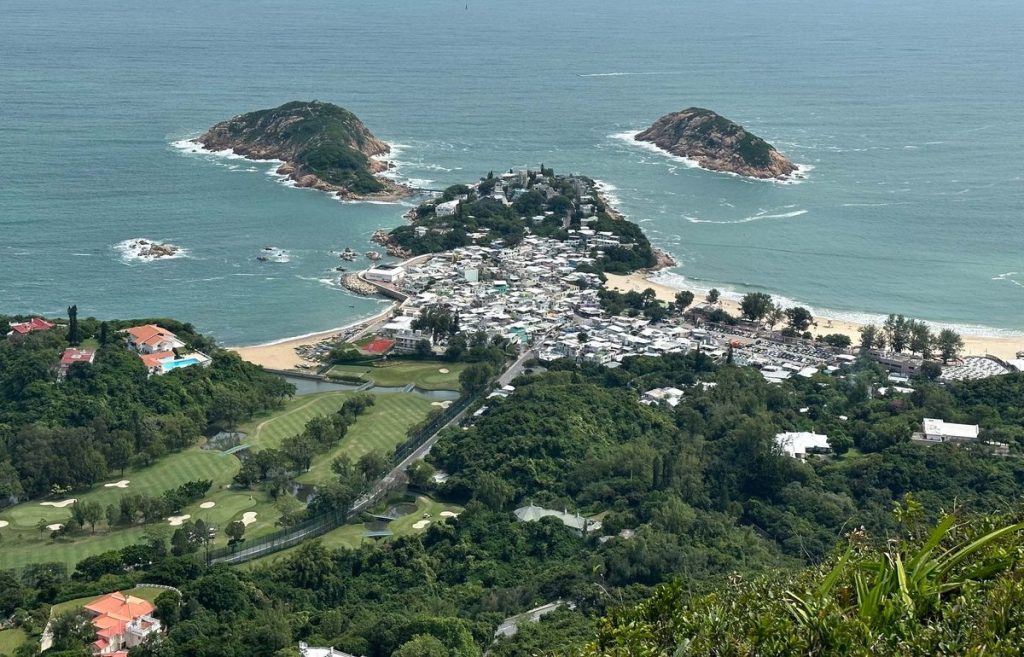
This is where the trail earns its reputation. Below you on the right is the Shek O peninsula, with the village, its sandy beach and two little islands just offshore. Along the way there is a new viewing platform, and in winter the bushes along the path are dotted with white camellia-like flowers.
Walking the Dragon’s Back
Next comes Shek O Peak at 284 metres. It is not high, but the open ridge gives you sea on both sides. To the east are the golf course of the Shek O Country Club, the Tathong Channel and Tung Lung Island. To the west are Tai Tam Bay and the expensive houses of the Red Hill peninsula.
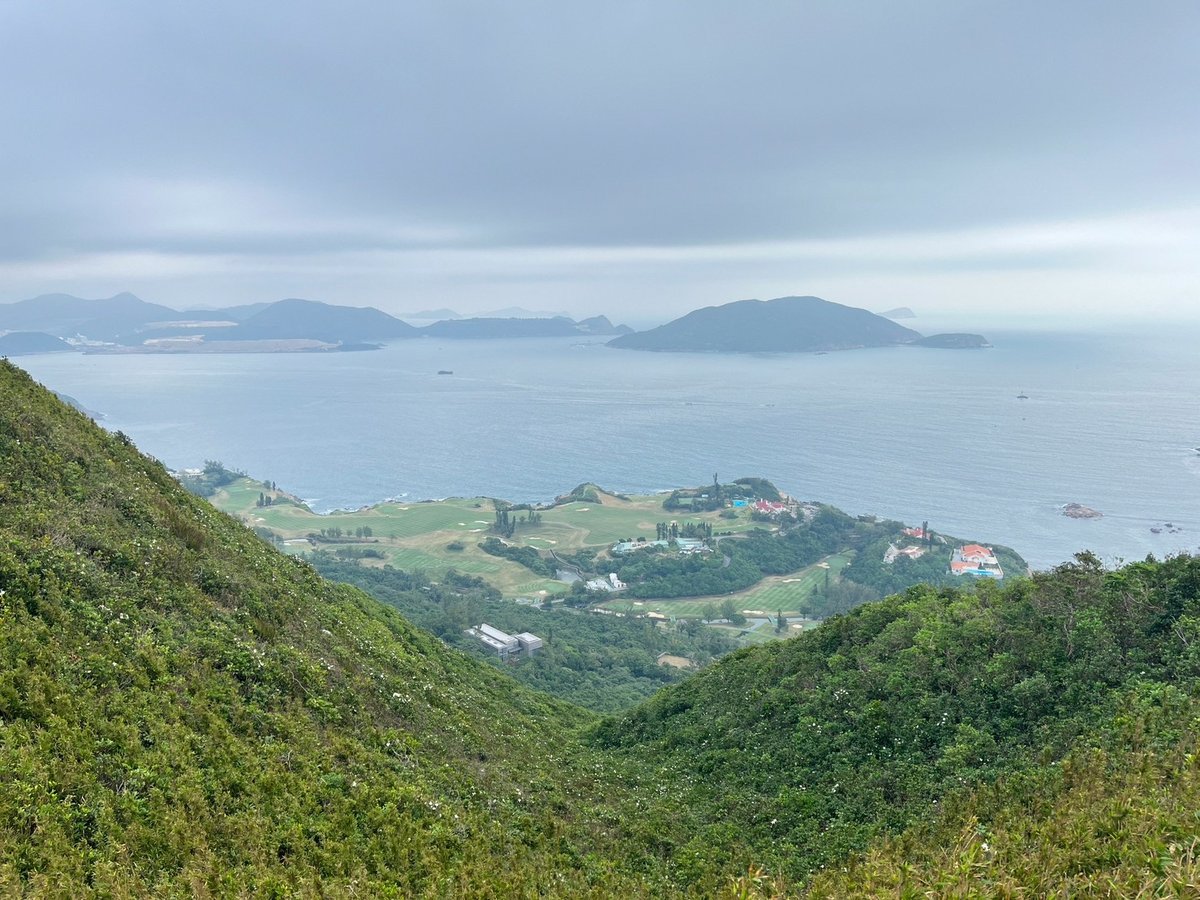 Green hills sloping down to the Shek O golf course with islands in the sea behind
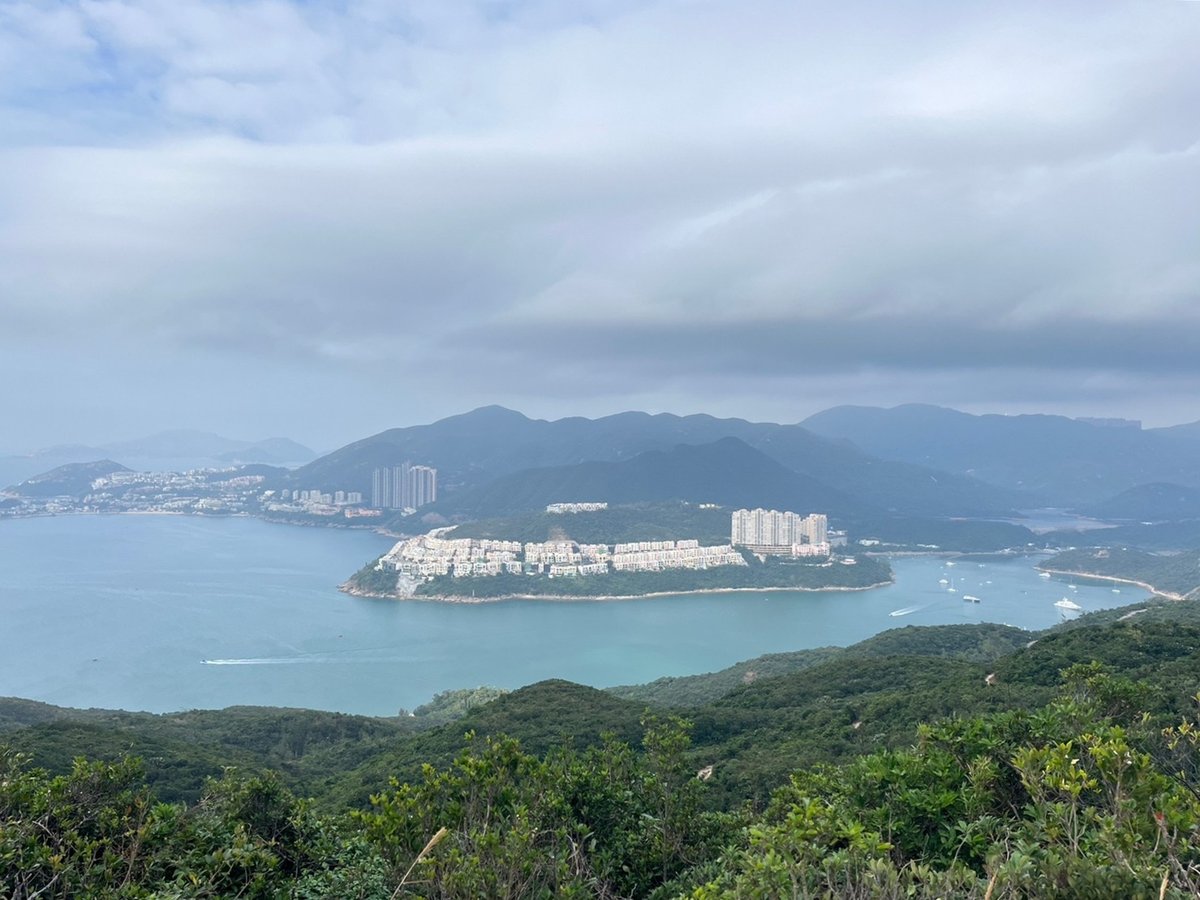 The Red Hill peninsula and Tai Tam Bay seen from the Dragon's Back ridge
I loved a story I read about the peak’s Chinese name, which translates roughly as “Broken Jar Peak”. It is said that during the Japanese occupation, villagers from Big Wave Bay were forced to work for the soldiers and hand over their food. When the war ended, they climbed the peak to celebrate and smashed the jars the soldiers had left behind.
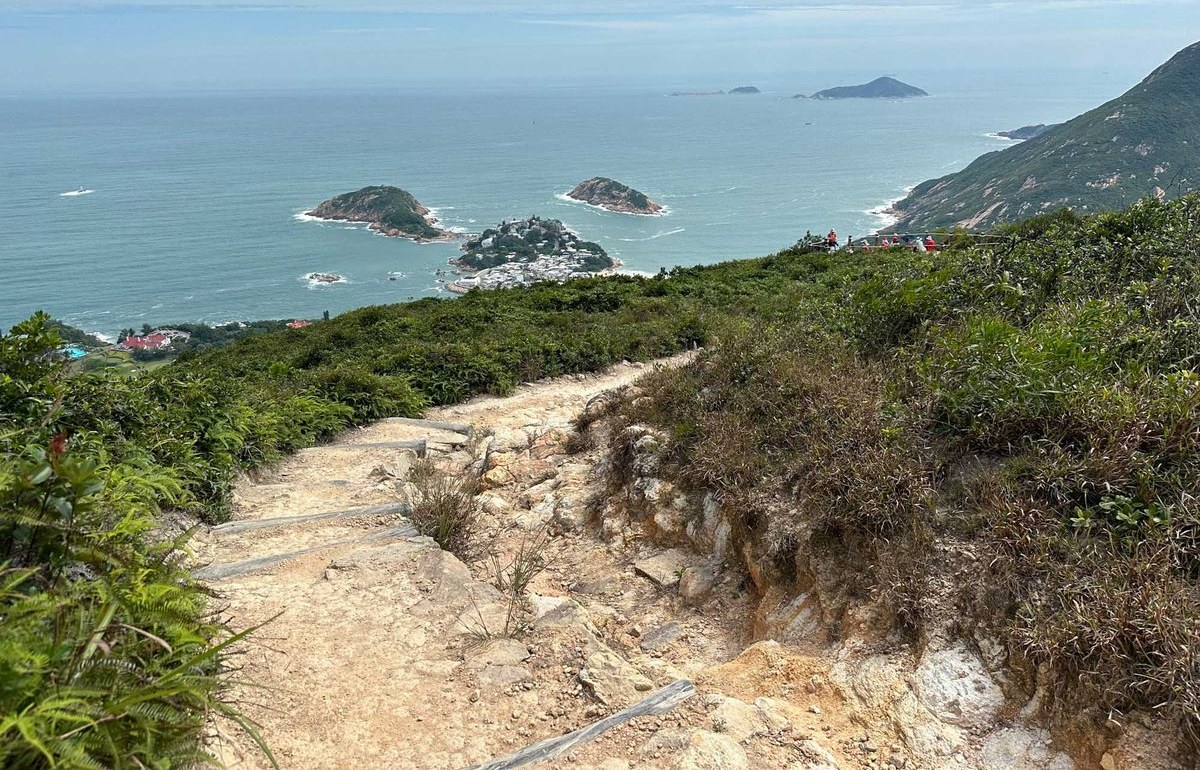 A rocky dirt path running along the ridge with islands and the sea below
The ridge itself is bare rock and dry dirt, with a few short, steep sections. On a weekend there can be a queue at the narrow parts, so start early. My day was grey and cloudy, which honestly made the walk more pleasant, because there is almost no shade up there.
Down Through the Forest to Big Wave Bay
After the ridge, the trail drops about 70 metres and turns into a flat, shady dirt path through the woods. It is less exciting, but it gives your legs a rest. After about half an hour you pass a water tank, walk a short stretch of paved road and reach a junction at Ma Tong Au, where signs point to Big Wave Bay.
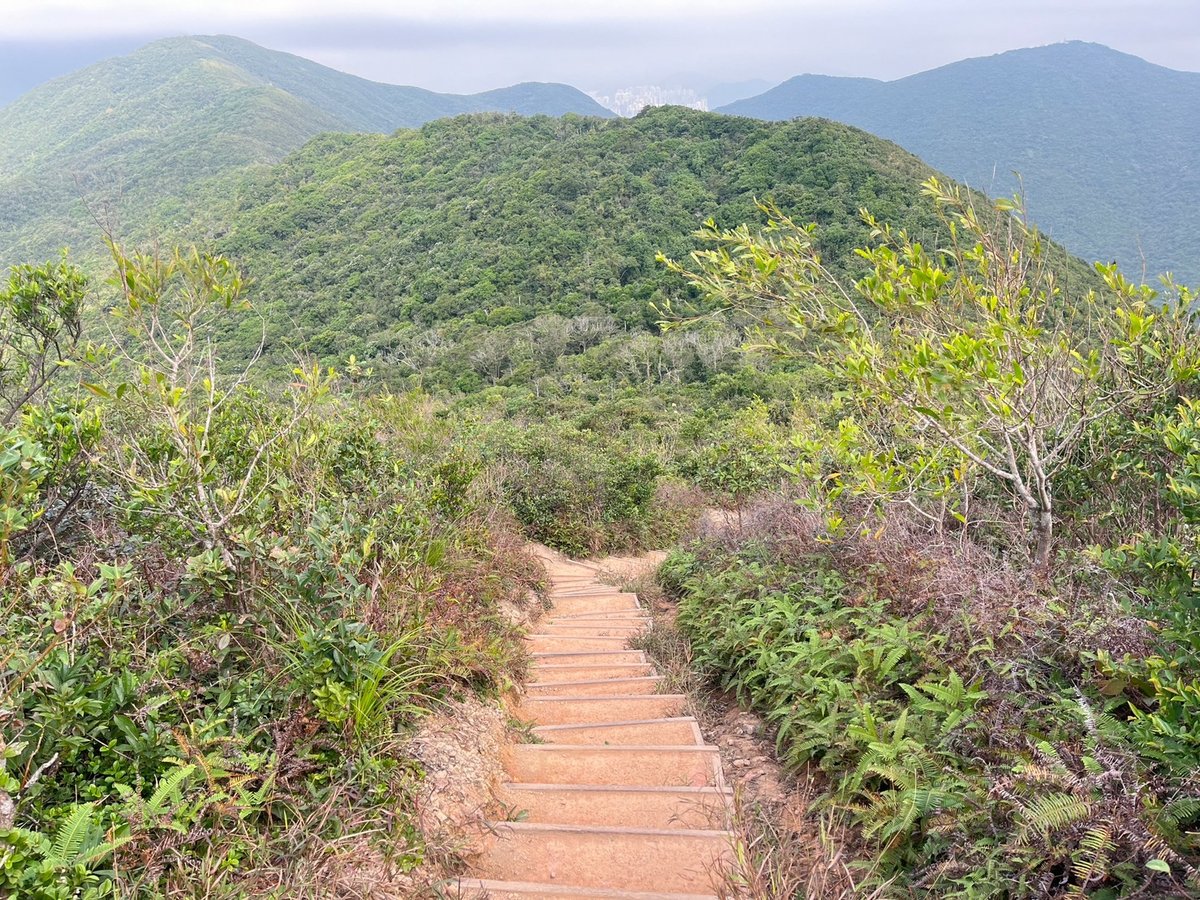 Stone steps leading down through green shrubs towards the forest
The last part is uneven and can be slippery, so take it slowly. Then, quite suddenly, the trail ends at the doorsteps of village houses next to a clear little stream. Distance post H100 marks the official end of the Hong Kong Trail.
Big Wave Bay
Big Wave Bay is a small, wide beach facing the open sea, and as the name suggests it is one of the best surf spots on Hong Kong Island. Even on my cloudy winter morning there were surfers in the water and people walking their dogs on the sand. There are public toilets, a few casual restaurants and small shops selling drinks, so this is the place to sit down and reward yourself.
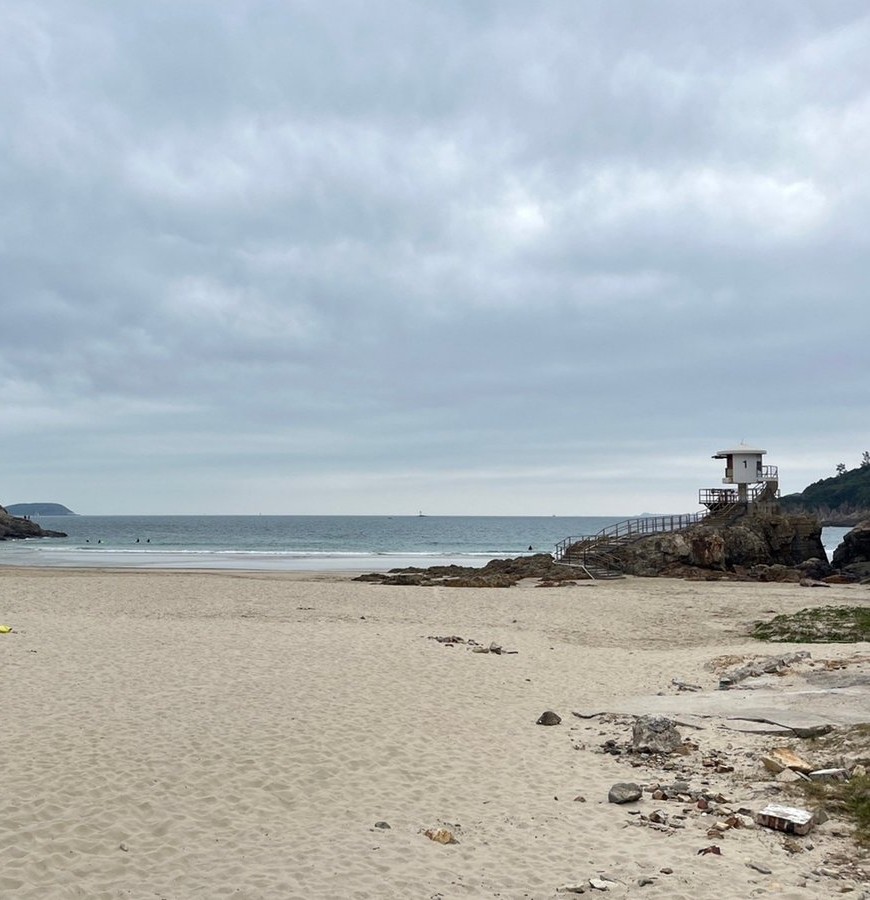 The sandy beach of Big Wave Bay under a cloudy winter sky with a lifeguard tower on the rocks
Do not miss the Big Wave Bay rock carving, a few steps from the beach. It was discovered in 1970, is thought to be thousands of years old and was one of the first places in Hong Kong declared a monument. The abstract patterns look a bit like birds and animals.
Tips for Hiking Dragon’s Back
- Go between November and March. Winter is the best hiking season in Hong Kong. My day was around 20 degrees.
- Start early, especially at weekends. The ridge is narrow and gets crowded by late morning.
- Bring water and snacks. There are no shops until Big Wave Bay.
- Wear proper shoes. The ridge is rocky and the last section through the forest is slippery.
- Plan your ride back. Transport from Big Wave Bay is limited. Red minibuses go back to Shau Kei Wan, bus 9 only calls at Big Wave Bay rarely, and a taxi is the easy backup. Carry some coins, because minibuses do not give change.
- Take your rubbish with you. Keep the trail as clean as you found it.
Final Thoughts
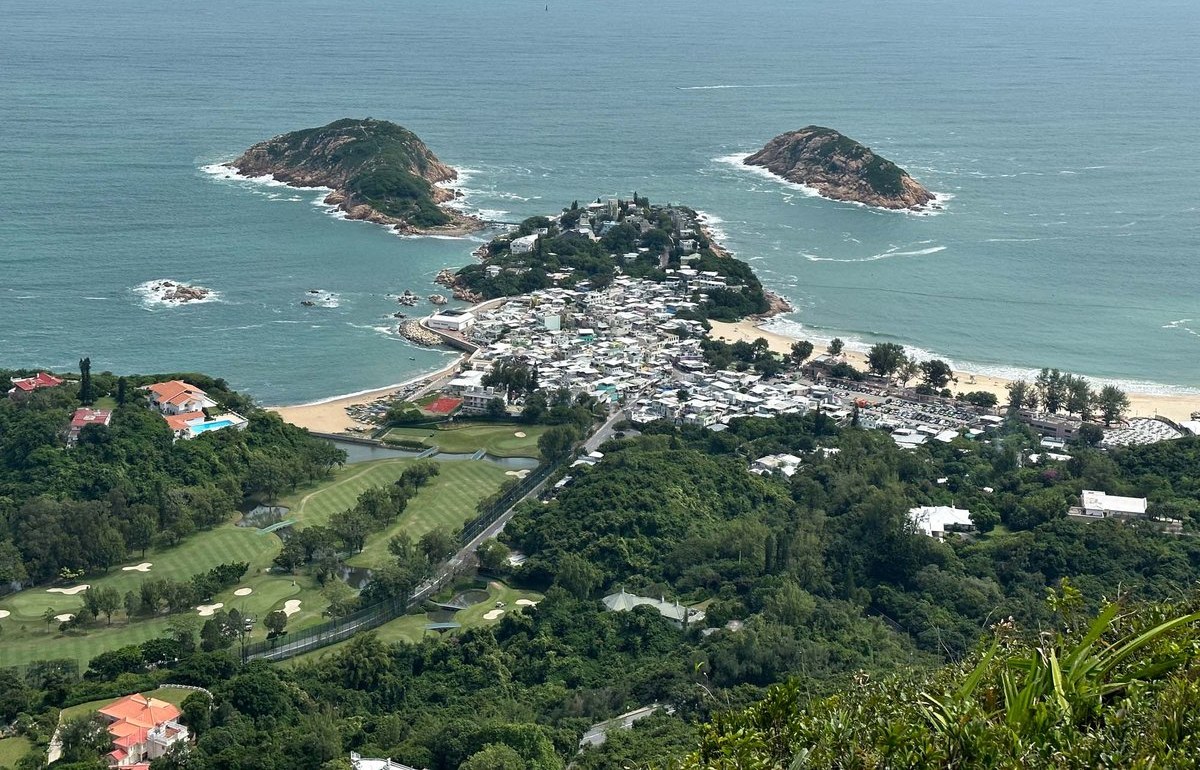 Sunny view of Shek O village, the golf course and islands from the Dragon's Back trail
Dragon’s Back is not a hard hike, and that is exactly its charm. In half a day you get sea views on both sides, a quiet forest and a beach at the finish, all less than an hour from the city. If you visit Hong Kong in winter, swap one morning of shopping for this trail. You will not regret it.