Growing up in Vietnam, snow was something I only saw in films and Christmas cards. So when cheap winter flights to Hokkaido popped up, I did not think twice. I spent four days in Sapporo in mid-January, with one long day trip to the old port town of Otaru, and it was everything I hoped for: deep snow, steaming bowls of soup and some of the best seafood I have ever eaten.
A warning before anything else: it is properly cold. Daytime temperatures in Sapporo often stay below zero in January, and the pavements turn into ice rinks. I will come back to footwear in the tips, because I learned that lesson the hard way.
Day Trip to Otaru
Otaru is an easy train ride west of Sapporo on the JR line, and for part of the way the tracks run right along the sea. The town grew rich as a herring-fishing and trading port in the late 1800s and early 1900s, and many of the grand stone banks and warehouses from that era are still standing. Under a thick layer of snow it looks like a postcard.
The Sankaku Market for a Seafood Breakfast
Right next to Otaru Station is the Sankaku Market, a narrow, slightly chaotic covered market packed with crab, scallops, salmon roe and sea urchin. Several small restaurants inside serve seafood rice bowls. Some let you choose three toppings for a smaller bowl, which is perfect if you want to try a bit of everything. I could not resist a bowl of salmon and glistening salmon roe with a generous portion of raw sea urchin on top, plus miso soup on the side.
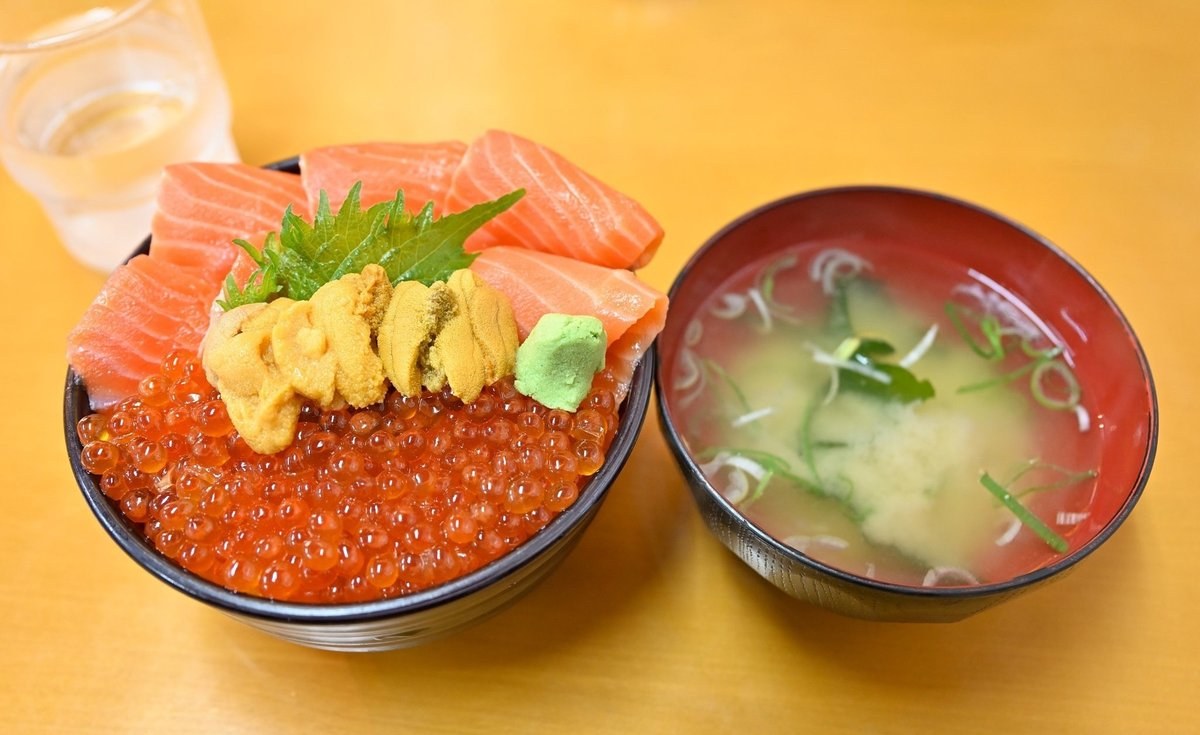 A seafood rice bowl topped with sea urchin, salmon roe and salmon, with miso soup
Go early. The popular shops get long queues, and on busy days people report waiting up to two hours. Eating seafood for breakfast felt strange for about one minute, then completely normal.
Walking the Otaru Canal
From the station it is an easy walk downhill to the Otaru Canal. The classic photo spots are from Asakusa Bridge and Chuo Bridge, looking along the water at the old stone warehouses. With snow piled high along the banks and a clear blue sky, the view was even prettier than I expected. Many people say it is most beautiful at dusk when the gas lamps come on, so if you can, stay until it gets dark (around 4:30 pm in winter).
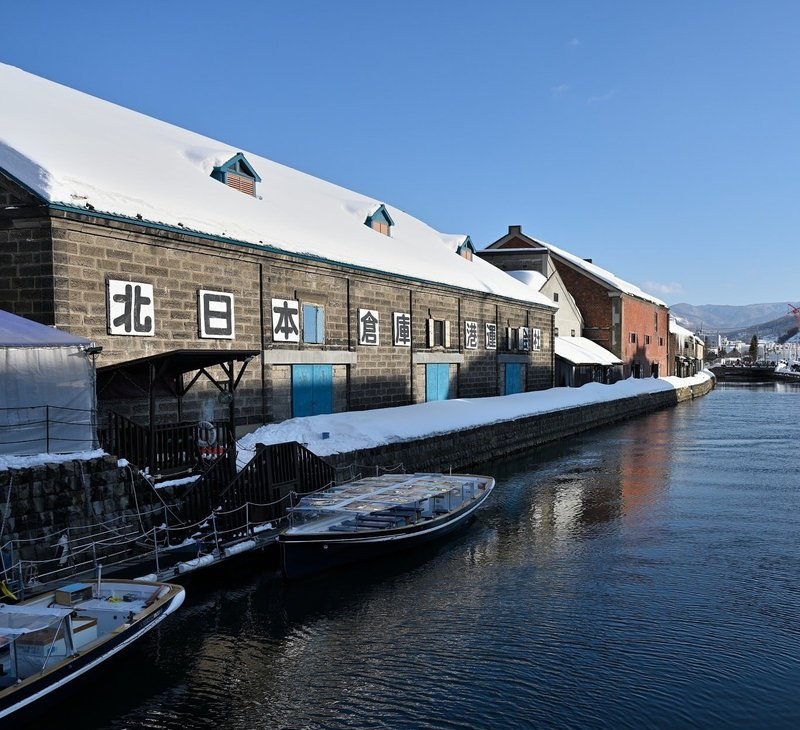 Snow-covered stone warehouses and moored boats along Otaru Canal
Canal cruises run in winter too, but they can be cancelled when the wind is strong, so do not build your whole day around one.
Nearby, look out for the grand old Bank of Japan Otaru Branch, a stone building with green domes that now houses a small museum, and the tracks of the old Temiya railway line, which were completely buried under snow during my visit.
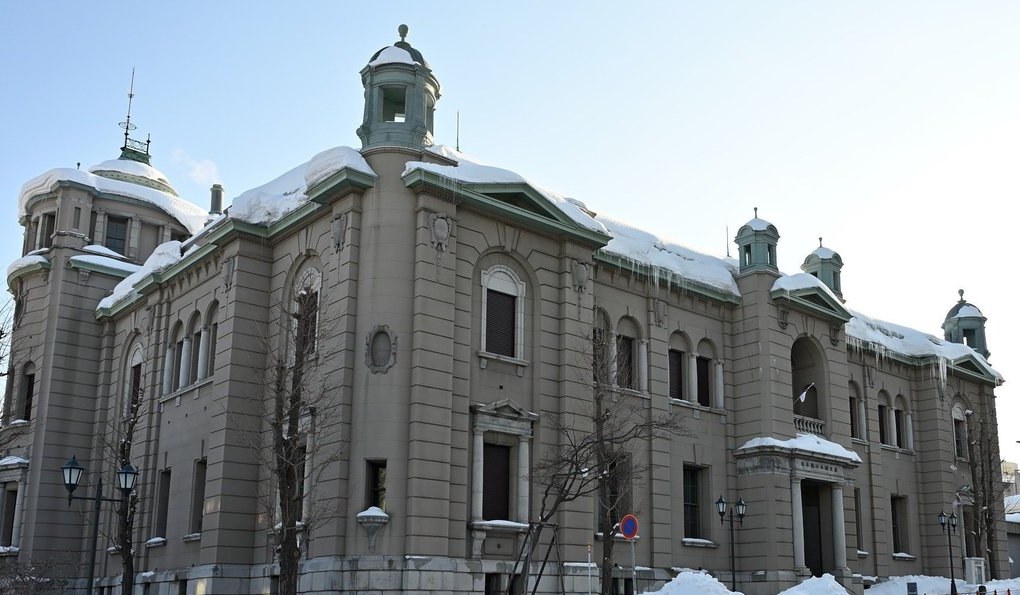 The former Bank of Japan Otaru Branch building with snow on its roof
Sakaimachi Street and the Music Box Museum
Sakaimachi Street is Otaru’s main shopping street, lined with glass workshops, sweet shops and souvenir stores. I stopped for a small cup of rich miso ramen at a tiny shop selling mini portions for just ¥550 (≈ $3.50 USD), the perfect hand warmer. Other famous stops include the cheesecake shops, the fish-cake bakery where you can try a crispy fish-cake roll, and the glass shops of Kitaichi.
At the far end of the street, close to Minami-Otaru Station, is the Otaru Music Box Museum (Orgel-do). The main hall is a lovely old brick building with a tall steam clock outside.
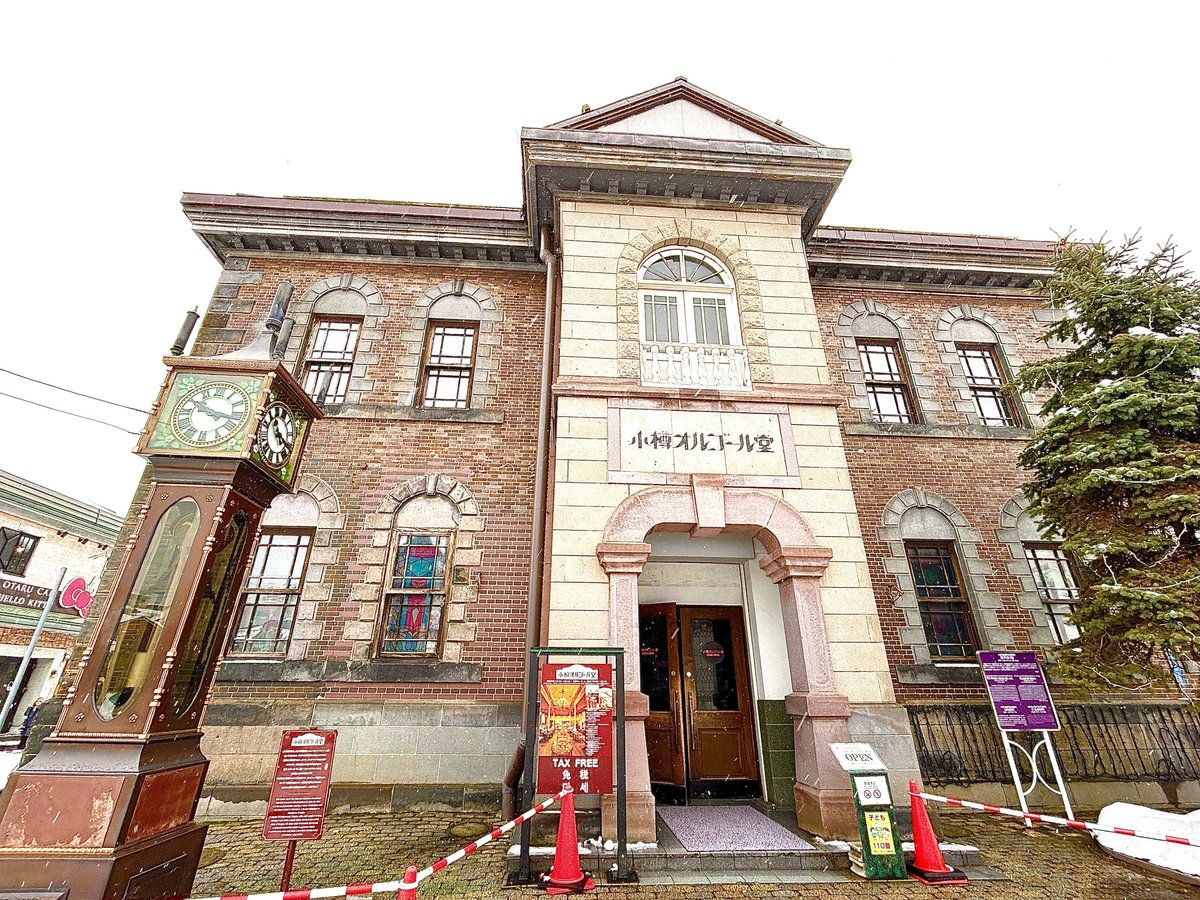 The brick main hall of the Otaru Music Box Museum with a steam clock in front
Inside, the gentle sound of hundreds of music boxes fills the room. The building has three floors: music boxes on the ground floor, music boxes and small gifts on the second, and character goods on the third. There is also a room of antique music boxes. Even if you are not a souvenir person, it is hard to walk out empty-handed.
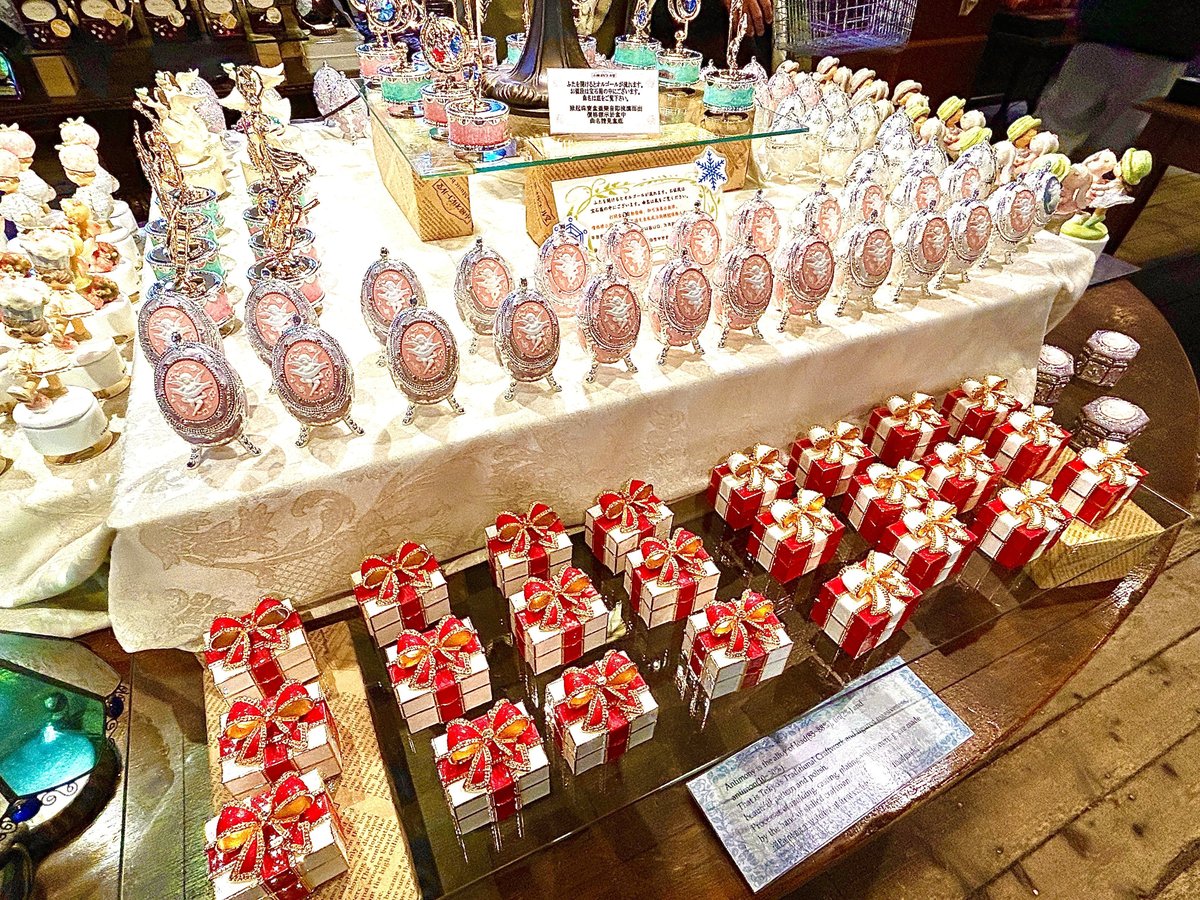 Rows of decorated music boxes on display at the Otaru Music Box Museum
The backstreets around Minami-Otaru were just as charming, with snow piled taller than me on both sides of the road.
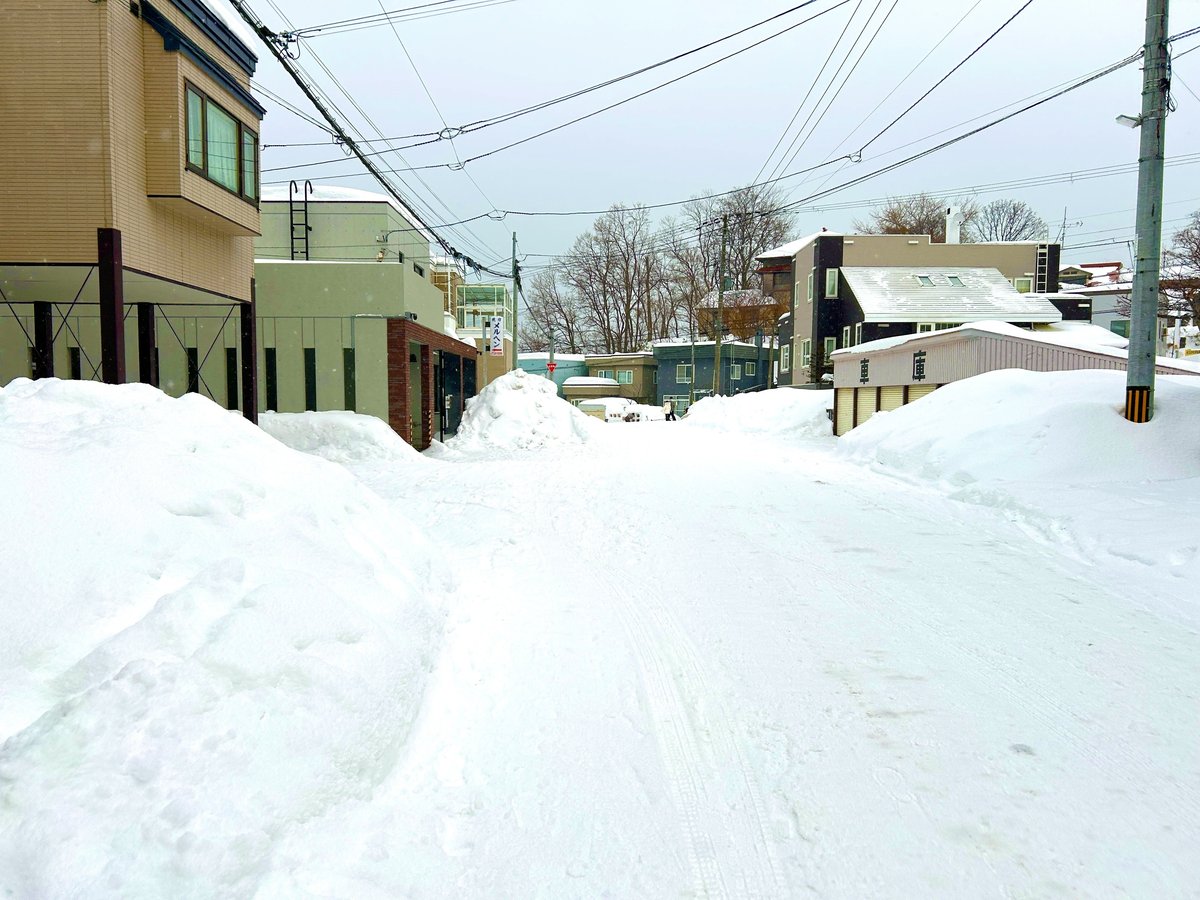 A quiet residential street in Minami-Otaru buried under deep snow
Winter in Sapporo
Back in Sapporo, I based myself near the main station, which turned out to be a great choice: a long network of underground walkways connects the station, Odori Park and Susukino, so you can cross the city without stepping onto the ice.
The Sapporo Clock Tower is famous for being underwhelming, since it is a small wooden building squeezed between office towers. But on a sunny morning after fresh snow, with a row of snowmen in front of it, I actually thought it looked sweet. From there it is a short walk to Odori Park and the Sapporo TV Tower, which looks great lit up at night.
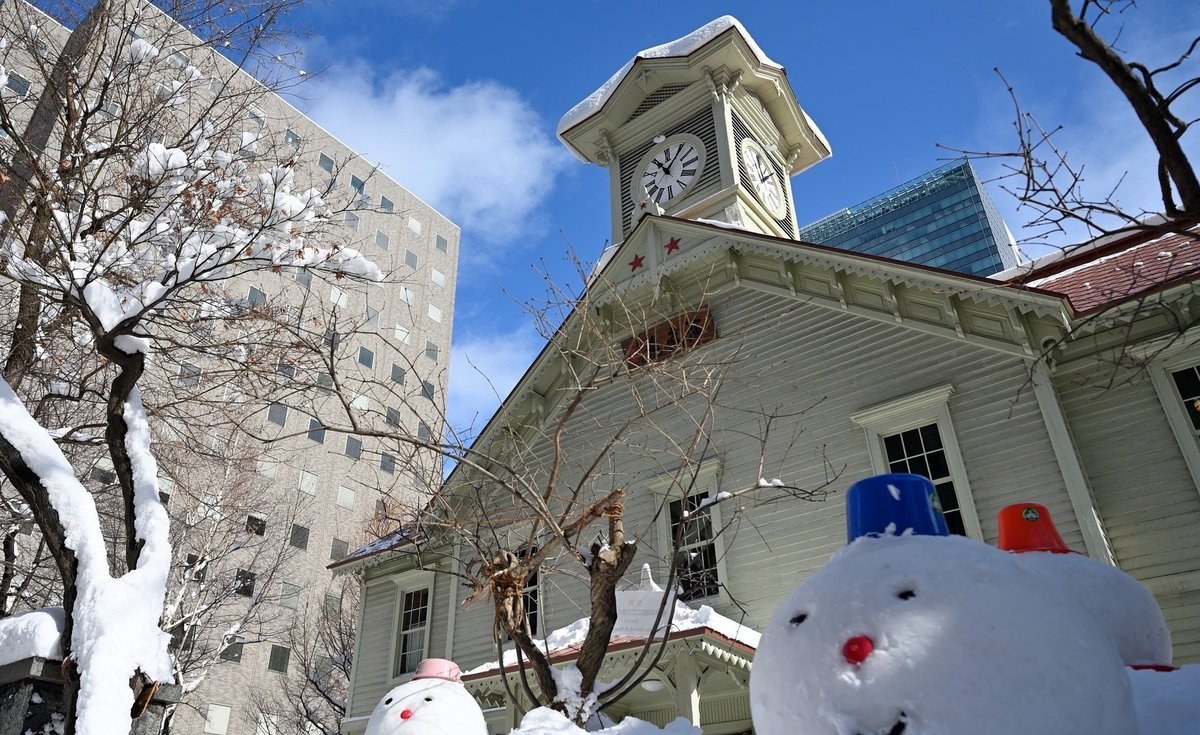 The white wooden Sapporo Clock Tower with snowmen in front on a sunny winter day
If you have a sweet tooth, take the subway to Miyanosawa Station for Shiroi Koibito Park, home of Hokkaido’s most famous cookie. It is under ten minutes’ walk from exit 5, and inside you can watch the cookies being made on the factory line.
For dinner, do not leave Sapporo without trying soup curry, a local speciality: a light, spicy curry broth full of grilled vegetables and chicken, eaten with rice on the side. After a day in the snow, nothing tastes better. Conveyor-belt sushi is also excellent here, but expect to queue at the popular chains.
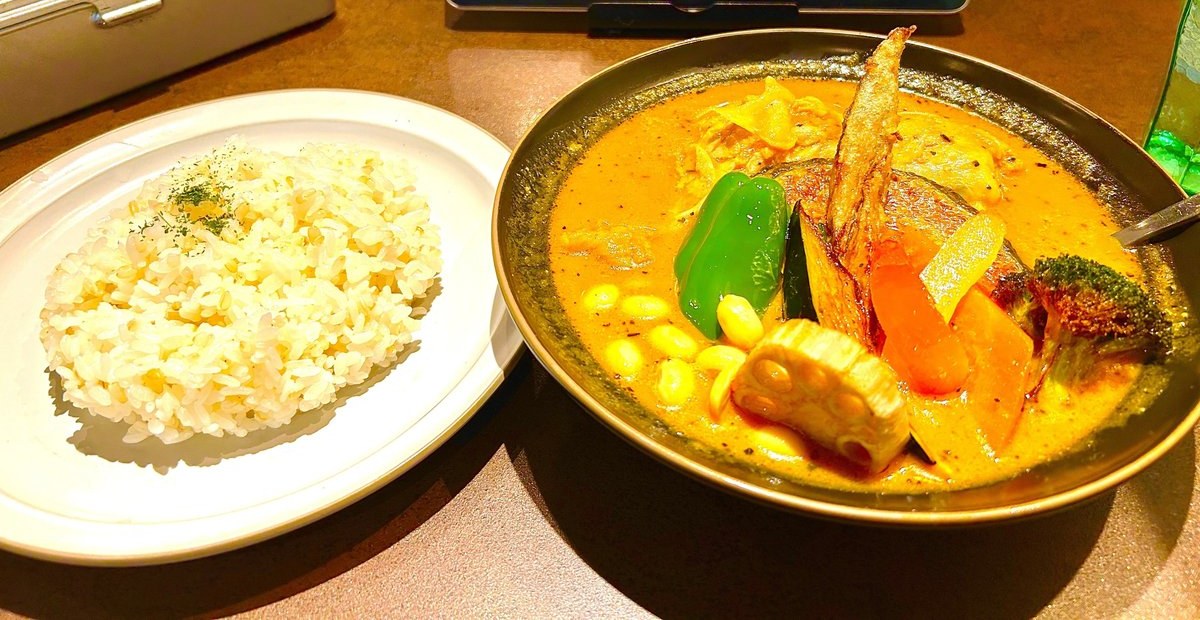 A bowl of Sapporo soup curry with grilled vegetables next to a plate of rice
Tips for Sapporo and Otaru in Winter
- Get grip for your shoes. Slip-on ice cleats are cheap in local shops and make a huge difference. I saw plenty of people fall on Sakaimachi Street.
- Dress in layers. Buildings and trains are warm, so a thin base layer, a fleece and a good windproof coat work better than one huge jacket.
- Start early. It gets dark before 5 pm, so plan Otaru as a morning-to-dusk trip.
- Use the underground walkways in Sapporo. They save you from the wind, the ice and the slush.
- Check the dates of the Sapporo Snow Festival. It is held in early February and the city gets much busier and pricier around it.
Final Thoughts
My first real snow trip could not have been better. Otaru gave me the fairy-tale scenery, the music boxes and the freshest seafood bowl of my life, while Sapporo kept me warm with soup curry and ramen. Pack properly, walk carefully, and Hokkaido in winter will reward you with a kind of beauty you simply cannot find in the tropics.