Every year my social media fills up with photos of Kyoto temples drowning in red maple leaves, and every year I tell myself “next autumn”. This time I finally booked it. I spent three days in Kyoto at the beginning of November, mostly on foot, with one goal: see as many autumn leaves as possible without being crushed by the crowds.
A quick reality check first. In most years the leaves in central Kyoto peak in the second half of November, so in early November you get a mix: some trees already on fire, others still green. Honestly, I loved it. The gradient from green to yellow, orange and red is beautiful in its own way, and the leaves still look fresh instead of dry and brown.
Tofukuji: The Famous Maple Valley
I started in the south at Tofukuji, one of the best-known leaf spots in the city. It is incredibly easy to reach: take the JR Nara Line one stop from Kyoto Station to Tofukuji Station (the Keihan line also stops there), and follow the signs, which start right on the platform.
Even this early in the season there were staff at every corner of the temple lanes asking people to keep left, which tells you how busy it gets at the peak. The classic view is from Gaunkyo Bridge, a wooden covered bridge you can walk across for free, looking out over a valley packed with maple trees towards the larger Tsutenkyo Bridge. On my visit the valley was still partly green, but the trees nearest the bridge were already a deep red.
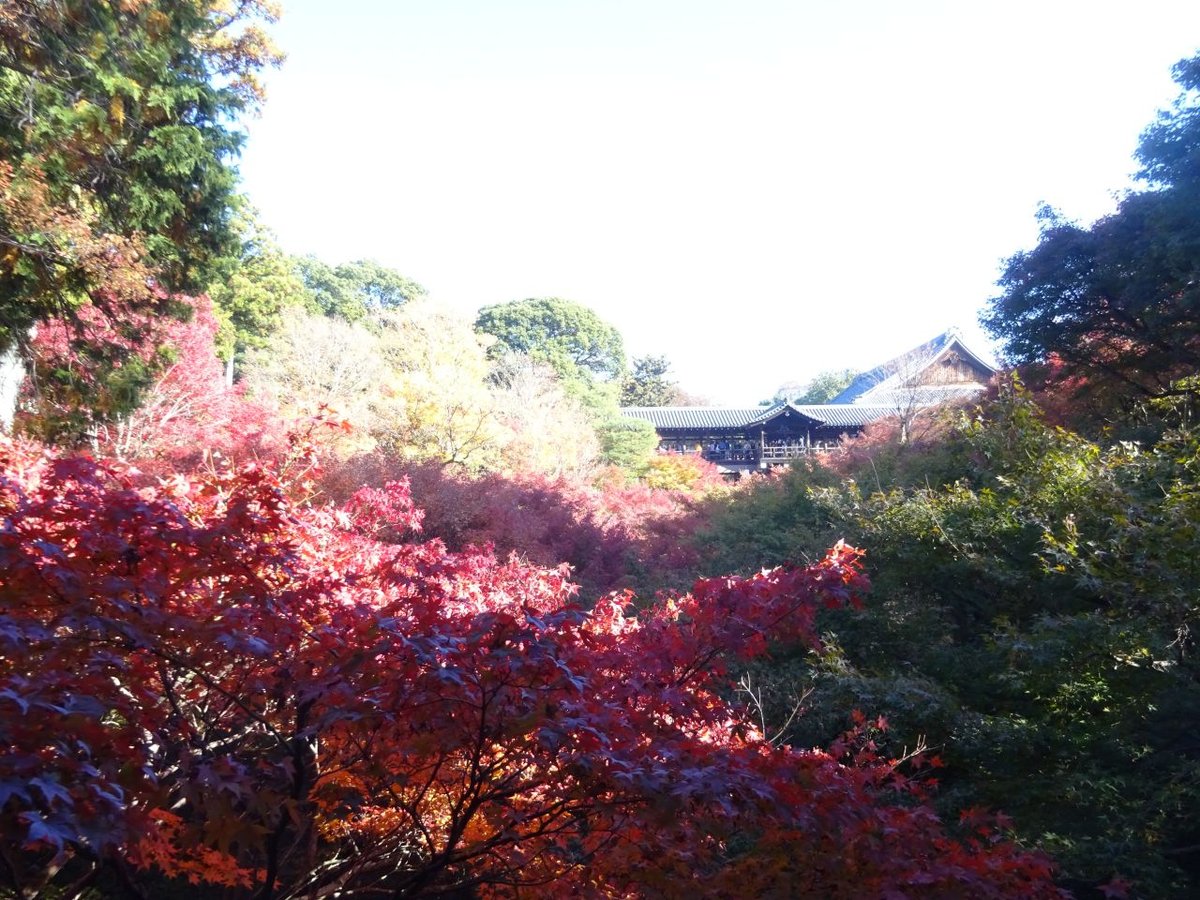 Red maple trees filling the valley below Gaunkyo Bridge at Tofukuji
Walking on Tsutenkyo itself and entering the gardens require tickets, and they are sold separately, so decide in advance what you want to see. My favourite surprise was the small sub-temple Tentokuin, where a few maples by the entrance garden were already blazing.
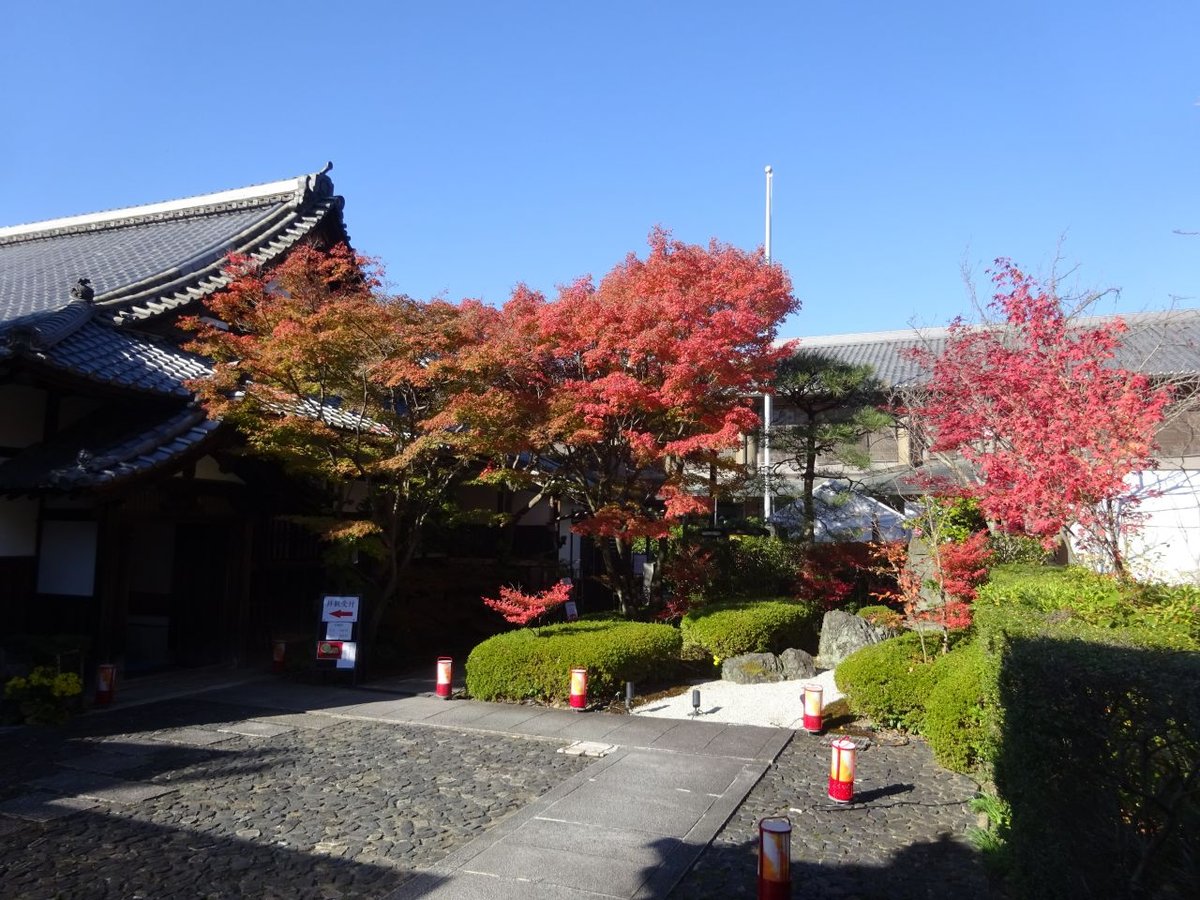 Bright red maples in the garden of Tentokuin sub-temple at Tofukuji
An Early Start at Nanzenji
The next morning I set my alarm early. My hotel was near Sanjo, by the Kamo River, so I walked along the river in the cool morning air, grabbed a thick Kyoto-style egg sandwich at an old coffee shop, and headed east towards the temples. Being out before 8 am is the single best tip I can give for Kyoto in leaf season: the streets are almost empty and the light is soft.
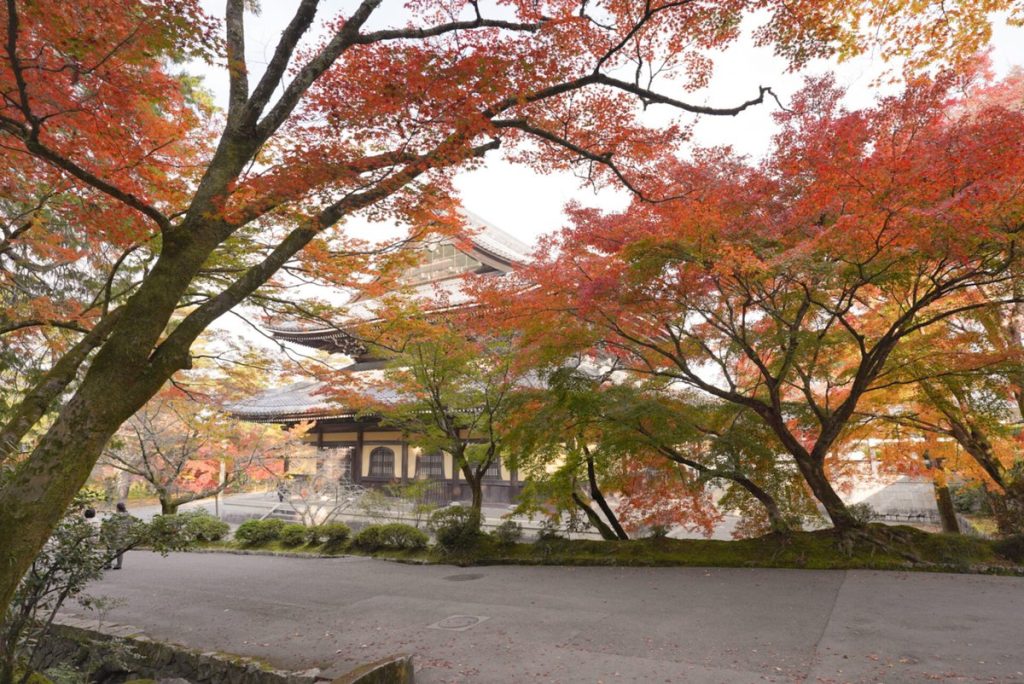
If you come by subway instead, get off at Keage Station on the Tozai Line and walk through the little brick tunnel under the old incline railway. A few minutes later you reach Nanzenji, a huge Zen temple whose outer grounds are free to enter. With the morning sun shining through the maples, it was already the highlight of my trip.
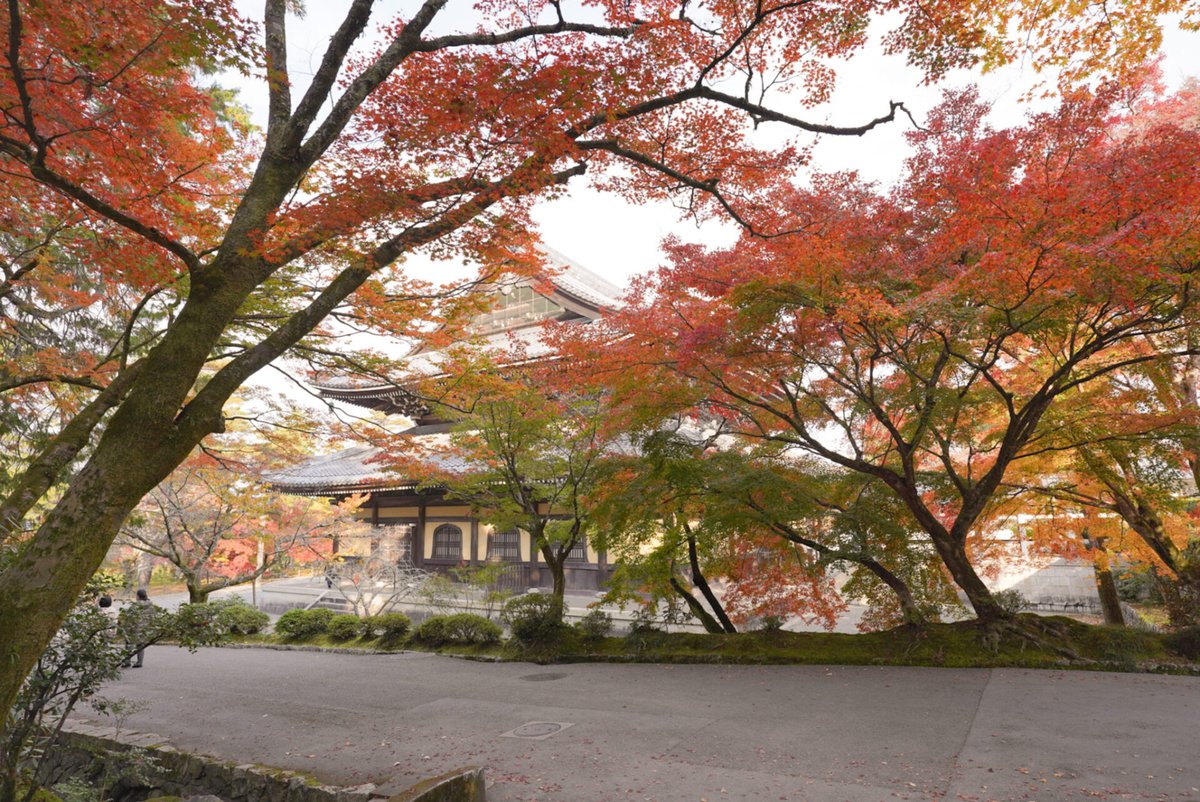 Orange and red maples in the grounds of Nanzenji temple in the morning sun
Do not miss the Suirokaku, a red-brick aqueduct built around 1890 that still carries canal water through the temple grounds. It looks almost Roman, and with autumn leaves hanging over the arches it is one of the most photographed spots in Kyoto.
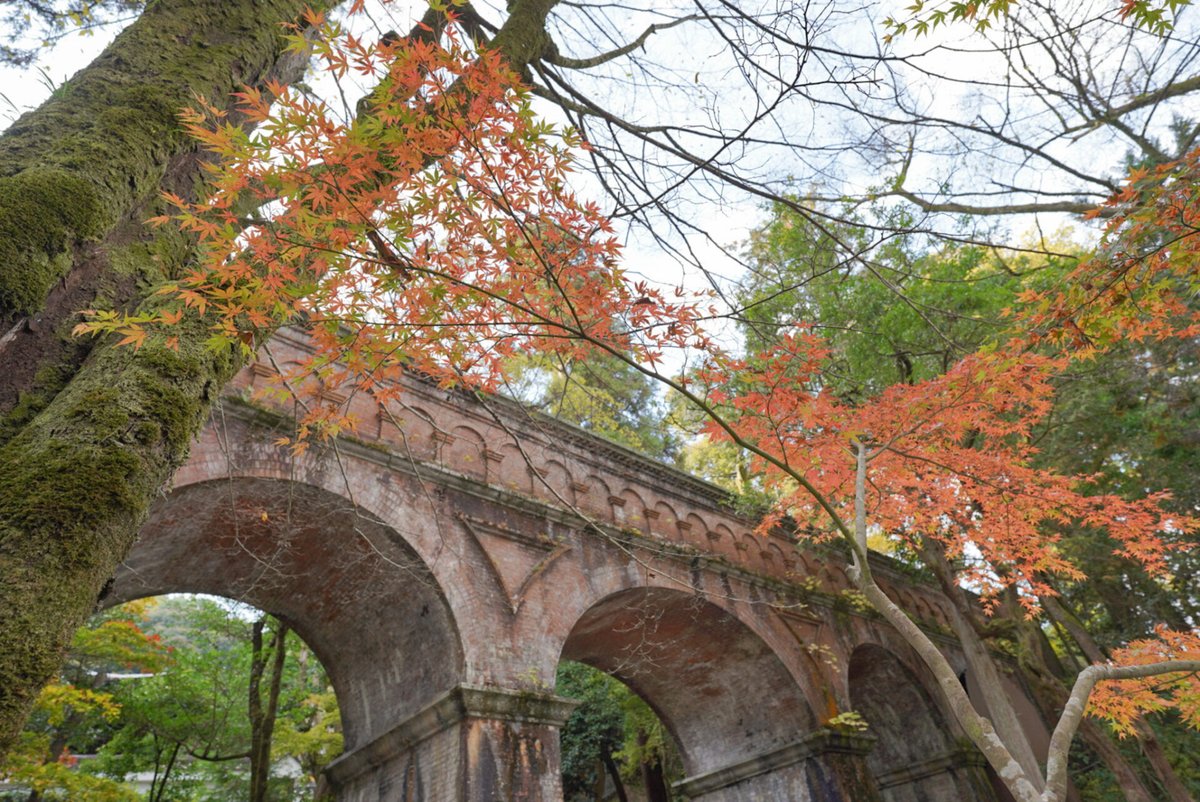 The brick arches of Suirokaku aqueduct framed by autumn leaves at Nanzenji
Two paid areas are worth the extra money. The Hojo (abbot’s quarters) has calm dry-stone gardens where you can sit on the wooden veranda and simply breathe. And you can climb the giant Sanmon gate. The stairs are very steep and photos are not allowed at the top, but the view over the treetops and the city is fantastic.
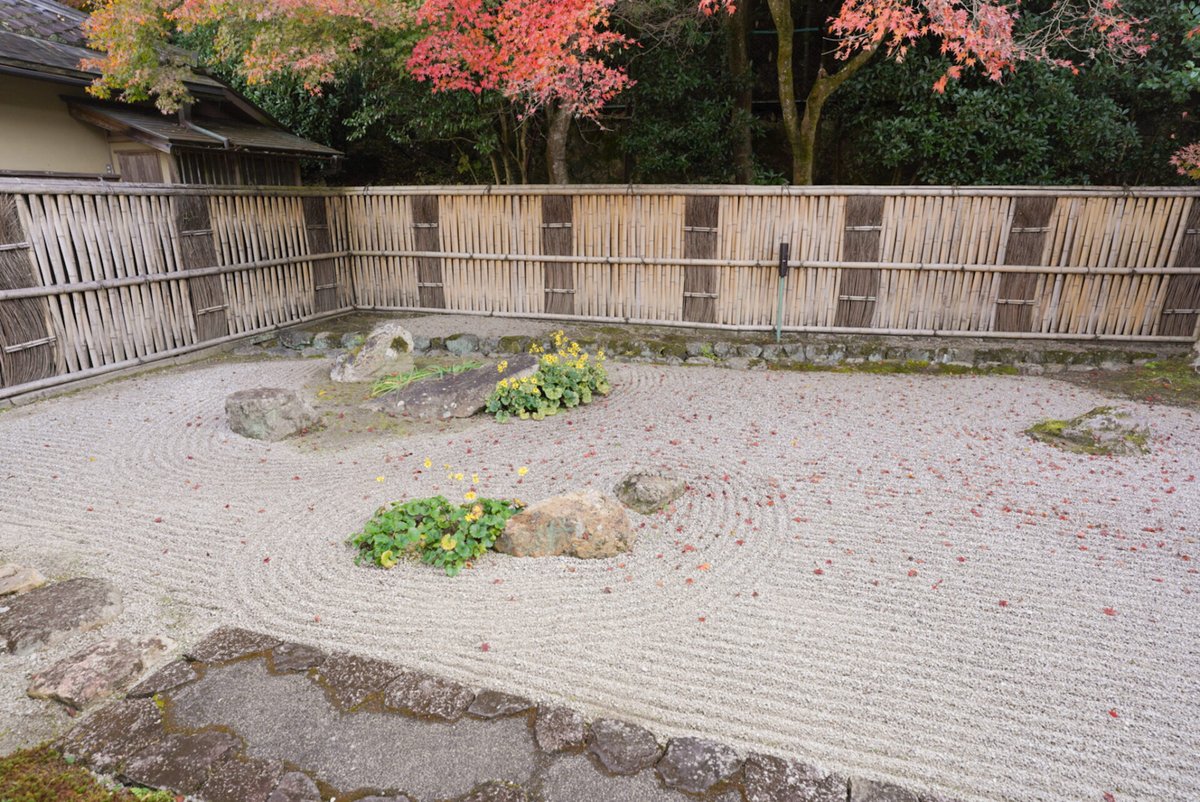 Raked gravel and stones in the dry rock garden of the Nanzenji Hojo
Eikando: Kyoto’s Most Colourful Temple
A short walk north brings you to Eikando (Zenrinji), often called the most beautiful maple temple in Kyoto. It was noticeably busier than Nanzenji by the time I arrived, but it was also where I saw the strongest colours of the whole trip. Even the entrance gate is framed by leaves in every shade from green to scarlet.
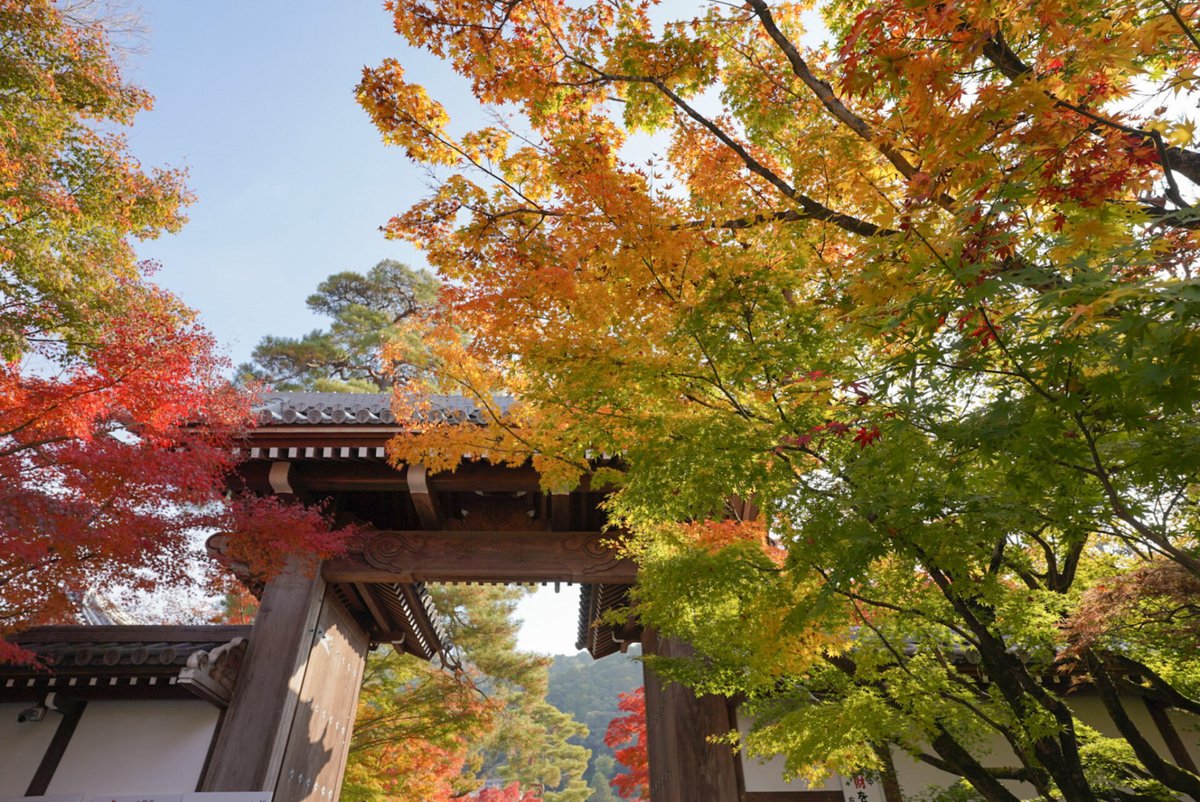 Yellow and red maple leaves around the entrance gate of Eikando
Inside, follow the route through the halls and out to the pond, where a stone torii and a small bridge lead to a shrine on an island. There is also a climb up to a pagoda on the hillside. The steps are steep (my knees complained the next day), but the view over the maple canopy and the city is worth it.
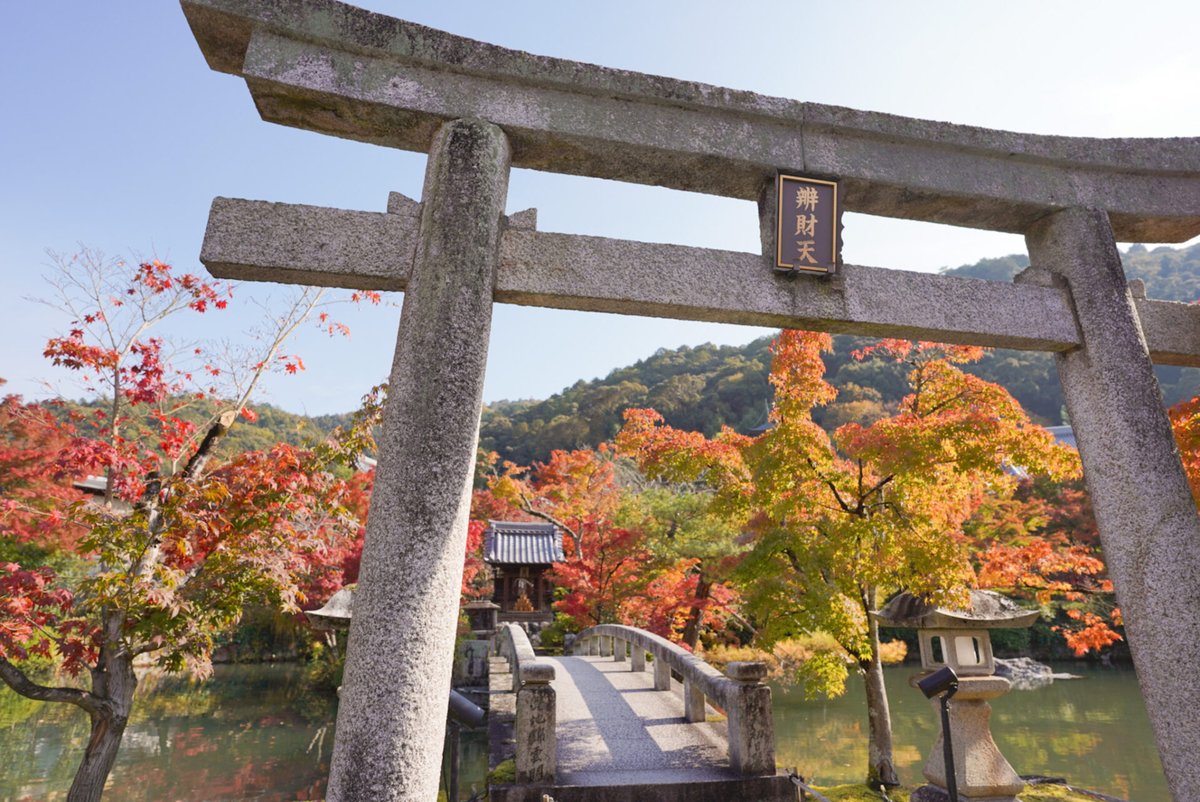 A stone torii gate and a small bridge over the pond at Eikando surrounded by autumn colours
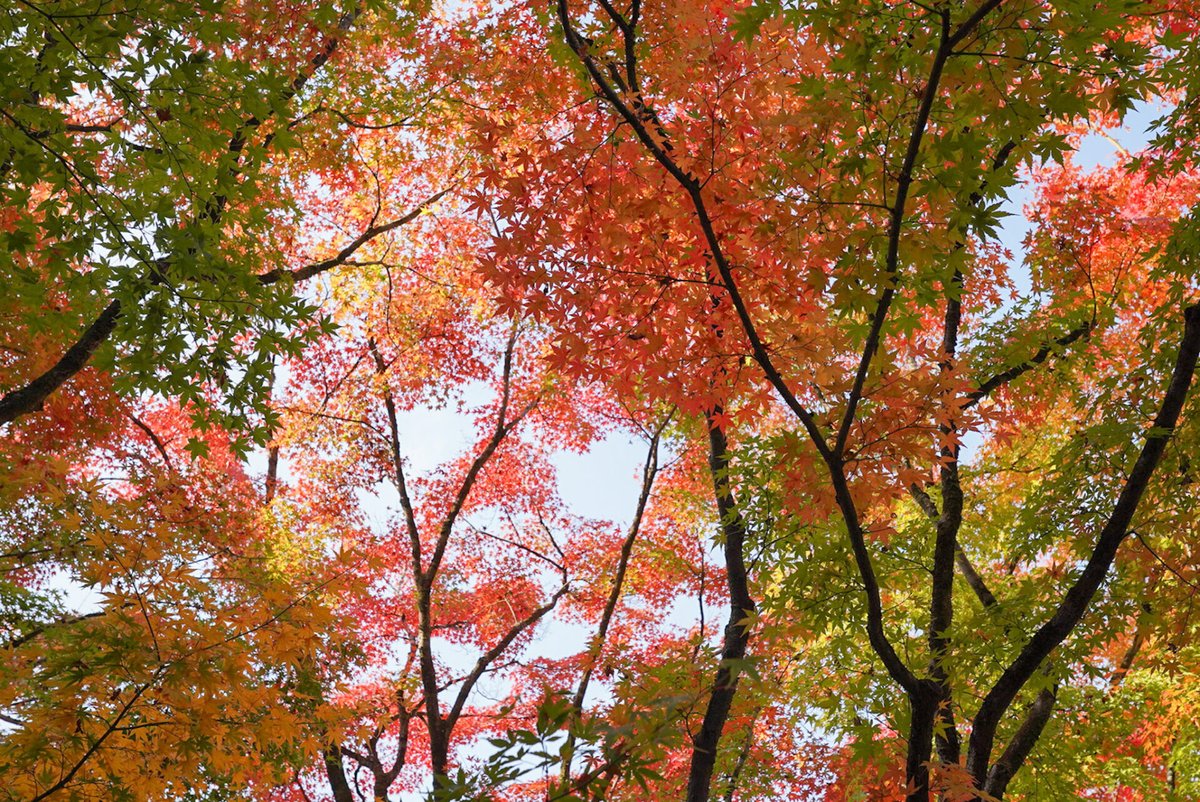 Looking up into a canopy of red and orange maple leaves at Eikando
Eikando also opens in the evening during leaf season for a special illumination. You need a separate ticket, and photography is banned on one of the bridges, with staff holding up signs, so just enjoy that part with your eyes.
From Eikando, the southern end of the Philosopher’s Path is only a few minutes’ walk north. I strolled a short stretch along the canal before hunger won and I walked down to the Okazaki area for a simple bowl of udon in Kyoto-style dashi near Heian Shrine. Expect a queue at lunchtime; I waited around half an hour.
Arashiyama: Beautiful, But Busy
On my last day I took the cute little Randen tram to Arashiyama in the west of the city. I will be honest: even on a weekday it was the most crowded place I visited. The bamboo grove path was completely jammed, so I gave up on it, and the area around Togetsukyo Bridge was so packed that people spilled onto the road. I queued about thirty minutes for a drink at a famous coffee stand, then escaped to a café inside a converted old public bathhouse near the station for a lovely tofu pasta lunch.
Tips for Leaf Season in Kyoto
- Check the colour forecasts. Japanese leaf-forecast websites update almost daily. Early November means mixed colours; the peak usually comes later in the month.
- Start early. Popular temples are calm before 9 am and packed by late morning.
- Group sights by area. Nanzenji, Eikando and the Philosopher’s Path are all walkable in one morning. Bus 5 stops at Nanzenji-Eikando-michi.
- Visit on a weekday. Weekends in November are on another level.
- Leave extra time to get to the airport. The airport bus queue at Kyoto Station was enormous, so allow a big buffer or take the train.
Final Thoughts
Kyoto in autumn is every bit as beautiful as the photos, as long as you accept that you will share it with a lot of other people. My advice is to wake up early, walk slowly, and do not be disappointed if not every tree is red yet. Some of my favourite moments were standing under a half-green, half-orange maple, listening to the temple bells before the crowds arrived.