I had been to Kuala Lumpur a few times, but somehow I had never made the short trip south to Malacca (Melaka). This November I finally fixed that with two nights in the old town. It was the rainy season, so most afternoons ended with a heavy shower, but the mornings were bright, the evenings were cool and the whole historic centre is so compact that you can see almost everything on foot.
Malacca was a great trading port long before Europeans arrived, and then it was ruled in turn by the Portuguese, the Dutch and the British. Each left buildings behind, and together with the Chinese and Peranakan shophouses they make the city feel unlike anywhere else in Malaysia. The old town has been a UNESCO World Heritage Site since 2008.
Getting There
From Kuala Lumpur I took an express bus from Terminal Bersepadu Selatan (TBS) to Melaka Sentral, then a Grab to my hotel near the river. Grab is cheap here, but in the old town you will mostly walk.
Dutch Square and the Red Buildings
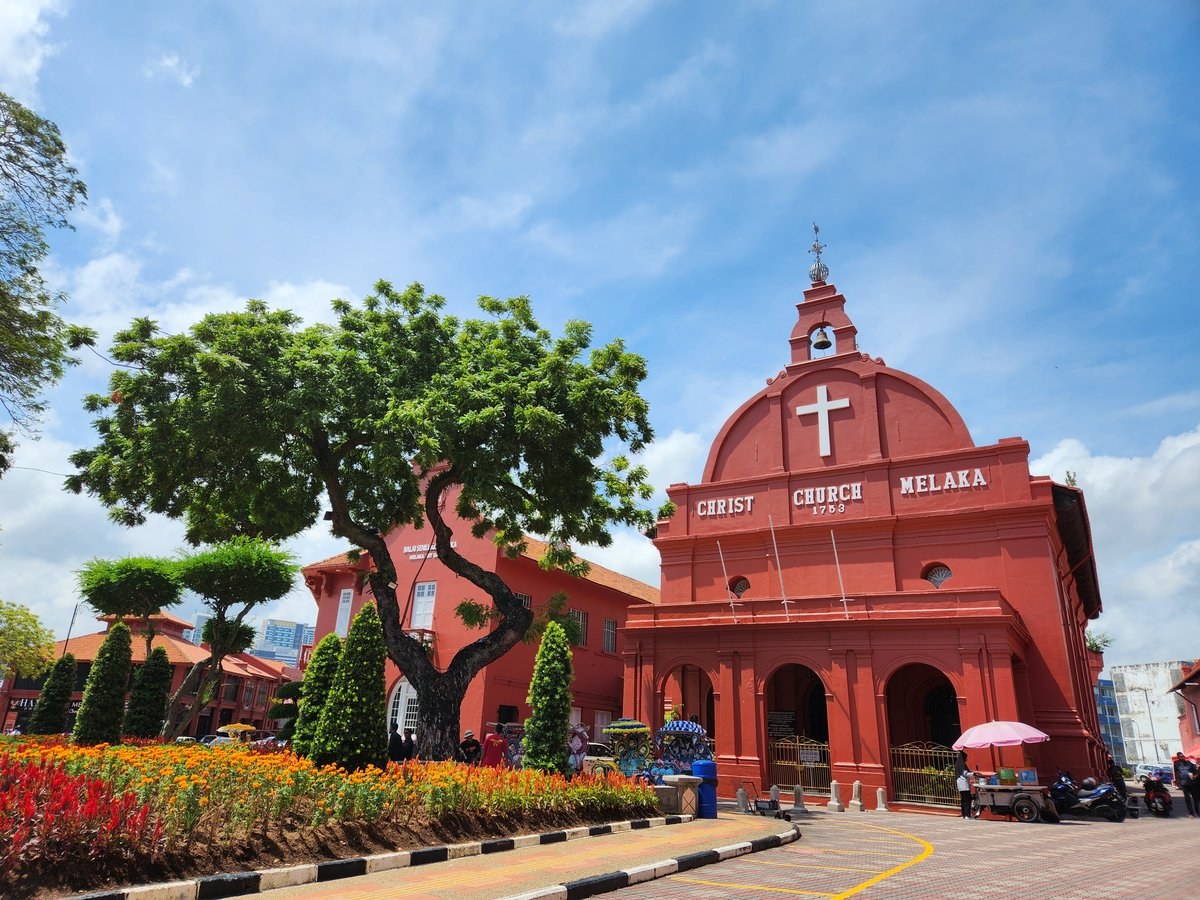 The red Christ Church Melaka and a flowering garden at Dutch Square
Every walk in Malacca starts at Dutch Square (Windmill Dutch Square), the cluster of brick-red buildings around a small fountain and the Tan Beng Swee Clock Tower. The most famous of them is Christ Church, built by the Dutch in the 18th century, with the old Stadthuys town hall right next to it. I had seen photos where the red paint looked faded, but on my visit everything looked freshly painted and very photogenic. There is also an “I Love Melaka” sign and a kilometre-zero marker, which is a good meeting point for taxis.
A few steps away towards the river mouth are the stone walls of Middelburg Bastion, one of the bastions of the old city walls, built by the Dutch in 1660. The stonework is still remarkably solid.
St Paul’s Hill
Behind the square, a staircase climbs St Paul’s Hill to the roofless ruins of St Paul’s Church, first built by the Portuguese in the early 1500s and often called the oldest church in Southeast Asia. A white statue of St Francis Xavier stands in front of it. The climb is short but there is almost no shade, so bring an umbrella for the sun and plenty of water.
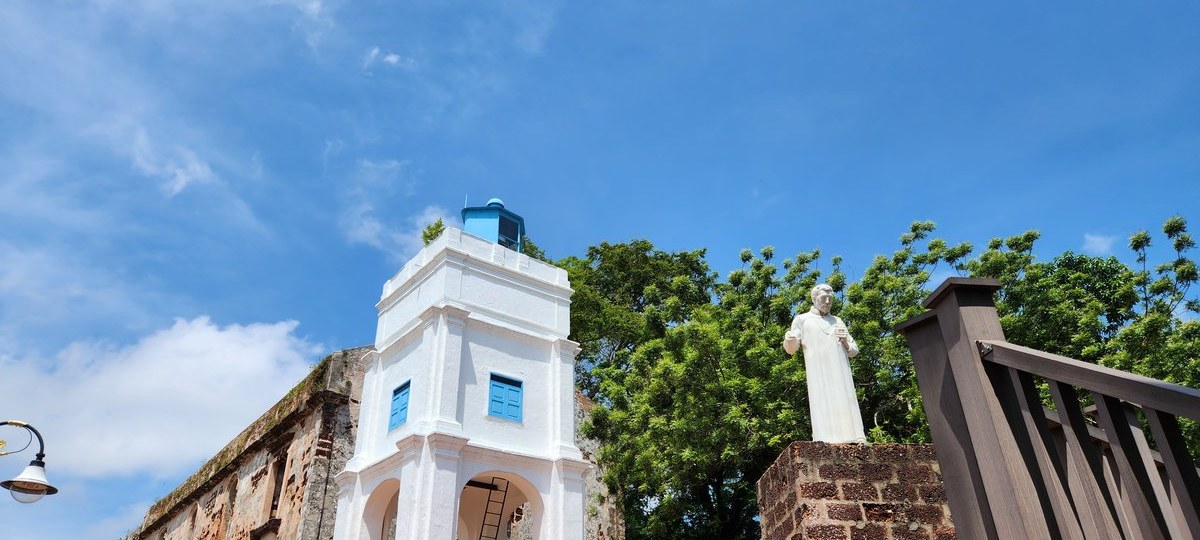 Ruins of St Paul's Church and the white statue of St Francis Xavier on St Paul's Hill
At the foot of the hill, the wooden Melaka Sultanate Palace Museum is a reconstruction of the old sultan’s palace. Entry for foreigners was RM20 (about $4.75 USD). The exhibits are a bit tired, but the building is impressive and the air-conditioning was exactly what I needed after the hill.
Jonker Street and Its Lanes
To reach Jonker Street you cross the short Tan Kim Seng Bridge over the river. Straight away you are in the old Chinese quarter: two-storey shophouses, souvenir stores, small museums and lots of cafés, with proper pavements that make walking pleasant. On weekend evenings the street closes to traffic and becomes a busy night market, full of snacks I had never seen before.
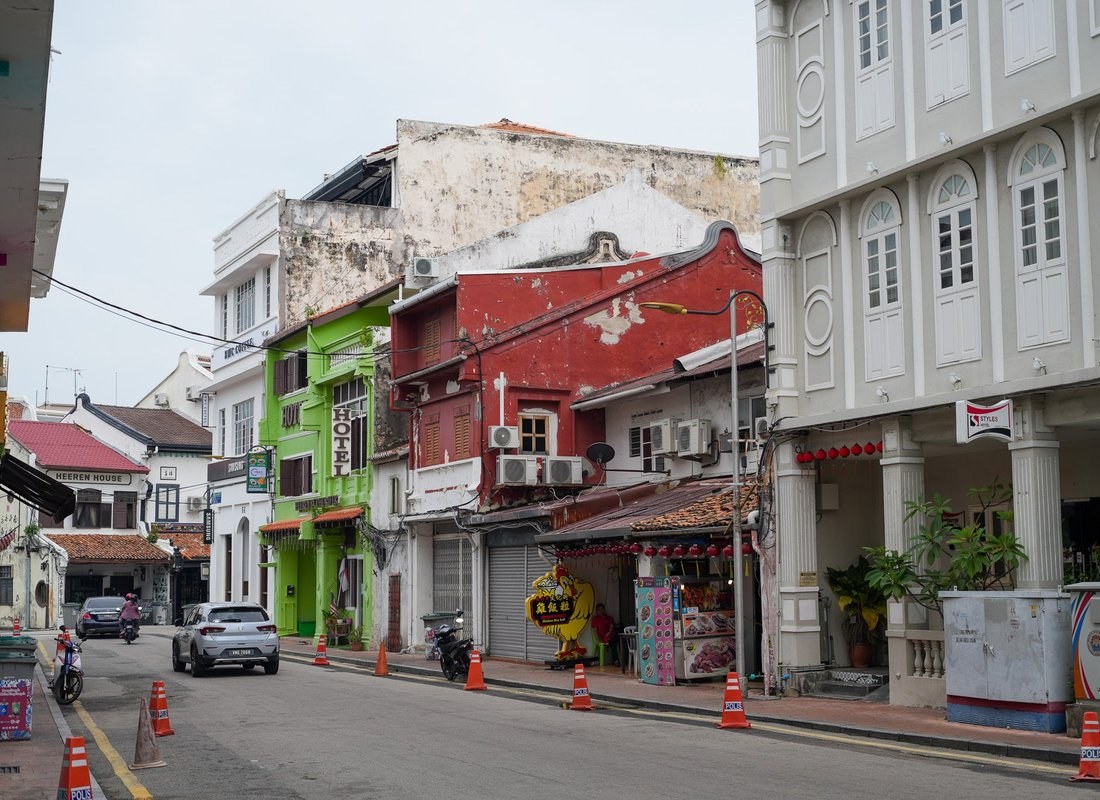 Colourful old shophouses on a quiet street in Malacca old town
Things I enjoyed around Jonker Street:
- Gula Melaka, the dark, smoky palm sugar that turns up in almost every dessert here. You can buy it as blocks or syrup to take home.
- Harmony Street (Jalan Tokong and Jalan Tukang Emas), where the 1640s Cheng Hoon Teng temple, the Kampung Kling Mosque with its pagoda-like minaret and a Hindu temple all stand within about a hundred metres of each other.
- The little street-art lane beside The Old Station Cafe that leads down to the river, lined with murals and plants.
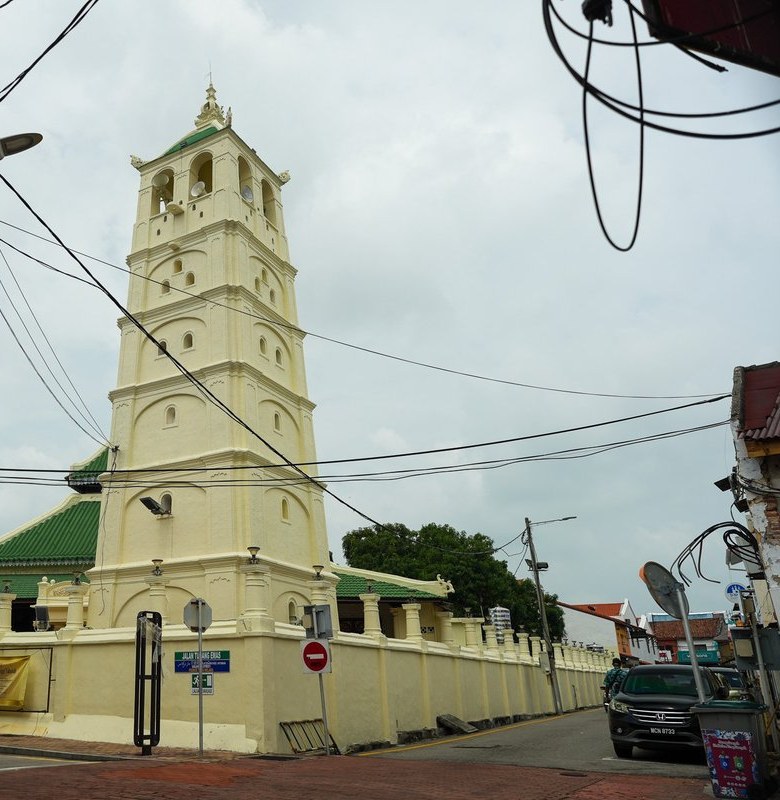 The pagoda-style minaret of Kampung Kling Mosque on Harmony Street
What I Ate
Malacca’s food is a mix of Chinese, Malay and Peranakan (Nyonya) cooking, and I ate my way through most of it.
The classic is chicken rice balls: steamed chicken served with rice that has been cooked in chicken stock and rolled into small balls. They are sold by the piece, and my mistake was ordering only two. One adult needs at least five. For breakfast I had charcoal-grilled kaya toast at a small local shop, about RM7 with a bottle of water, and the smoky bread was something I had never tried before.
My favourite meal was a bowl of Nyonya laksa, a spicy coconut curry noodle soup topped with prawns, egg, tofu puffs and fresh herbs. Two bowls of laksa came to under RM30 (about $7 USD). I also loved the rojak from a street stall, fruit and vegetables tossed in a sticky, sweet shrimp-paste sauce with crushed peanuts, for RM8 (about $1.90 USD).
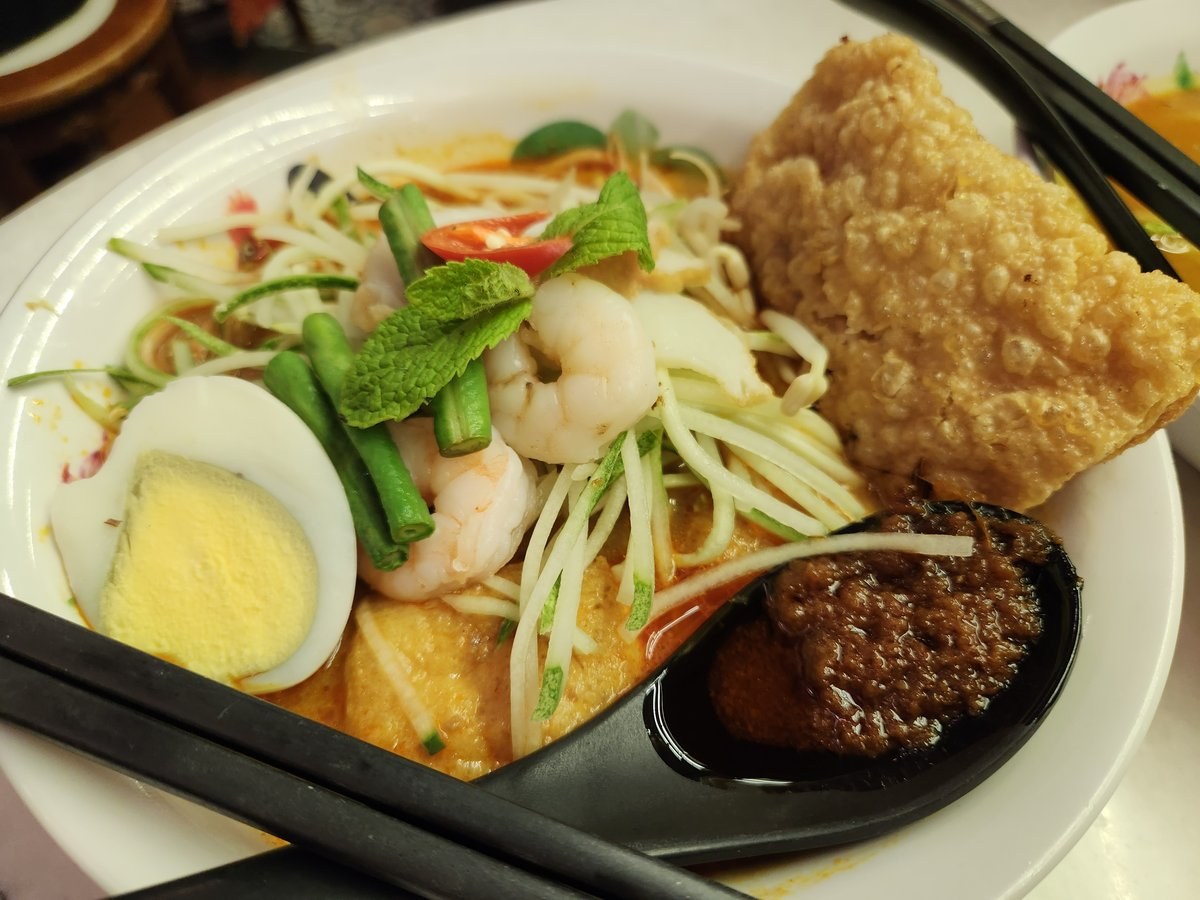 A bowl of Nyonya laksa with prawns, boiled egg, tofu puff and mint
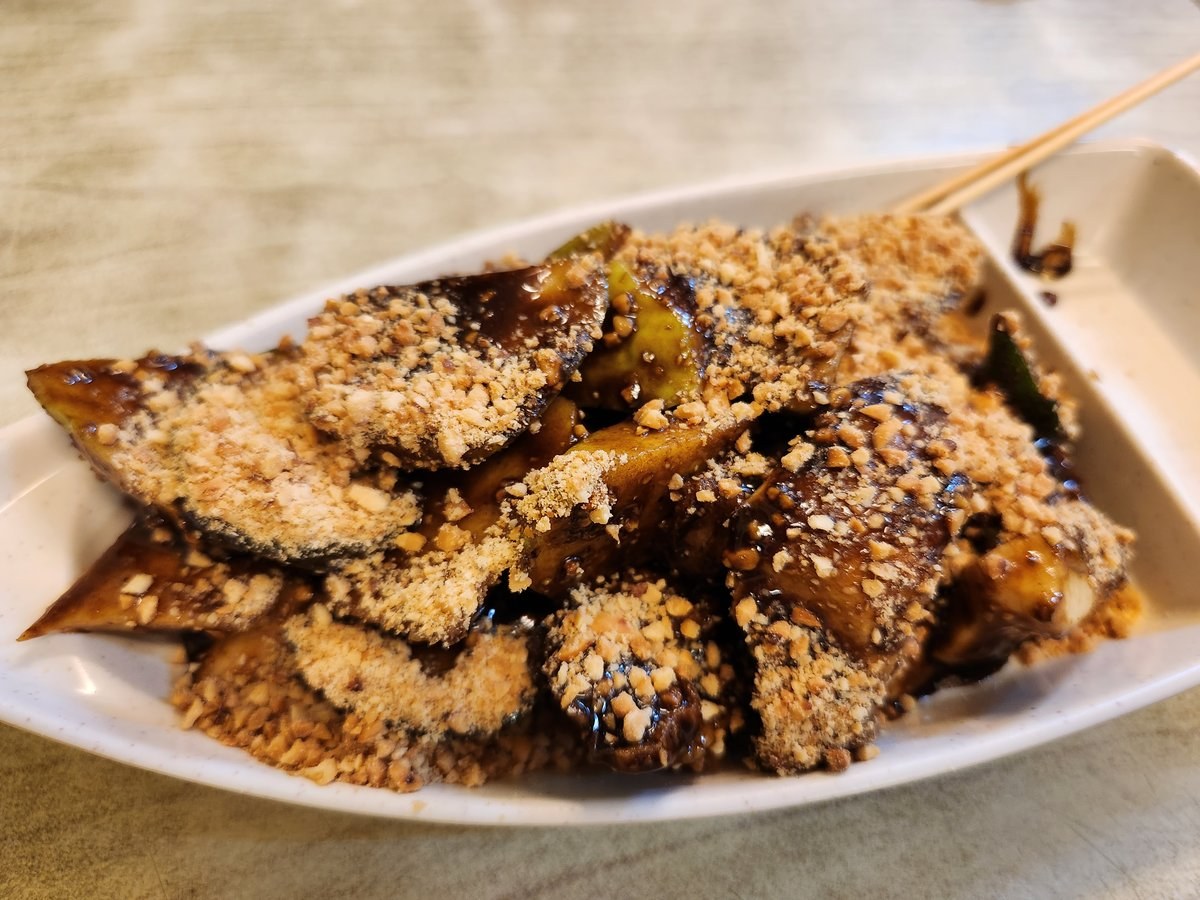 Fruit rojak coated in dark shrimp paste sauce and crushed peanuts
For dessert, try a gula Melaka latte in one of the modern cafés, putu piring (steamed rice cakes filled with palm sugar, sold near the start of Jonker Street) and a bowl of cendol to cool down. A fresh mango juice from a stall was about RM6.
Along the Malacca River
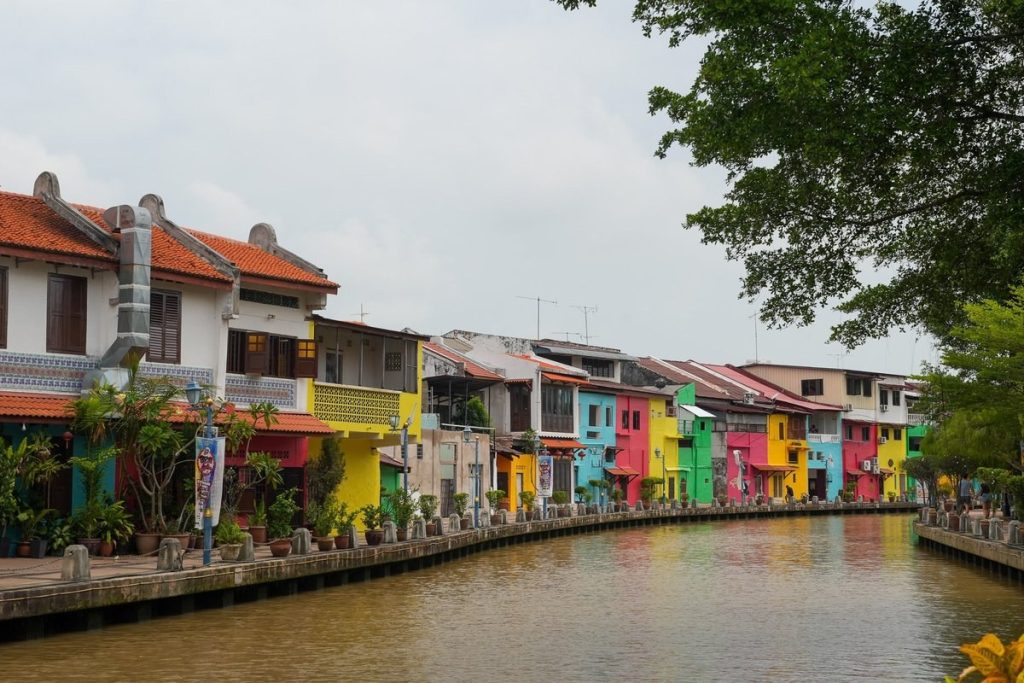
One afternoon I walked about a kilometre along the Malacca River from Dutch Square towards my hotel. The banks are lined with bars and cafés, and further upstream the houses are painted in bright pinks, greens and yellows. There is a bridge every few minutes, so you can zigzag from one side to the other while the river cruise boats pass by. After several days of rain the water was brown and muddy, but the colours of the houses still made it one of the prettiest walks of the trip.
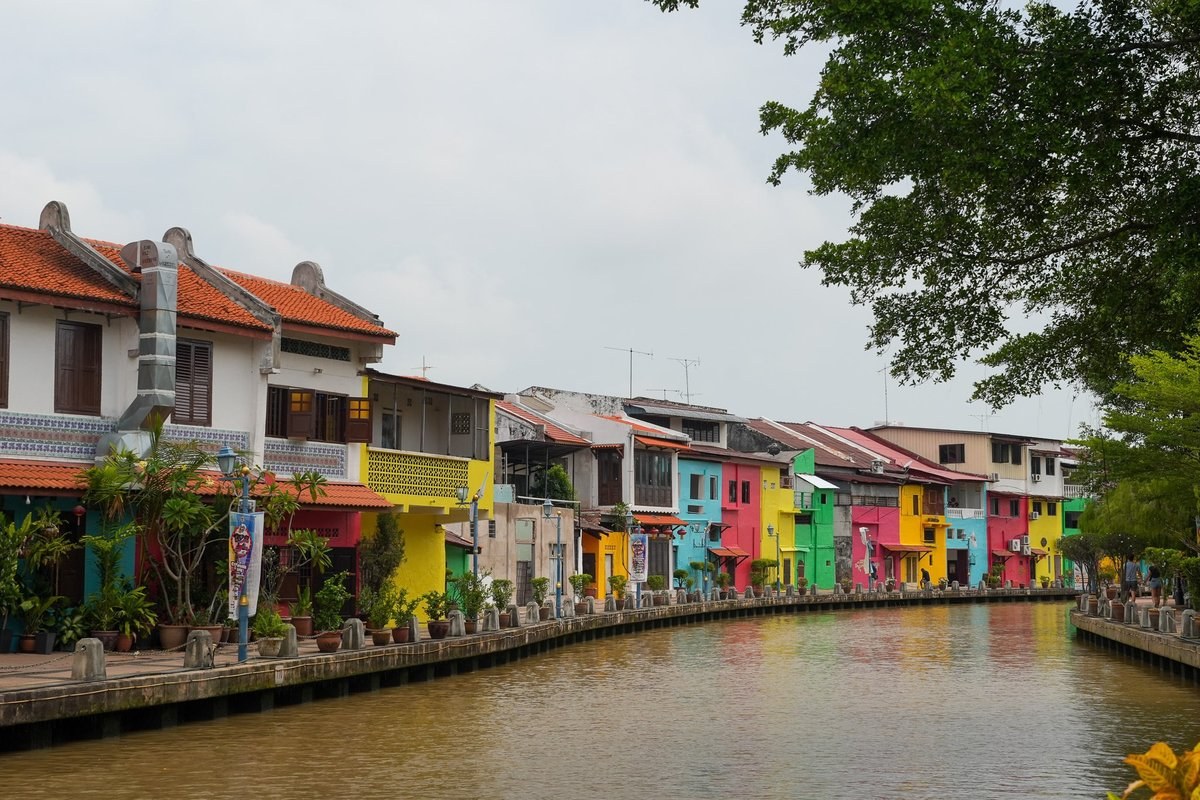 Colourful houses lining the Malacca River under a cloudy sky
Sunset from Menara Taming Sari
On my last evening I rode Menara Taming Sari, a revolving viewing tower near the river. A large round cabin slowly climbs the tower and turns a couple of times at the top. The ticket was about RM23 (about $5.50 USD), there was no queue, and the sunset view over the red roofs, the river and the flat city stretching to the horizon was worth every ringgit.
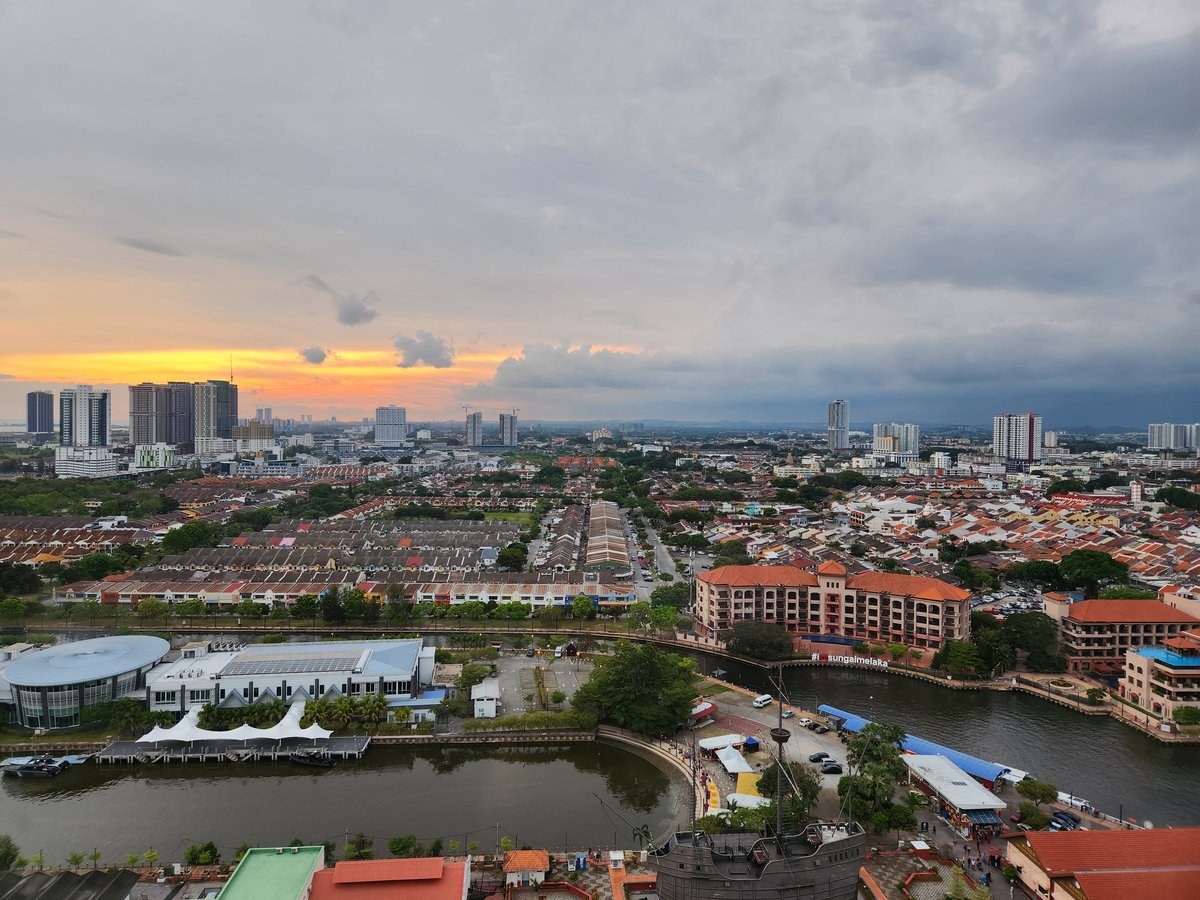 View over Malacca city and the river at sunset from Menara Taming Sari
Tips for Visiting Malacca
- Two days is enough for the old town at a slow pace; a day trip from Kuala Lumpur feels rushed.
- Walk early. The heat is strong by late morning, and in the rainy season showers usually come in the afternoon.
- Come for a weekend if you want the Jonker Street night market.
- Bring an umbrella for both sun and rain.
Final Thoughts
Malacca surprised me. I expected a quick photo stop, but it turned into one of my favourite places in Malaysia: red colonial squares, temples next to mosques, a riverside walk and a bowl of laksa waiting at the end of the day. I already want to go back for another round of rice balls.