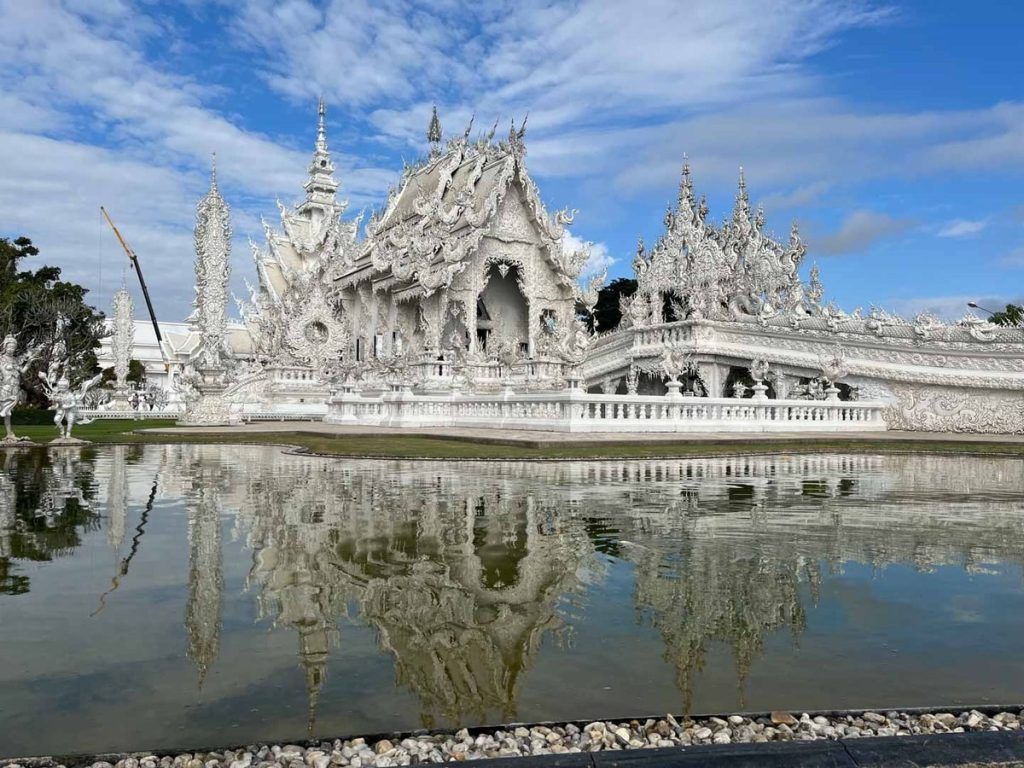
Every time someone posts a photo of the White Temple in Chiang Rai, my phone seems to know I want to go. So when I was back in northern Thailand in early December, right in the cool season, I finally booked a long day trip from Chiang Mai to see Chiang Rai’s three famous art sites: the White Temple, the Blue Temple and the Black House. It was a very long day in a minivan, but it was absolutely worth it.
The Road From Chiang Mai
Chiang Rai is about 240 km from Chiang Mai, and much of the way is a winding mountain road, a bit like driving from Hanoi up to Sapa. Most day tours, including ours, leave around 6 am and bring you back at about 8 pm. There are plenty of packages: the basic one covers the three sites below, and longer ones add the Long Neck village or a boat ride at the Golden Triangle. With only three stops, we had time to enjoy each place instead of rushing.
December is the best time for this trip. The air is dry, mornings are fresh and cool, and as the sun came up we saw mist lying in the valleys like cotton. After a short break at a roadside service station, I slept most of the way while the driver handled the bends.
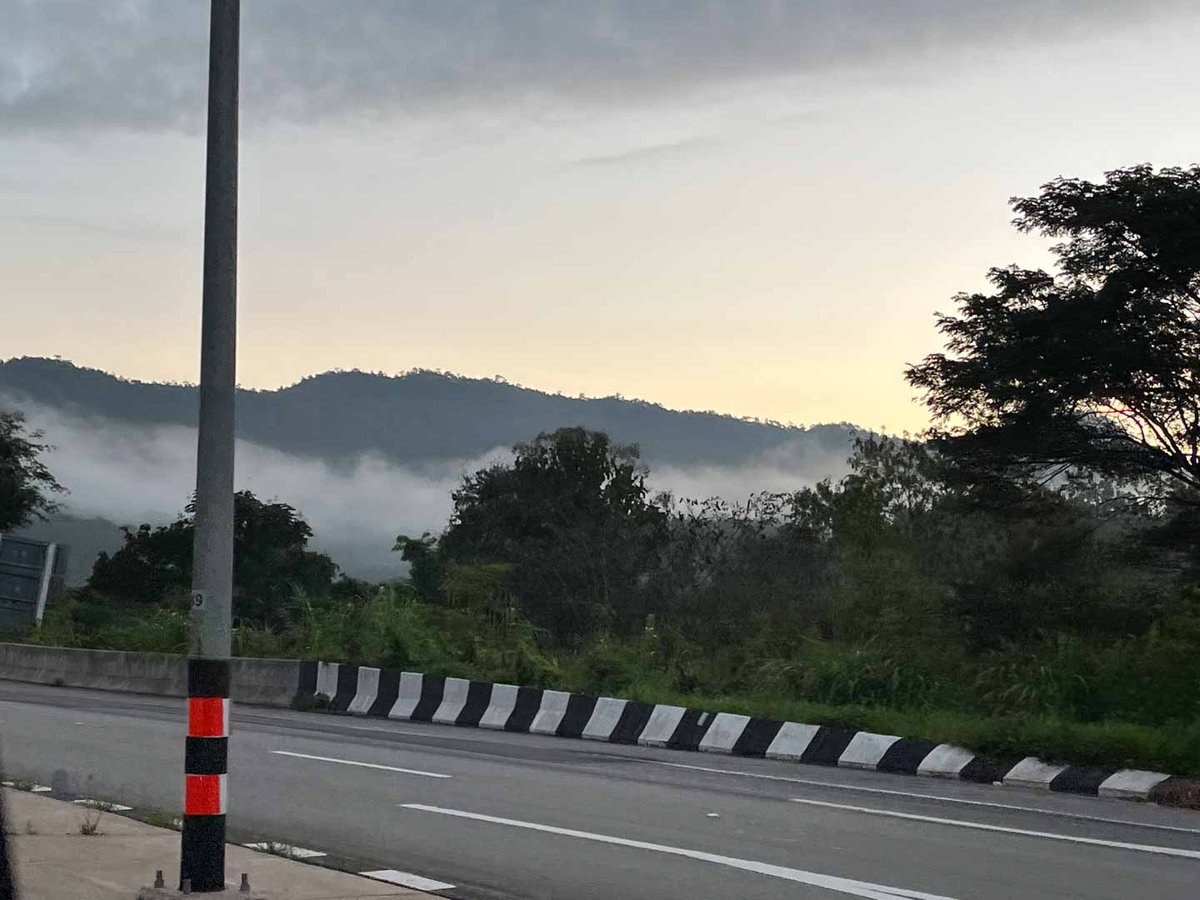 Morning mist over the mountains beside the highway in northern Thailand
The White Temple (Wat Rong Khun)
Wat Rong Khun is not an ancient temple at all. It is the life’s work of Thai artist Chalermchai Kositpipat, who started rebuilding it in the late 1990s and is still adding to it with private funds. Everything is white to represent purity, and thousands of small mirror pieces set into the plaster make the whole building sparkle in the sun.
Foreigners pay 100 baht (≈ $3 USD); Thai visitors enter for free. Without a ticket you can still look from outside, but not from the classic front view across the pond. The dress code is strict: no sleeveless tops, and shorts or skirts should cover the knees.
Crossing the Bridge Over “Hell”
The walk to the main hall is the most striking part. You cross a curved bridge over a pit filled with hundreds of sculpted hands reaching up from below, some holding skulls, as if lost souls are begging to be pulled out. Guardian figures stand at each end, and the bridge is one way only, so do not turn back. The symbolism is clear: you leave earthly desire behind on the way to enlightenment.
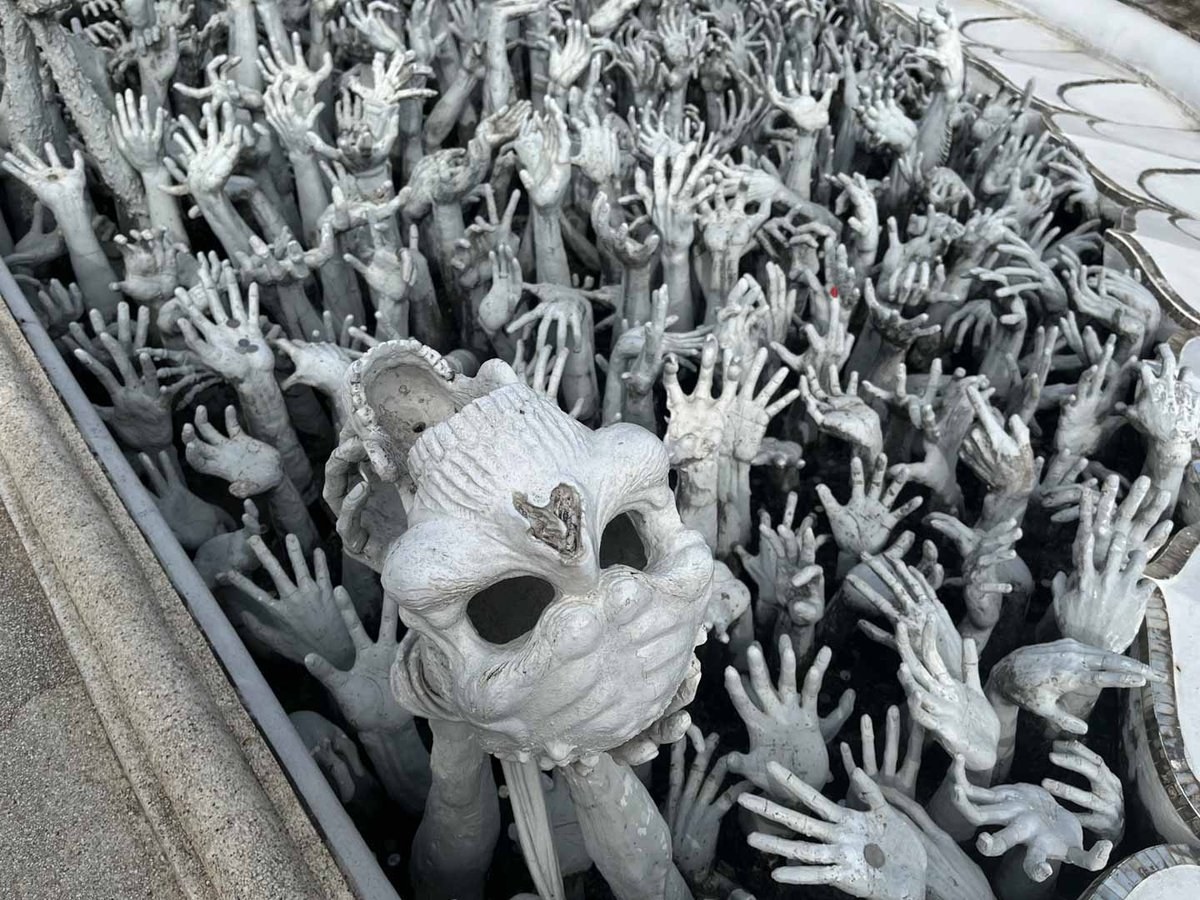 Hundreds of white sculpted hands reaching up from the pit beside the bridge at the White Temple
Photos are not allowed inside the main hall, so I simply stood and looked for a while. Afterwards we walked around the outer terraces, where nagas, elephants and Buddha figures cover every corner. Behind the main hall is a shiny golden building that houses, believe it or not, the toilets. Further along there is a gallery of the artist’s paintings and a garden with a waterfall decorated with pop culture figures like the Ninja Turtles, Batman and Gollum. Some people find this silly; I found it playful.
The Blue Temple (Wat Rong Suea Ten)
Our second stop was Wat Rong Suea Ten, whose name means “house of the dancing tiger”, after a legend about tigers leaping across the river here. Unlike the White Temple, this is an old temple, but it was rebuilt from about 2005 in a bold new style designed by a former student of Chalermchai. Entry is free, and it felt much calmer than the White Temple.
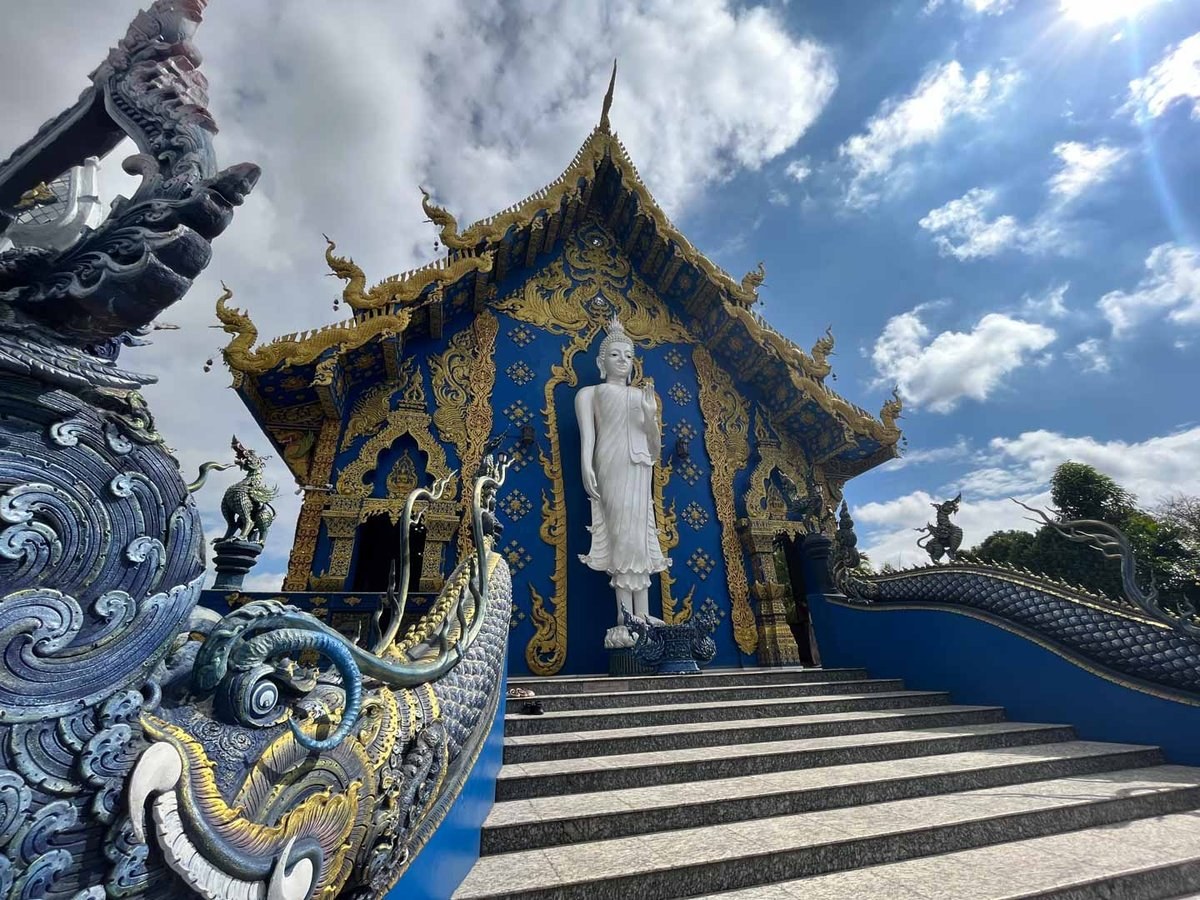 A white standing Buddha in front of the deep blue and gold hall of the Blue Temple
The colour is incredible: deep sapphire walls trimmed with gold, nagas twisting along the stair rails and a large white Buddha at the centre. Inside you may take photos, but you should kneel or sit while doing so. Do not forget to look up, because the painted ceiling is just as detailed as the walls.
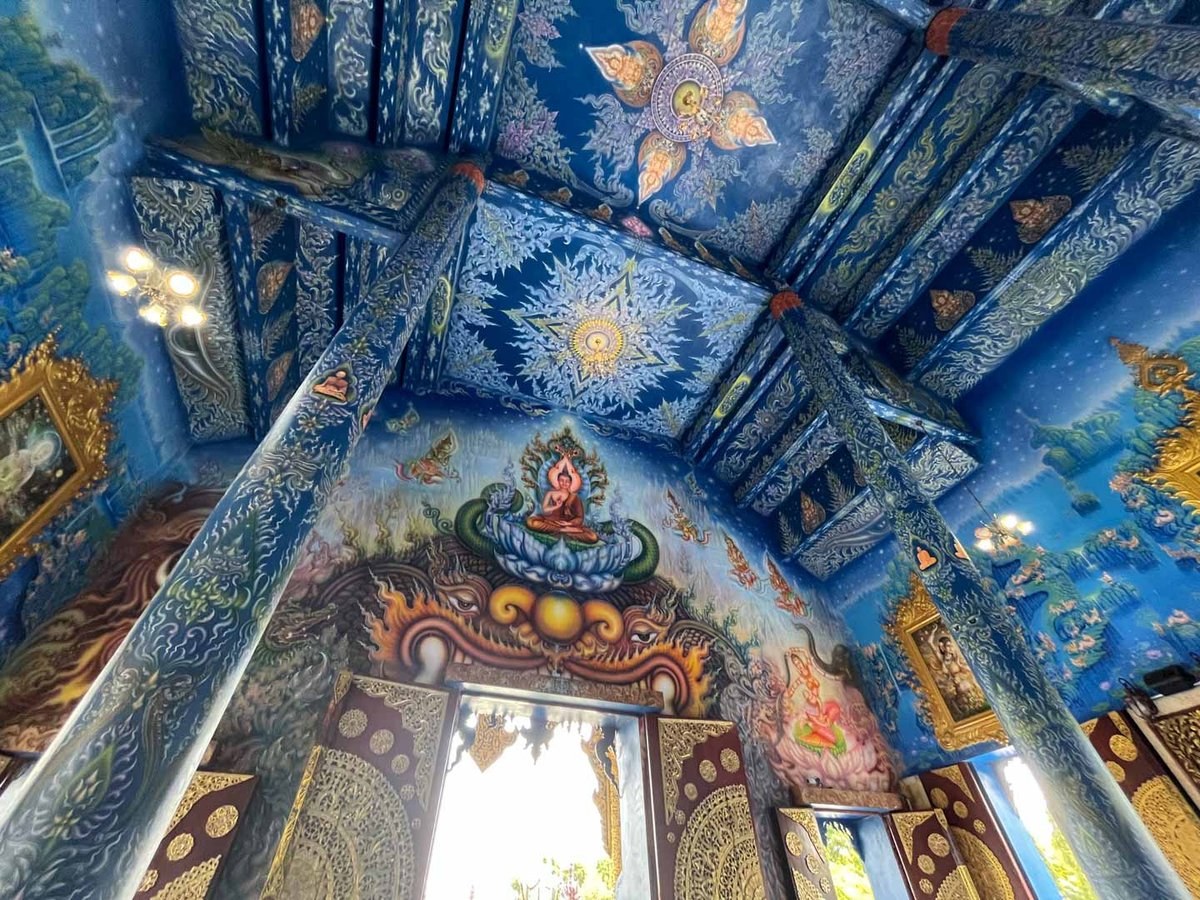 The richly painted blue ceiling and murals inside Wat Rong Suea Ten
Before leaving, we bought scoops of ice cream coloured bright blue with butterfly pea flower, a local favourite that matches the temple perfectly.
Lunch With a Surprise on the Menu
We had lunch nearby at a garden restaurant designed like an old villa. I smiled when I saw Vietnamese grilled pork with rice noodles and fried spring rolls on the menu, but I stuck with something local: a mild northern Thai beef curry with brown rice and salad for 250 baht (≈ $8 USD). The beef was slow-cooked and tender, and the portion was generous for the price.
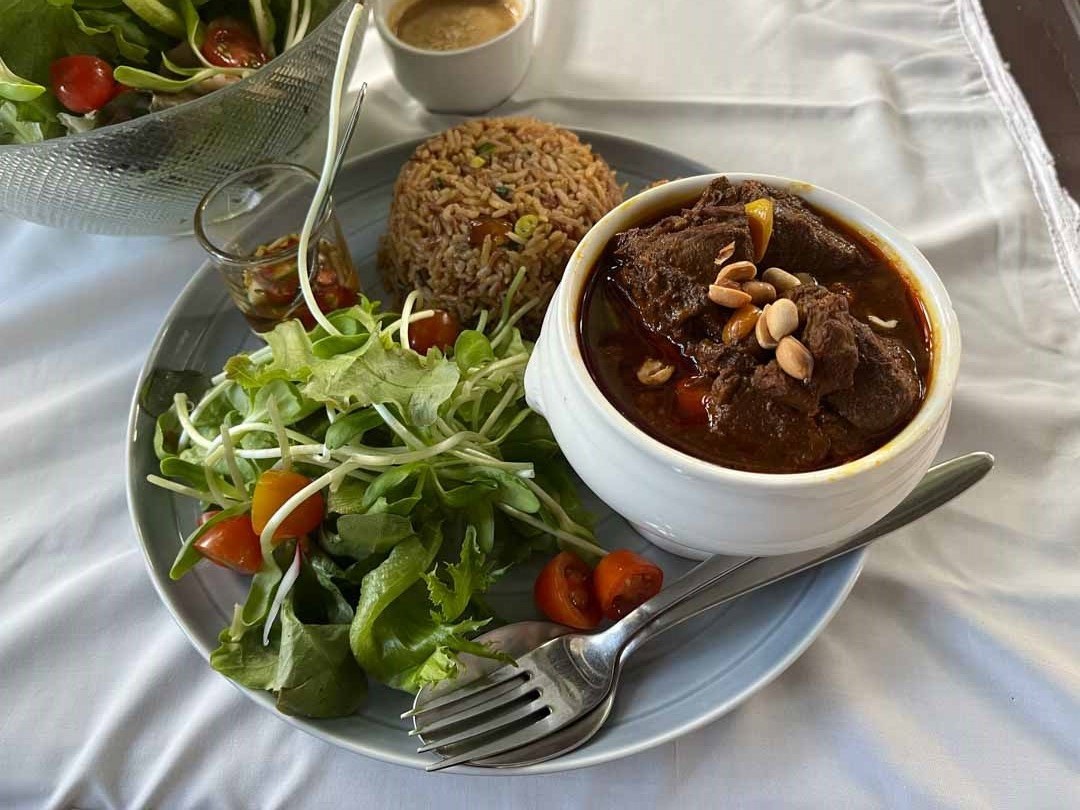 A bowl of northern Thai beef curry with peanuts, fried rice and salad
The Black House (Baan Dam)
Our last stop was the opposite of the White Temple. Baan Dam, often called the Black House or “Black Temple”, is not a temple but a museum created over several decades by the late artist Thawan Duchanee. The park holds around 40 dark wooden buildings in traditional northern Thai style, scattered under big shady trees. It opens from about 9 am to 5 pm and entry was around 80 baht.
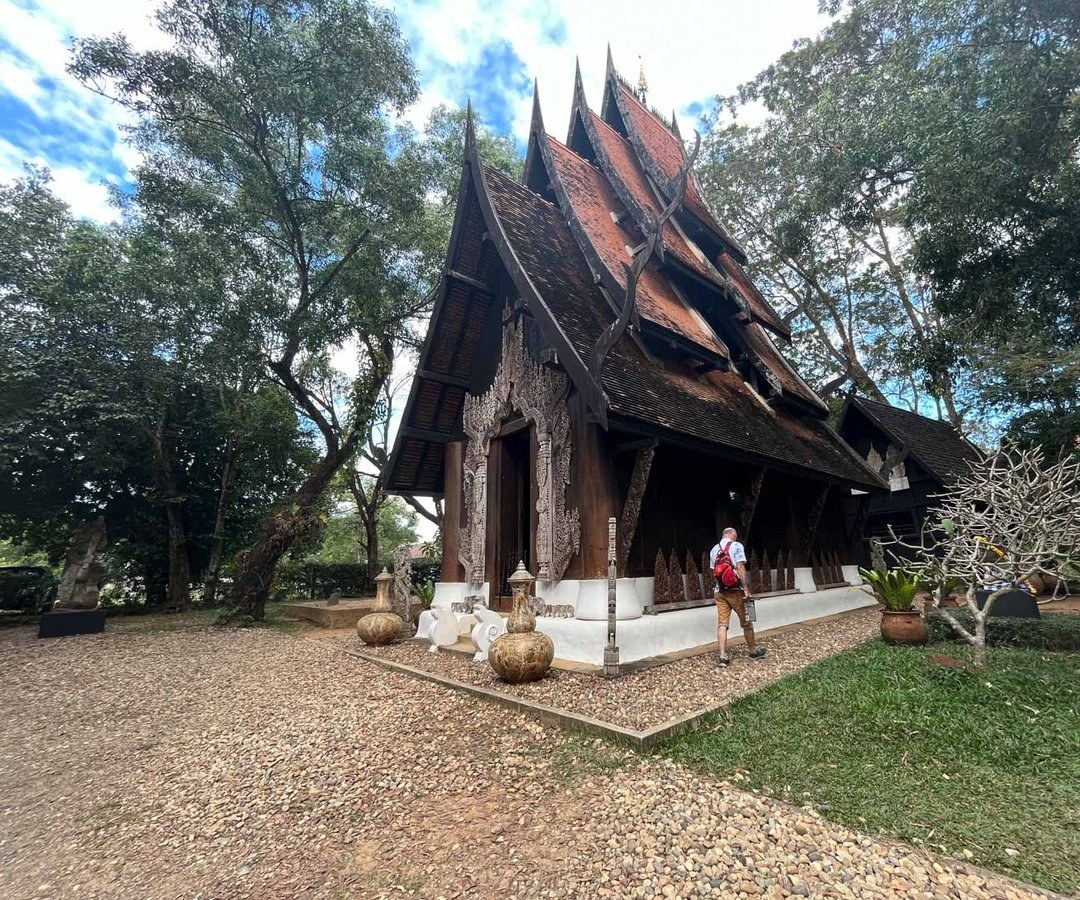 A tall dark teak hall with steep layered roofs at Baan Dam in Chiang Rai
Inside the halls, things get strange. Long wooden tables are covered with crocodile and snake skins, buffalo horns and animal bones, and fertility symbols appear everywhere, even on the toilet signs. In daylight with other visitors around it is more curious than scary, but it is definitely the most unusual museum I have ever visited.
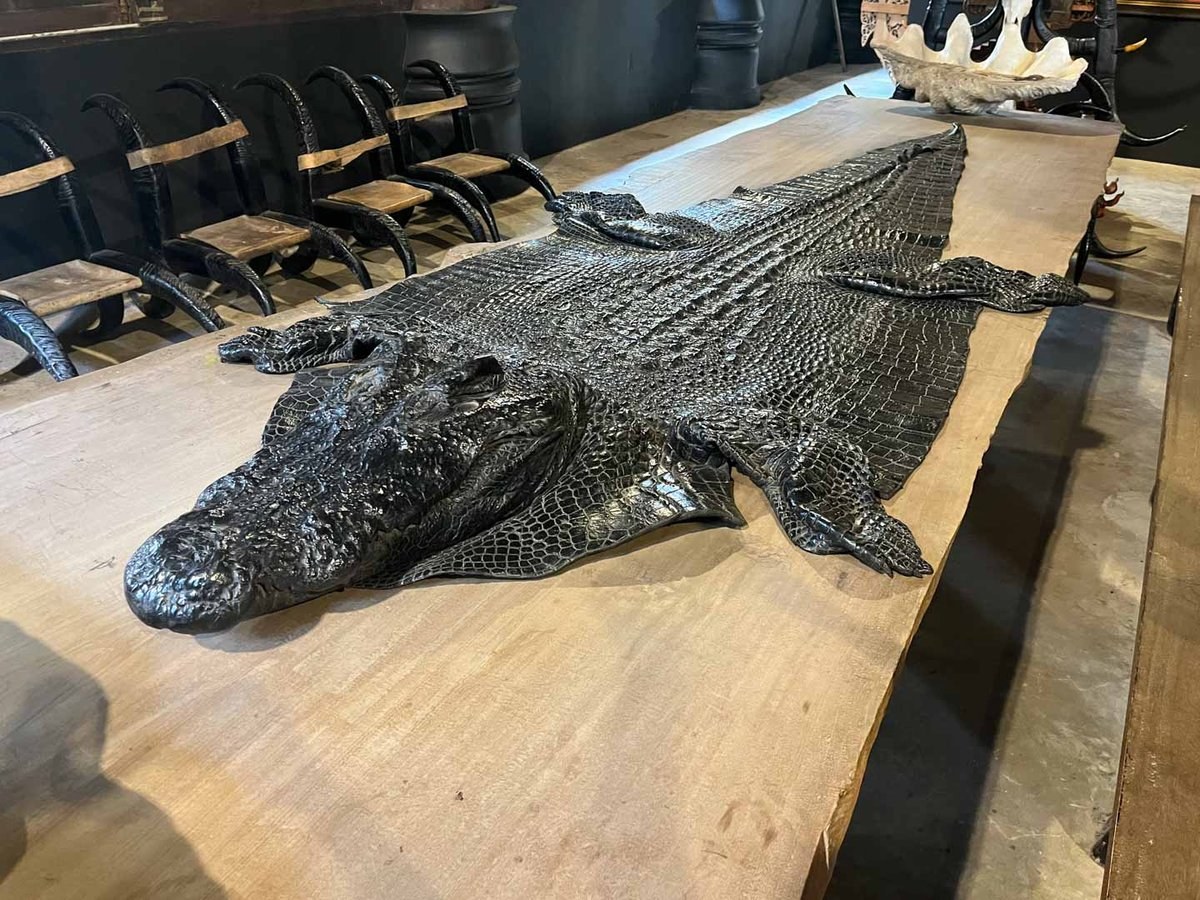 A whole crocodile skin laid along a wooden table inside the Black House
Tips for Visiting
- Go in the cool season. November to February has dry weather, cooler mornings and clearer skies.
- Arrive early at the White Temple. Tour buses arrive by mid-morning and it gets crowded quickly.
- Dress modestly and bring a light scarf or long trousers for the temples.
- Consider staying a night. Doing everything from Chiang Mai means six to seven hours in a vehicle.
Final Thoughts
White, blue and black: three colours, three completely different moods. The White Temple was dazzling, the Blue Temple peaceful and the Black House wonderfully strange. If you are spending time in northern Thailand during the cool months, this day trip is a must, just bring a neck pillow for the ride.