I had walked past pictures of the stone Buddha head wrapped in tree roots for years, on postcards and in half the Bangkok guidebooks I own. This month I finally went to see it. Ayutthaya, the old royal capital of Siam, is only about 90 km north of Bangkok, which makes it one of the easiest day trips from the city. I went on a weekday in early September with a friend, using trains, a river ferry and two rented bicycles, and it was one of the best days of my whole trip.
A Little Bit of History
Ayutthaya was founded in 1350 and grew into one of the richest cities in Asia, trading with China, Japan and Europe. In 1767 it was captured and burned by the Burmese army; temples were looted and many Buddha statues lost their heads. What remains today is a huge field of brick ruins on an island surrounded by rivers, listed by UNESCO as the Ayutthaya Historical Park. Knowing this story beforehand made the broken statues feel far more moving than just “old ruins”.
Getting There From Bangkok
There are three easy ways to go on your own:
- Ordinary train from the old Hua Lamphong station: the cheapest option at around 15–20 baht (≈ $0.50 USD), but it takes about two hours, the seats are hard and there is only fan cooling.
- Express train from Krung Thep Aphiwat Central Terminal (the huge new station at Bang Sue): around 50 minutes in an air-conditioned second-class carriage for a few hundred baht.
- Minivan from Mo Chit 2 bus terminal, about 70–100 baht, with frequent departures but a ride that depends on traffic.
We mixed the first two. In the morning we took an express from Krung Thep Aphiwat, which is so big that station staff zip around on electric scooters. The train was clean, quiet and left on time, and we were even given a free pastry and a carton of juice. In the evening we came back on a slow ordinary train for less than the price of a coffee, windows open and fans spinning.
Ferry and Bicycles: The Best Way to Get Around
The ruins are spread out across the island, more than a kilometre from the station and on the other side of the Pa Sak River, so walking everything is not realistic. Outside the station, tuk-tuk drivers offer hourly charters (roughly 200–300 baht ≈ $6–9 USD per hour, depending on your bargaining). We did what many repeat visitors recommend instead.
Walk straight down the small lane opposite the station and you reach a little pier. Pay 10 baht at the counter, climb down the steps and a long wooden boat takes you across in a couple of minutes. It reminded me a lot of the cross-river ferries back home in the Mekong Delta.
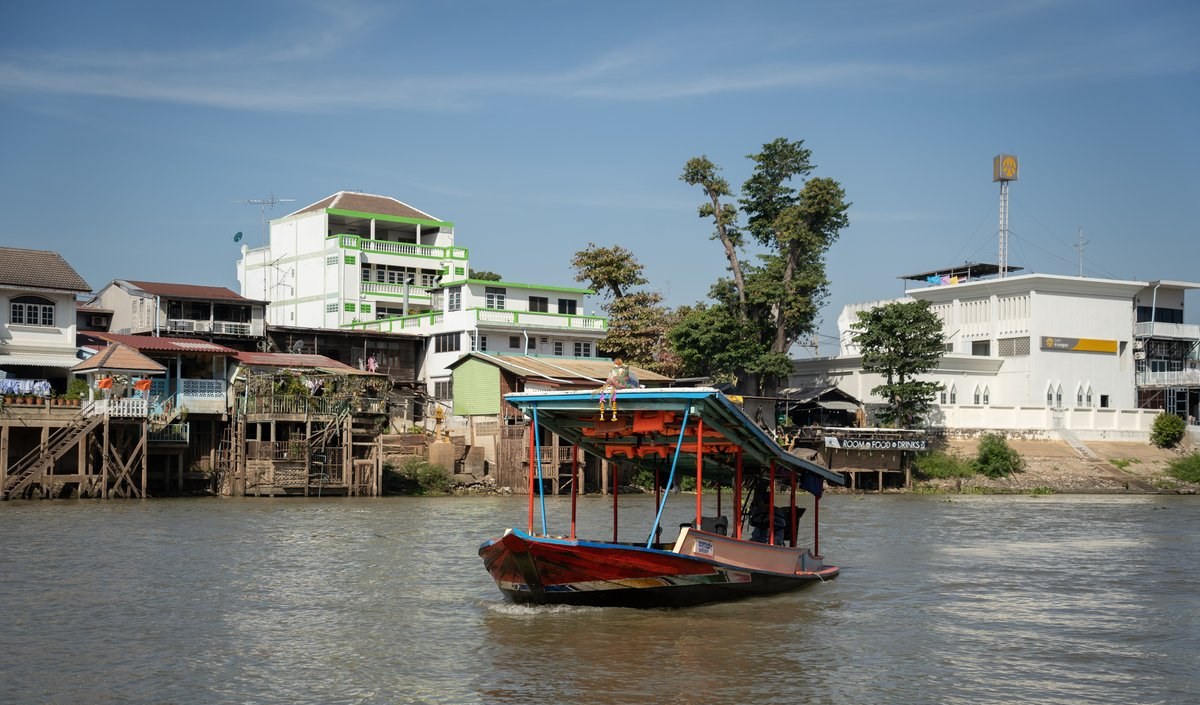 A small wooden ferry boat crossing the Pa Sak River in Ayutthaya
Right at the top of the steps on the other side is a short street of rental shops. A bicycle costs about 60 baht (≈ $1.90 USD) for the whole day, and a scooter around 200 baht if you have a licence. The prices are the same everywhere, so just choose a bike with working brakes. Our shop owner handed us a paper map and drew his favourite route on it with a pen, which turned out to be perfect.
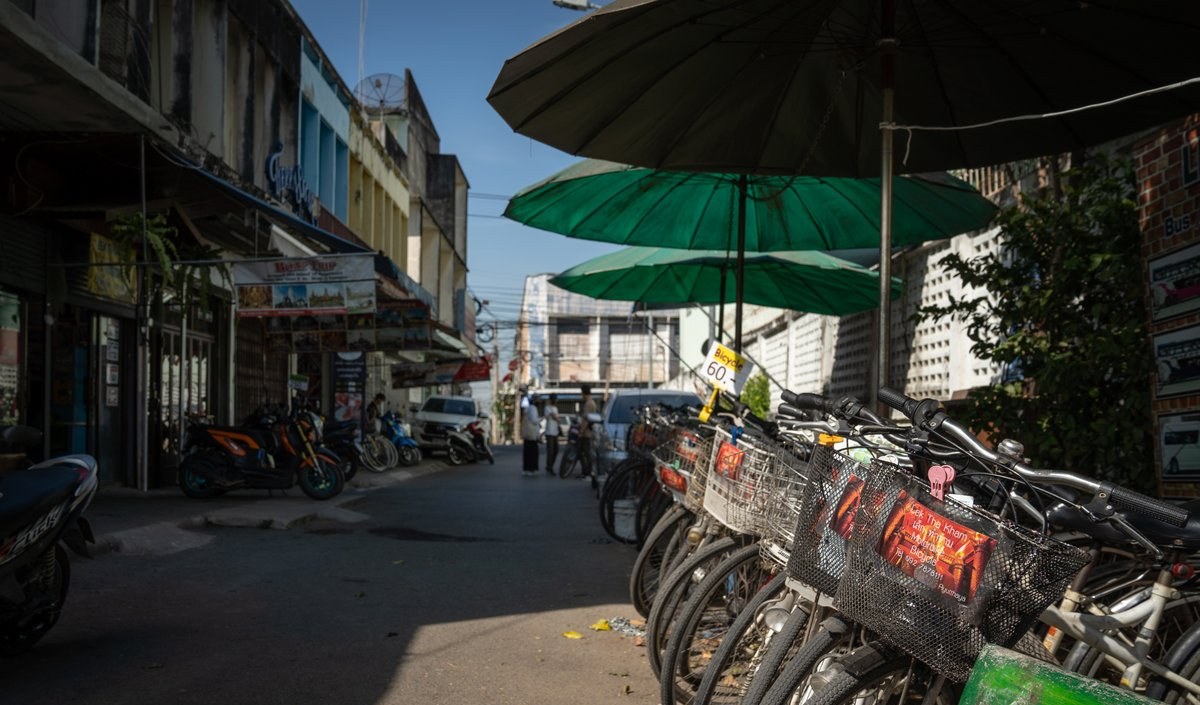 Rows of rental bicycles with baskets on a street near the Ayutthaya ferry pier
The Temples We Visited
There are dozens of ruins, but after three or four you start to feel “temple fatigue”, so it is better to choose a few and take your time. Most major sites charge around 50 baht, some are free, and there is also a combined ticket for several sites.
Wat Mahathat and the Buddha Head in the Tree
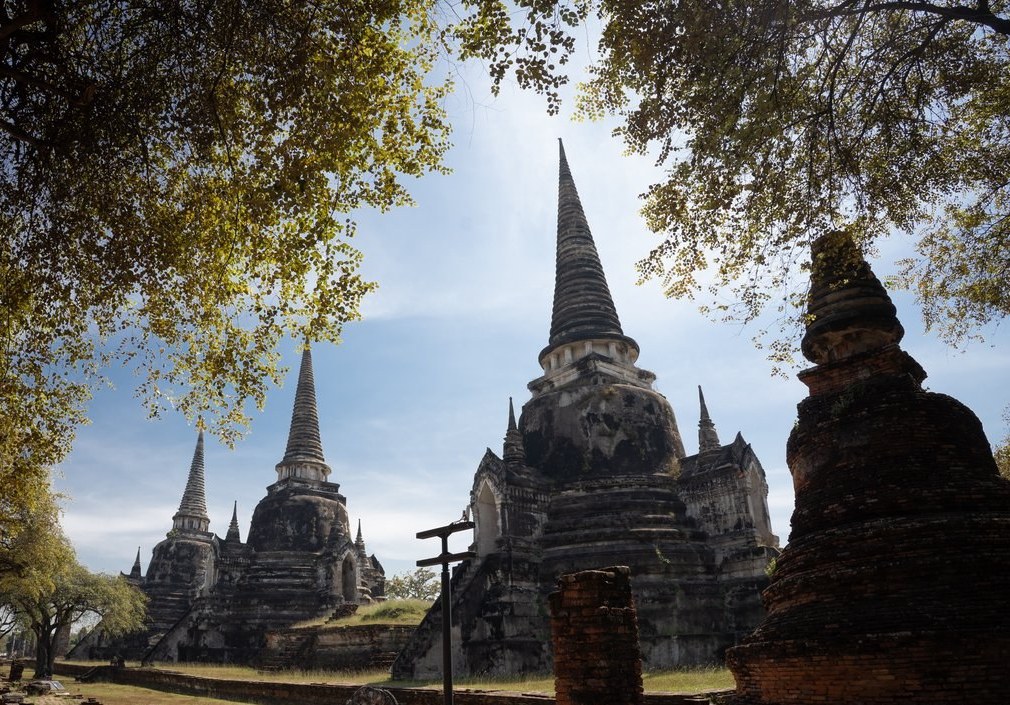
Our first stop was Wat Mahathat (50 baht, open roughly 8 am to 5 pm). The tall brick prangs here are crumbling beautifully, and rows of headless Buddha statues line the old walls.
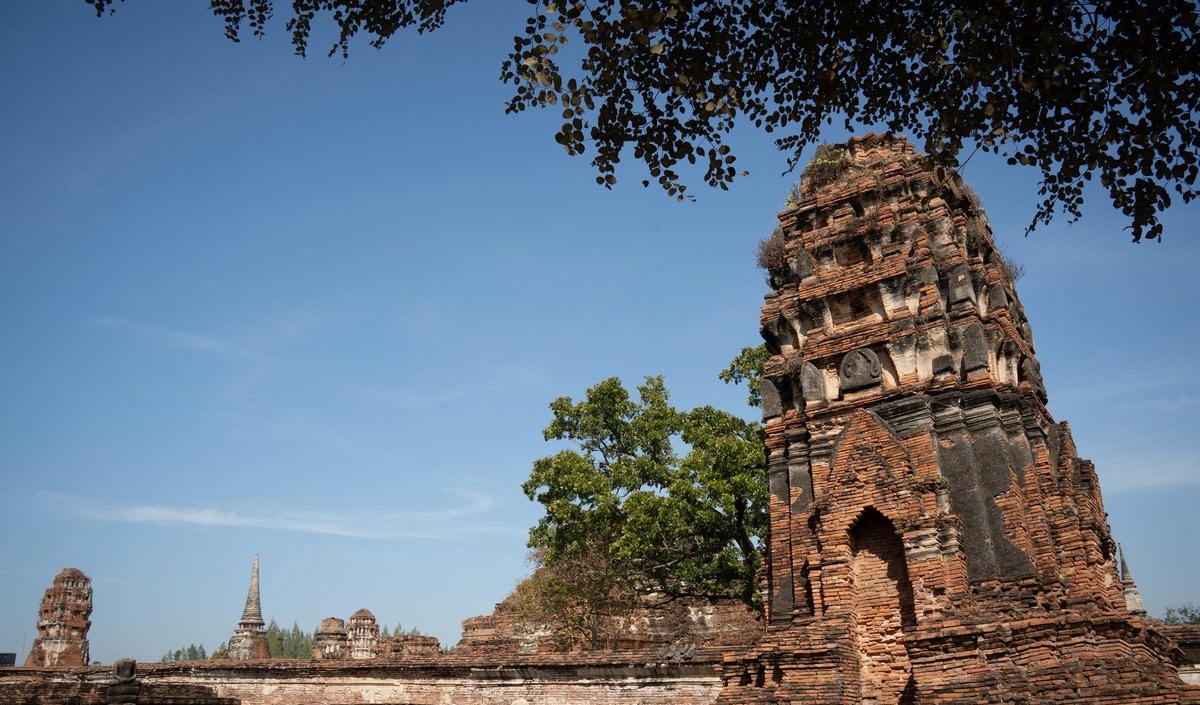 A crumbling brick prang at Wat Mahathat under a blue sky
Then, in a corner of the grounds, there it is: a serene sandstone Buddha head held gently in the roots of a fig tree, which slowly grew around it over the centuries. It is smaller than I expected and more peaceful than any photo shows. One rule matters here: when you take a picture, crouch or sit so that you are never higher than the head.
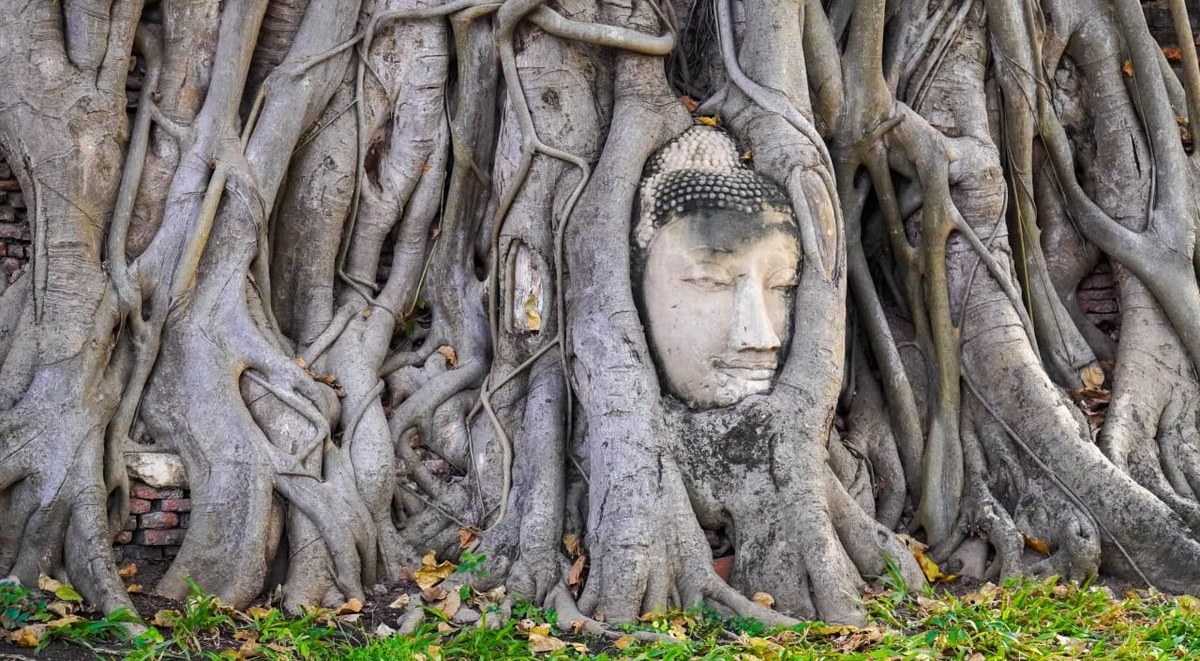 The famous stone Buddha head embraced by tree roots at Wat Mahathat
Wat Phra Si Sanphet
A short ride away is Wat Phra Si Sanphet, which once stood inside the royal palace grounds. Its three huge bell-shaped chedis, built in the late 15th century, are said to have held the ashes of Ayutthaya kings. You can see their spires from all over the park, and the old bases lean in a way that makes them look almost alive.
Wat Lokaya Sutha
Further west is the giant white reclining Buddha of Wat Lokaya Sutha, about 42 metres long and free to visit. There is no hall around it, just the Buddha lying peacefully under the open sky with flower offerings at its side. It felt like the calmest place on the island.
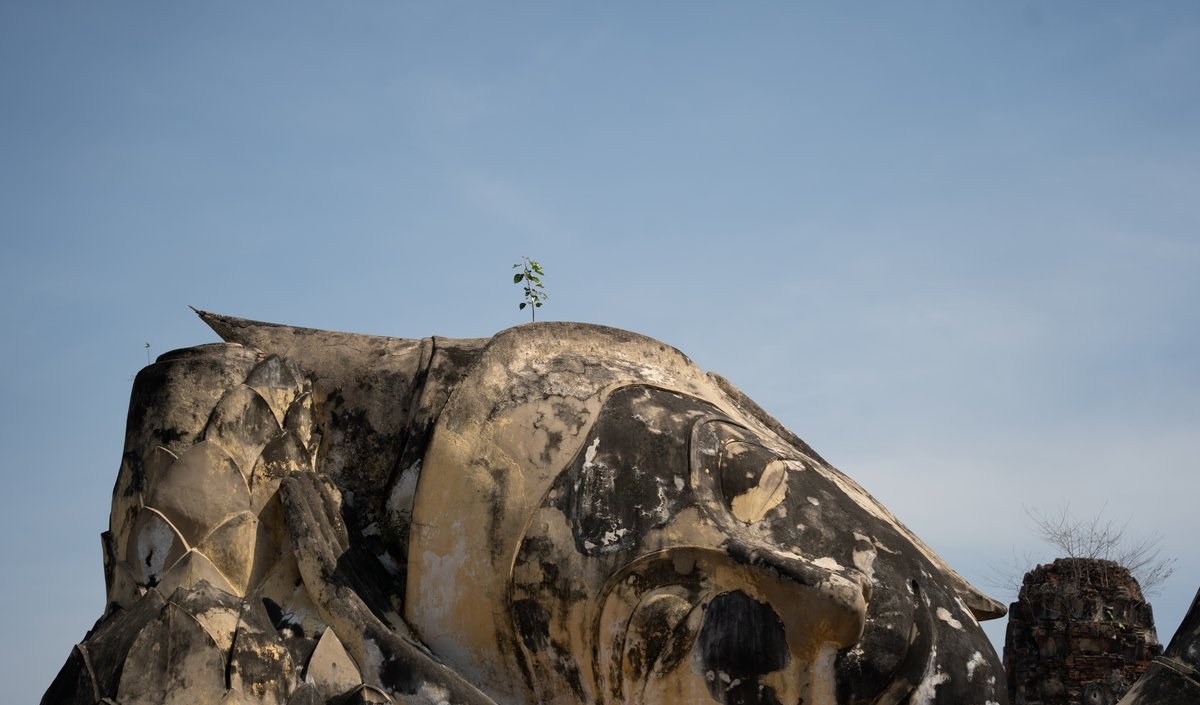 The weathered head of the giant reclining Buddha at Wat Lokaya Sutha
For lunch we stopped at a simple noodle shop inside the park. A small bowl of Thai noodle soup with beef and meatballs was about 40 baht, with a rich, dark broth that I would happily cycle back for.
Sunset at Wat Chaiwatthanaram
We finished at Wat Chaiwatthanaram (50 baht) on the riverbank, a Khmer-style temple whose central prang looks like a small Angkor Wat. September is rainy season, and a heavy shower had chased us under a roof in the afternoon, but the clouds broke just in time and the bricks glowed orange in the last light.
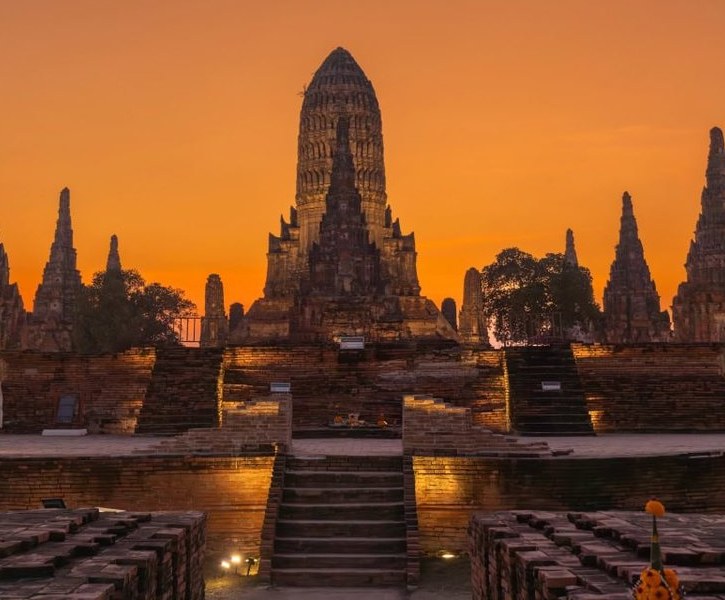 The Khmer-style prangs of Wat Chaiwatthanaram glowing at sunset
Tips for Your Day Trip
- Start early. Shade is rare, so see the main ruins in the morning and rest at lunchtime.
- Dress respectfully. Shorts and T-shirts are fine, but very short or revealing clothes are not, and you should never climb on ruins or statues.
- Bring a rain jacket from June to October and plenty of sunscreen all year round.
- Stay overnight if you can. One night lets you see sunrise, skip the midday heat and visit more temples slowly.
Final Thoughts
Ayutthaya is more than a photo stop for the Buddha head. Cycling slowly between ruins, crossing the river on a 10-baht ferry and sitting in the shade of a 600-year-old wall gave me a real feeling of how grand, and how fragile, this city once was. For the price of a single taxi ride in Bangkok, you get a whole day of history. Next time, I will definitely stay the night.