Growing up in Vietnam, I thought I already knew what a floating market looked like. I have been to Cai Rang in Can Tho, where farmers sell pineapples and pumpkins from heavy wooden boats at sunrise. So when a friend and I had one free day in Bangkok, I was curious to see how the famous Damnoen Saduak Floating Market would compare. We paired it with the Maeklong Railway Market, the place where a real train squeezes through the middle of a market several times a day. It was a long, hot day, but I would happily do it again.
Getting There: Tour or Do It Yourself?
Damnoen Saduak sits in Ratchaburi province, roughly two hours by road west of central Bangkok, and Maeklong is about half an hour away from it in Samut Songkhram. You have three realistic options:
- Public transport: the cheapest way, around 100–200 baht (≈ $3–6 USD) in total, but you need to change buses or vans and it can take two to three hours each way.
- Private car: around 2,000–3,000 baht (≈ $60–90 USD) for the whole car, which makes sense for a family or a group of four.
- Shared day tour: usually 700–1,200 baht (≈ $21–36 USD) per person with transport included.
Because the two markets are best visited in the morning and around midday, we booked a shared tour the night before on a booking app, paying a price near the lower end of that range. Honestly, the transport alone was worth the price.
An Early Start From Siam
We met our guide at 7:00 am in front of a big shopping mall near BTS Siam. Departure times start as early as 7 am, and I picked the earliest slot on purpose: by late April Bangkok already feels like an oven before 10 am. Each of us got a bottle of water, and our guide switched between English and Chinese while telling jokes that he laughed at more than anyone else.
About an hour out of the city we passed flat white salt fields by the road. The guide explained that sea salt is harvested here during the dry season, roughly from November until the rains arrive. We stopped at a petrol station for a ten-minute toilet break and reached Damnoen Saduak at around 9 am.
Damnoen Saduak Floating Market
Before boarding the boats, the tour served a small snack at a long table next to the pier: chilled coconut pudding and short, sweet Thai bananas. After two hours on the bus it was the perfect pick-me-up, and mixing the banana into the pudding was even better.
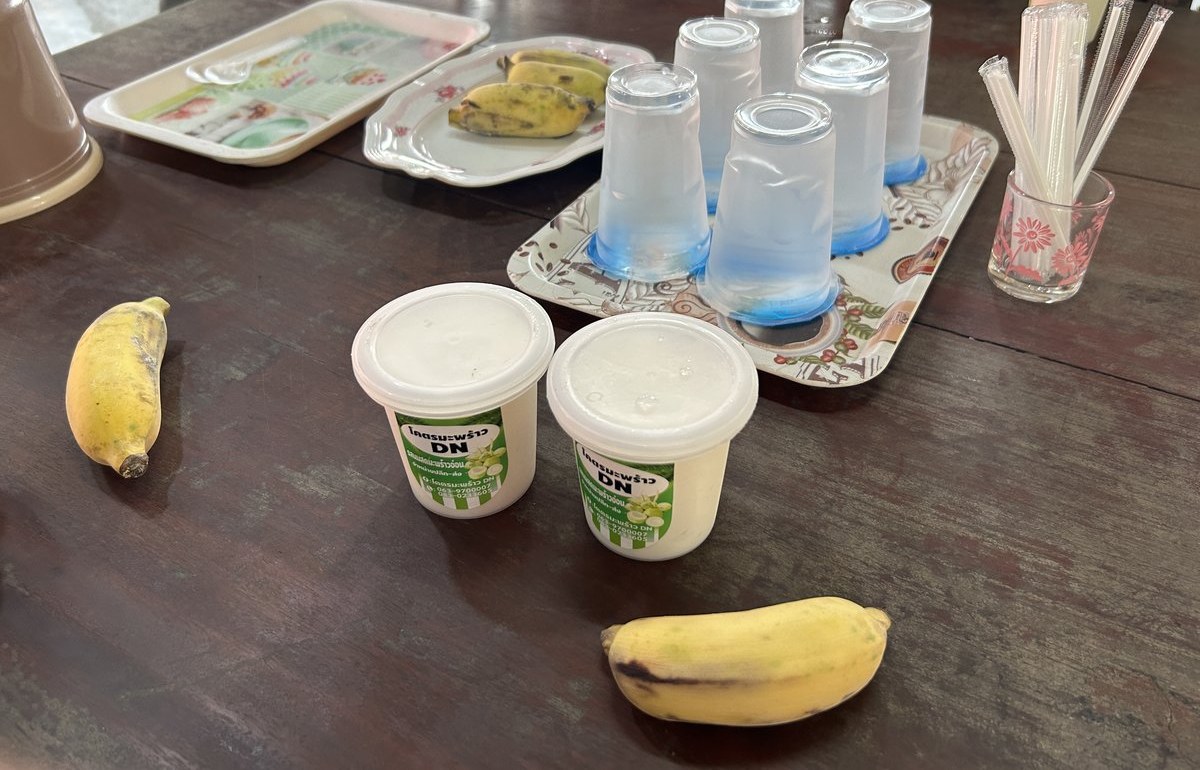 Cups of coconut pudding and small Thai bananas served before the boat ride
The Long-Tail Boat Ride
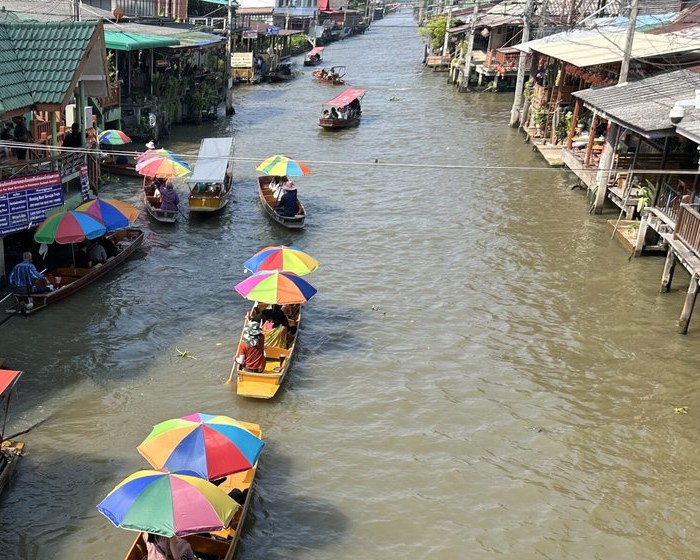
Five or six of us shared a covered long-tail boat, and the ride lasted about 30 minutes. The first stretch is fast and breezy, so bring sunglasses and a hat because of the spray. Then the canal narrows and both banks fill up with souvenir stalls selling hats, bags, wooden carvings and elephant trousers. Our boatman slowed down every time someone looked interested, and at one point he parked us in front of a stall that clearly belonged to someone he knew. We smiled and moved on.
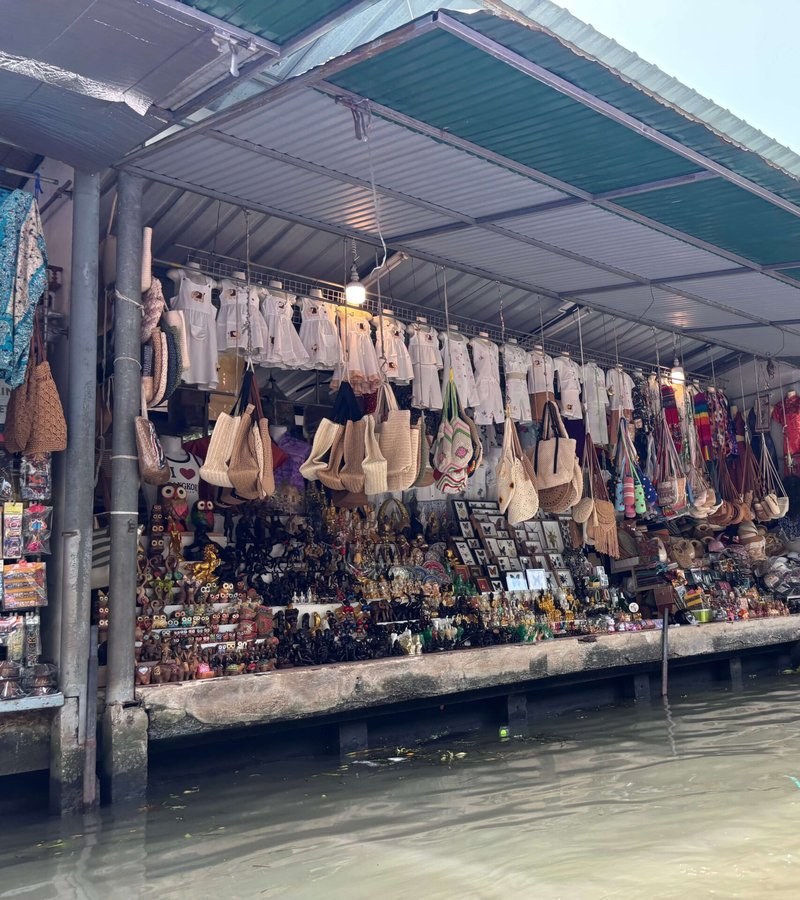 Souvenir stalls with bags and handicrafts lining the canal bank
Compared with Cai Rang, Damnoen Saduak is much more of a tourist show, and nearly everything is priced for visitors. Still, behind the stalls there are real wooden houses on stilts with potted plants, water jars and satellite dishes, and those quiet corners were my favourite part of the ride.
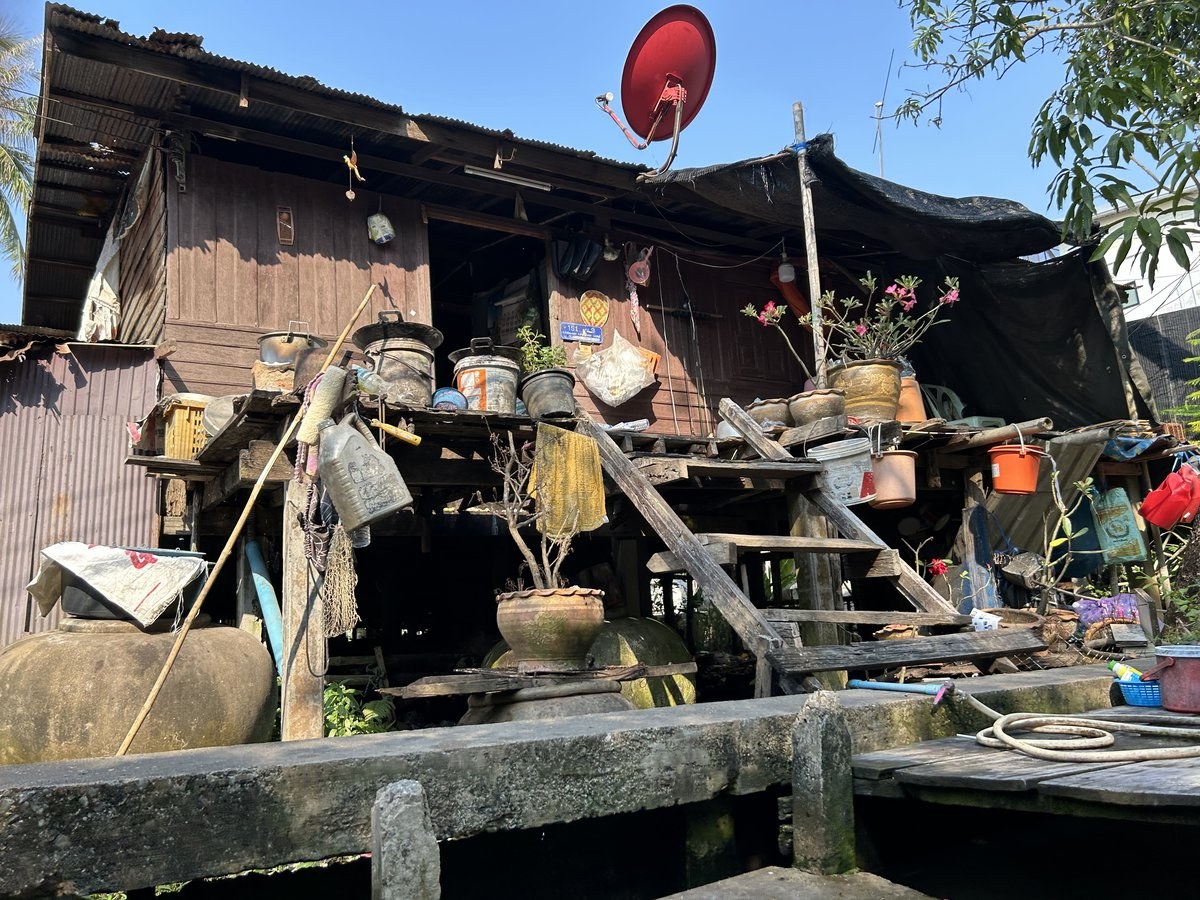 An old wooden stilt house with pots and plants beside the canal
Bargaining and Snacks
Our guide gave two pieces of advice on the bus. First, souvenir prices start about 30 percent high, so offer less and smile; vendors often type numbers on a calculator for you. Food prices, however, are fixed. Second, he did not recommend eating cooked dishes from the boats, because the bowls can only be rinsed in canal water. I compromised with a coconut ice cream (60 baht ≈ $1.80 USD) decorated with a little flower, which was cold, creamy and caused no trouble at all.
After the boat ride we had some free time to walk the riverside paths. The older market near the bridge has more atmosphere, while the newer section across the bridge sells mostly clothes and bags, similar to what you find in Bangkok. We left at 10:30.
Maeklong Railway Market
Half an hour later we were walking along a railway track lined with shops on both sides. Maeklong Railway Market is a working local market built right on an active line, and the train passes about eight times a day (four round trips). Between trains, shoppers stroll along the sleepers past fruit, snacks, clothes and cafés with tables almost touching the rails.
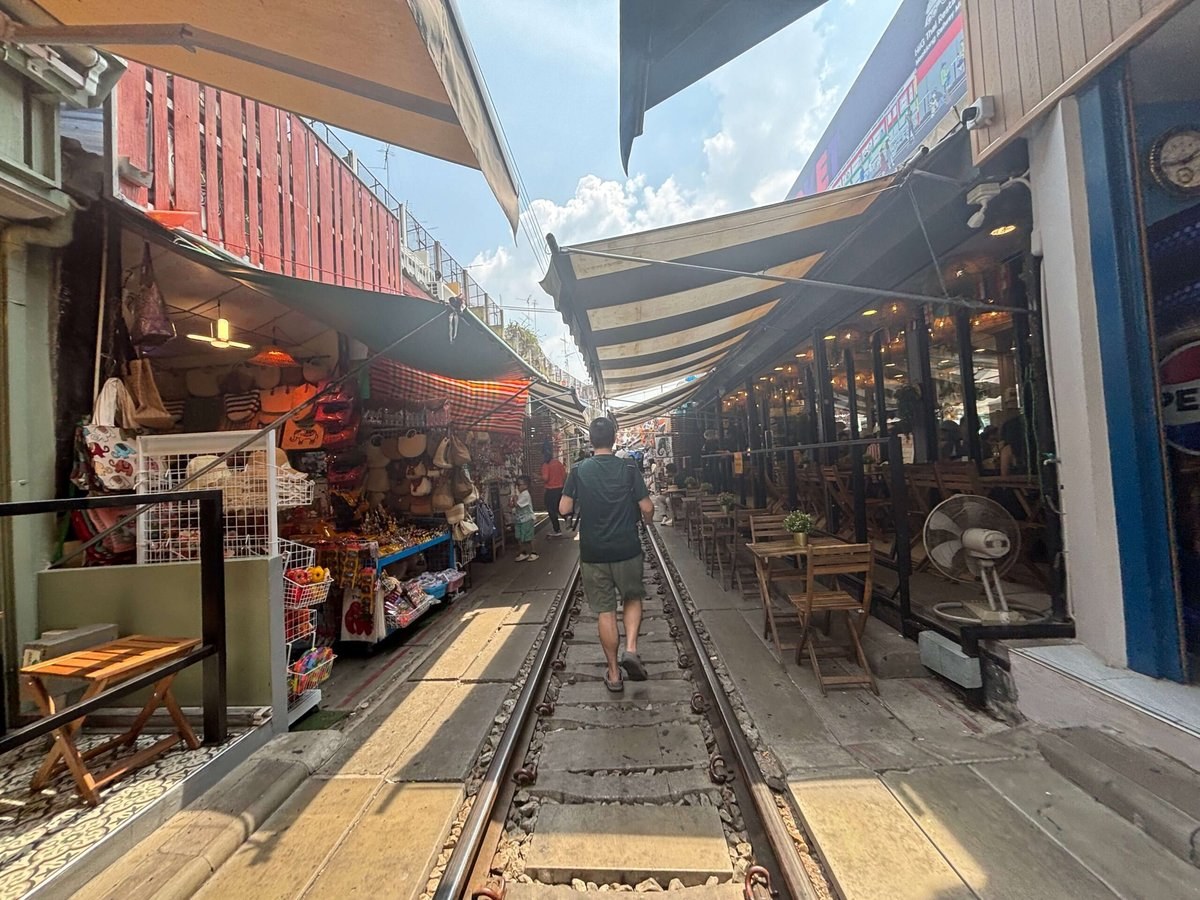 Shops and café tables lining both sides of the railway track at Maeklong market
When the announcement plays, the vendors stay completely calm until the last moment. Then, in a few seconds, the awnings fold up, baskets slide back, and staff stretch ropes to keep tourists behind the white line. The yellow and red train creeps past close enough to touch, and the moment it is gone everything is rolled out again as if nothing happened.
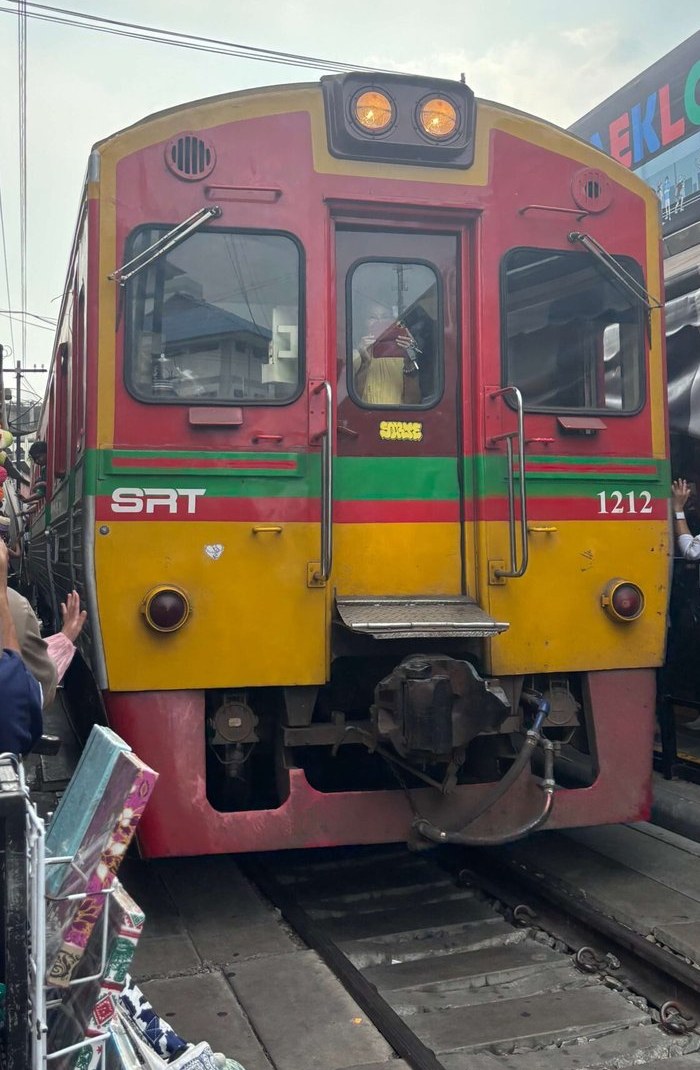 A red and yellow train passing slowly through Maeklong Railway Market
After the train, we walked deeper in towards the station. The far end is the fresh market, with vegetables, dried fish and fermented food, and the smell is strong if you are not used to it. To escape the heat, we sat down in an air-conditioned Thai restaurant near the tracks for a tom yum and a plate of mango sticky rice, then grabbed a huge avocado smoothie for around 50 baht for the ride home.
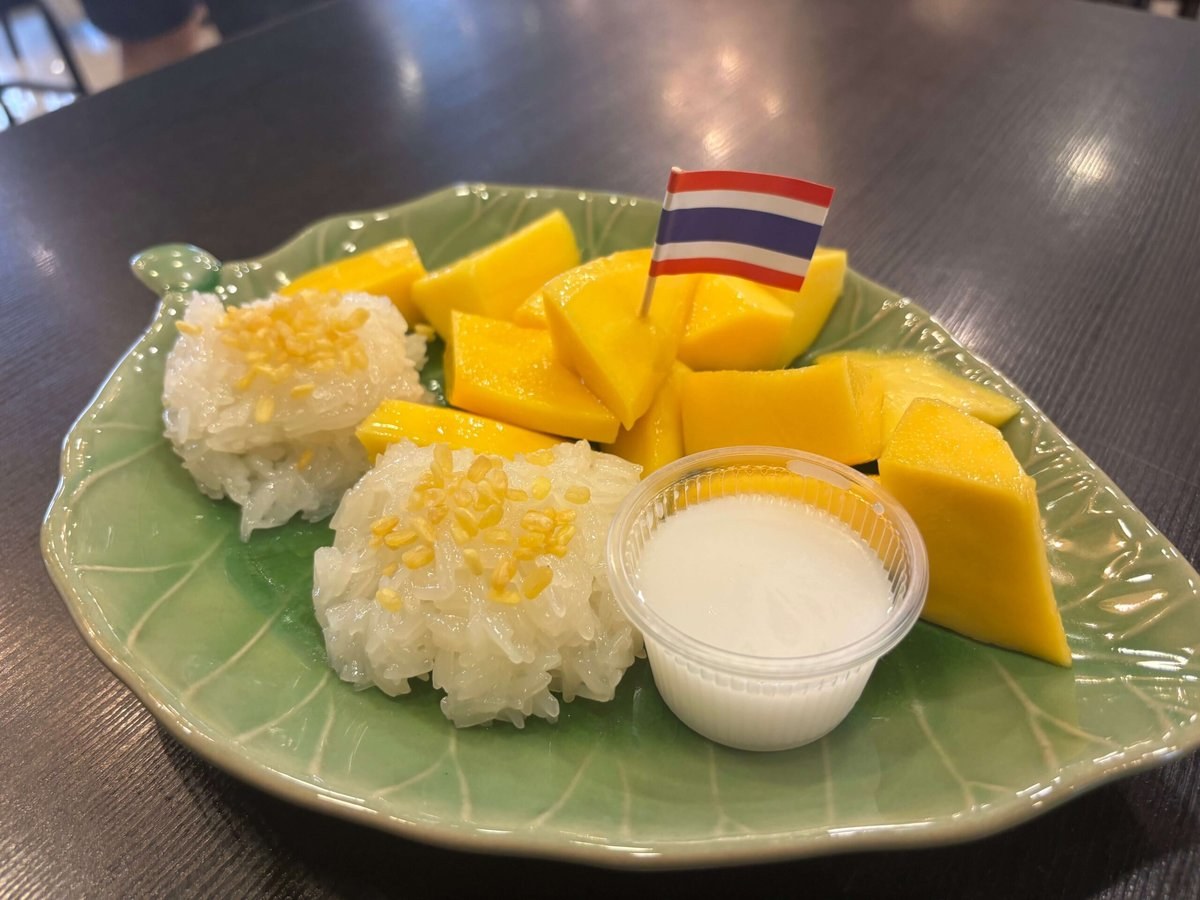 Mango sticky rice with coconut cream served on a leaf-shaped plate
The bus left at 1 pm, handed out frozen towels and sweet Thai mandarins, and we were back in Bangkok around 3:30 pm with the whole evening still free.
Tips for This Day Trip
- Go early. Damnoen Saduak is busiest and most photogenic in the morning, and most stalls close by early afternoon.
- Carry small notes. Toilets at both markets cost a few baht and usually have no paper.
- Watch your bag. The railway market gets packed before each train, so wear your backpack on your front.
- Check the train times on the day if you travel independently, since the schedule can change.
Final Thoughts
Damnoen Saduak is touristy, there is no point pretending otherwise, but gliding down a canal full of rainbow umbrellas is still a fun experience. Maeklong was the real highlight for me: watching a whole market fold itself away for a train and spring back to life seconds later felt like a small piece of street theatre. If you have one spare day in Bangkok, this combination is easy, affordable and a great break from the city.