After a hot and hectic few days in Surabaya, my friend and I wanted somewhere cooler and slower. Everyone we asked gave the same answer: go up to Malang, and then a little higher to Batu. We spent four days between the two in May, right at the start of the dry season, and it turned out to be the most relaxed part of our whole East Java trip.
Malang is a university city with wide streets shaded by huge old rain trees, while Batu sits further up the slopes of Mount Arjuna and feels like a weekend resort town full of theme parks, flower gardens and fruit farms. Together they make a very easy short break.
Getting to Malang
We took a Grab to Purabaya bus terminal on the south side of Surabaya and caught a big intercity bus to Malang. The ticket was about Rp40,000 (≈ $2.50 USD) and the ride took roughly an hour and a half on a good toll road. The bus was a bit old but clean.
The first thing I noticed when we got off was the air. Malang is not cold during the day, but the evenings are fresh enough that I finally used the light jacket I had carried around Java for a week.
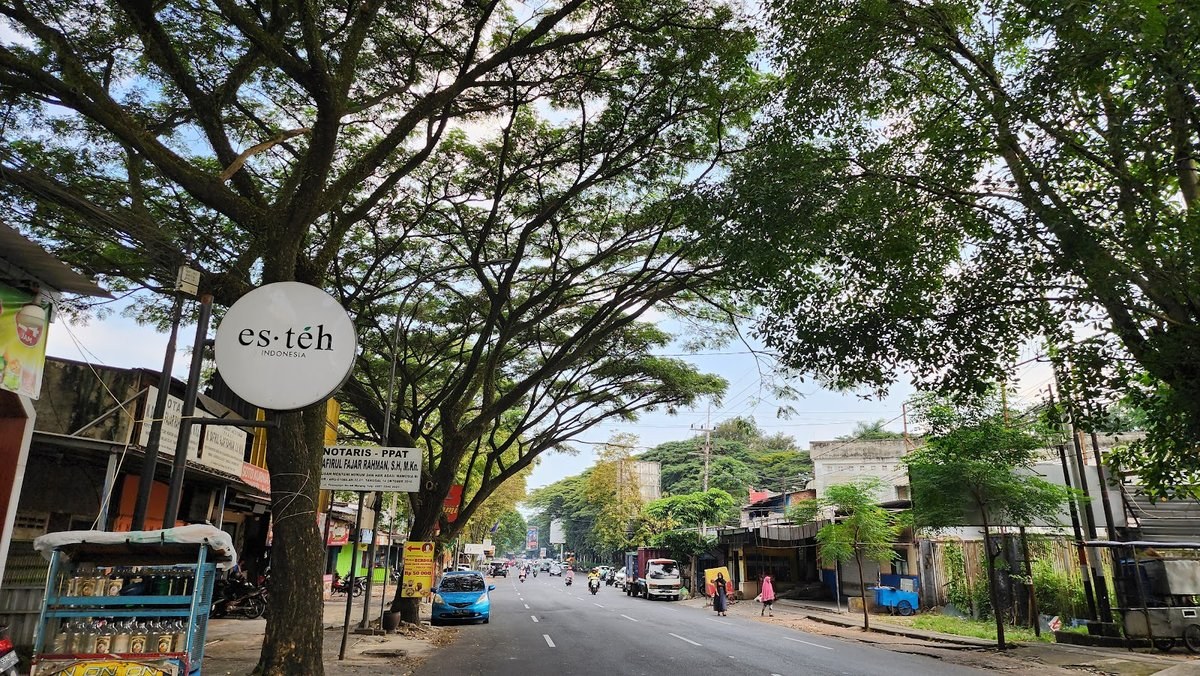 A wide street in Malang shaded by giant rain trees
A Slow Day in Malang City
Jodipan, the Rainbow Village
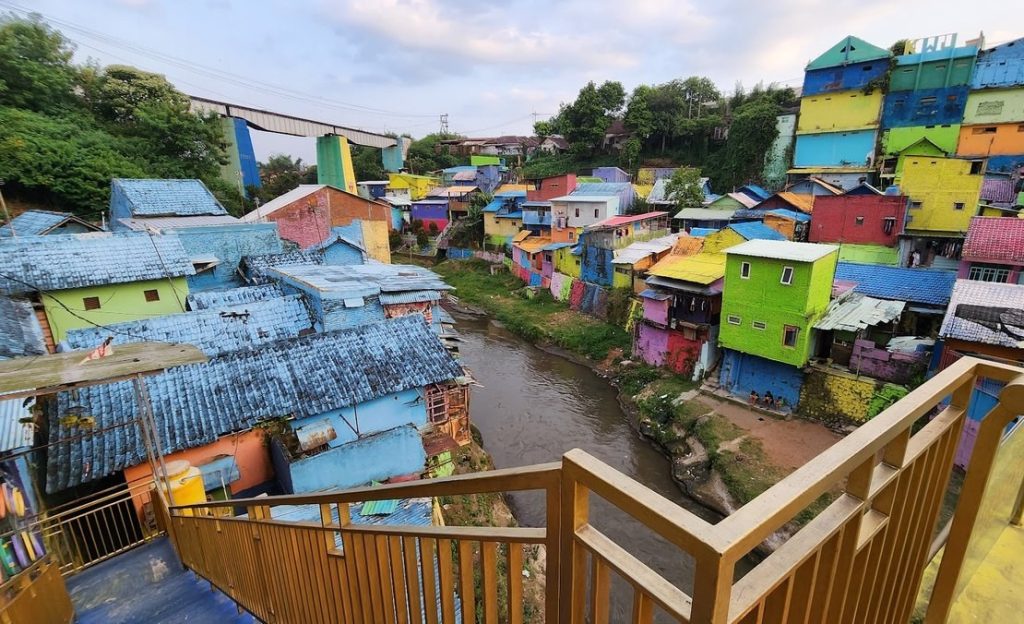
The place everyone photographs in Malang is Kampung Warna-Warni Jodipan, the colourful village on the banks of the Brantas River. Not long ago this was a crowded, rubbish-filled riverside slum. A group of local university students came up with the idea of cleaning it up and painting every house in bright colours, with paint donated by sponsors. It worked so well that the neighbouring Kampung Tridi and the blue village next door were painted too, so that both sides of the river would look good.
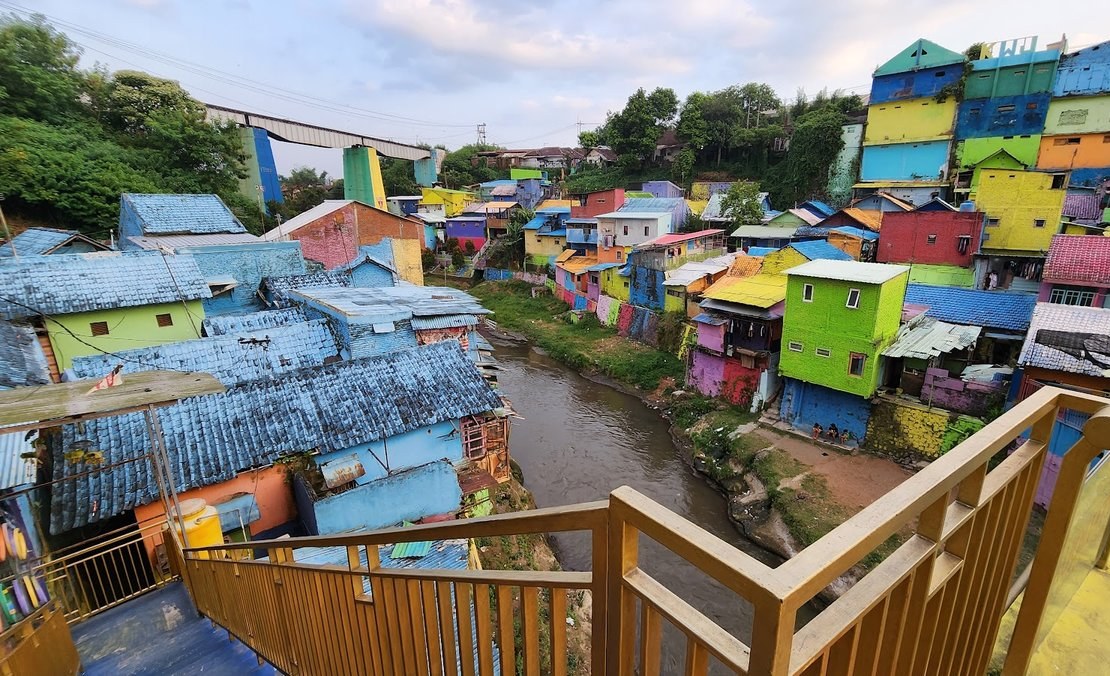 Brightly painted houses of Jodipan rainbow village stacked along the Brantas River
It is only about ten minutes on foot from Malang train station. There are several entrances, and each village collects its own small ticket, from a few thousand up to about Rp10,000 (≈ $0.60 USD). The money goes back into the community. The highlight is the yellow footbridge with a glass strip in the middle, which links Jodipan and Tridi and gives you a view of the whole colourful hillside.
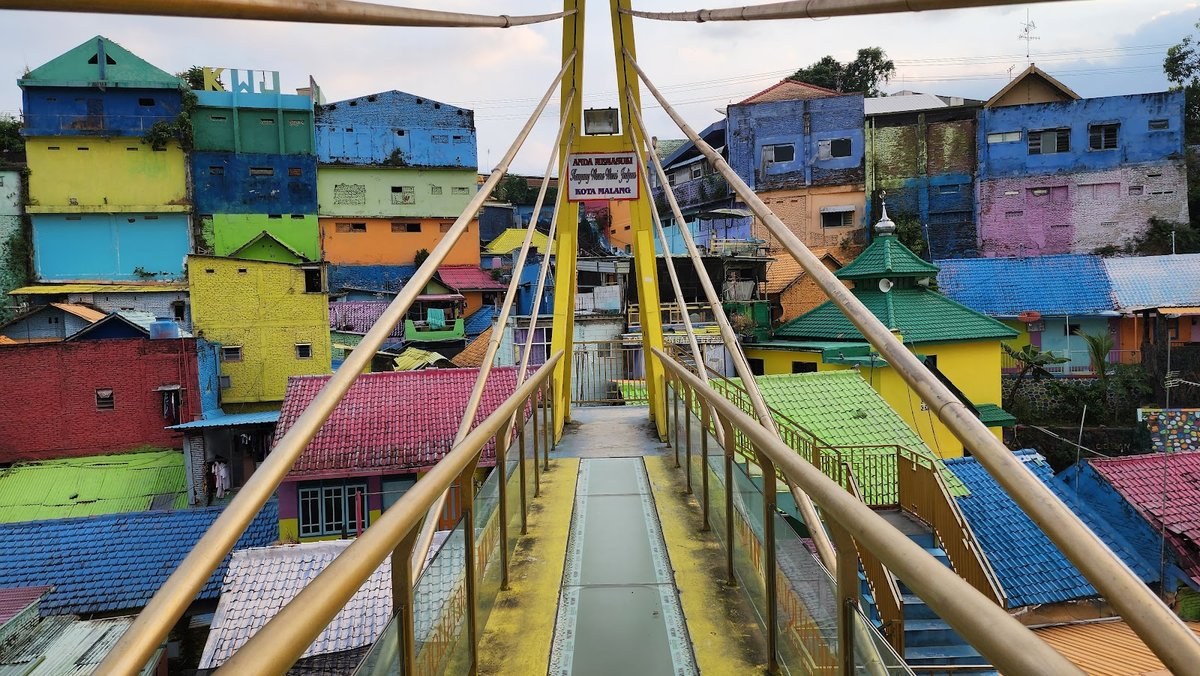 Yellow footbridge with a glass walkway crossing to Kampung Tridi in Malang
Remember that people really live here. We kept our voices down in the narrow lanes and bought cold drinks from the residents who sell them from their front doors, which was very welcome because the sun was strong by late morning. The villages are open roughly from 7 am to 5 pm, and a weekday morning is the quietest time.
Kayutangan and an Ice Cream at Toko Oen
In the afternoon we wandered around Kampoeng Heritage Kayutangan, an old neighbourhood of Dutch-era houses and narrow alleys that has been turned into a pleasant walking area with small cafés. Nearby, Pasar Klojen is a tidy traditional market that is good for trying local snacks.
We finished at Toko Oen, a legendary café from the colonial period with an old-fashioned interior and a classic menu. Their ice cream is the thing to order, and sitting in that old room with a cold scoop felt like a small trip back in time.
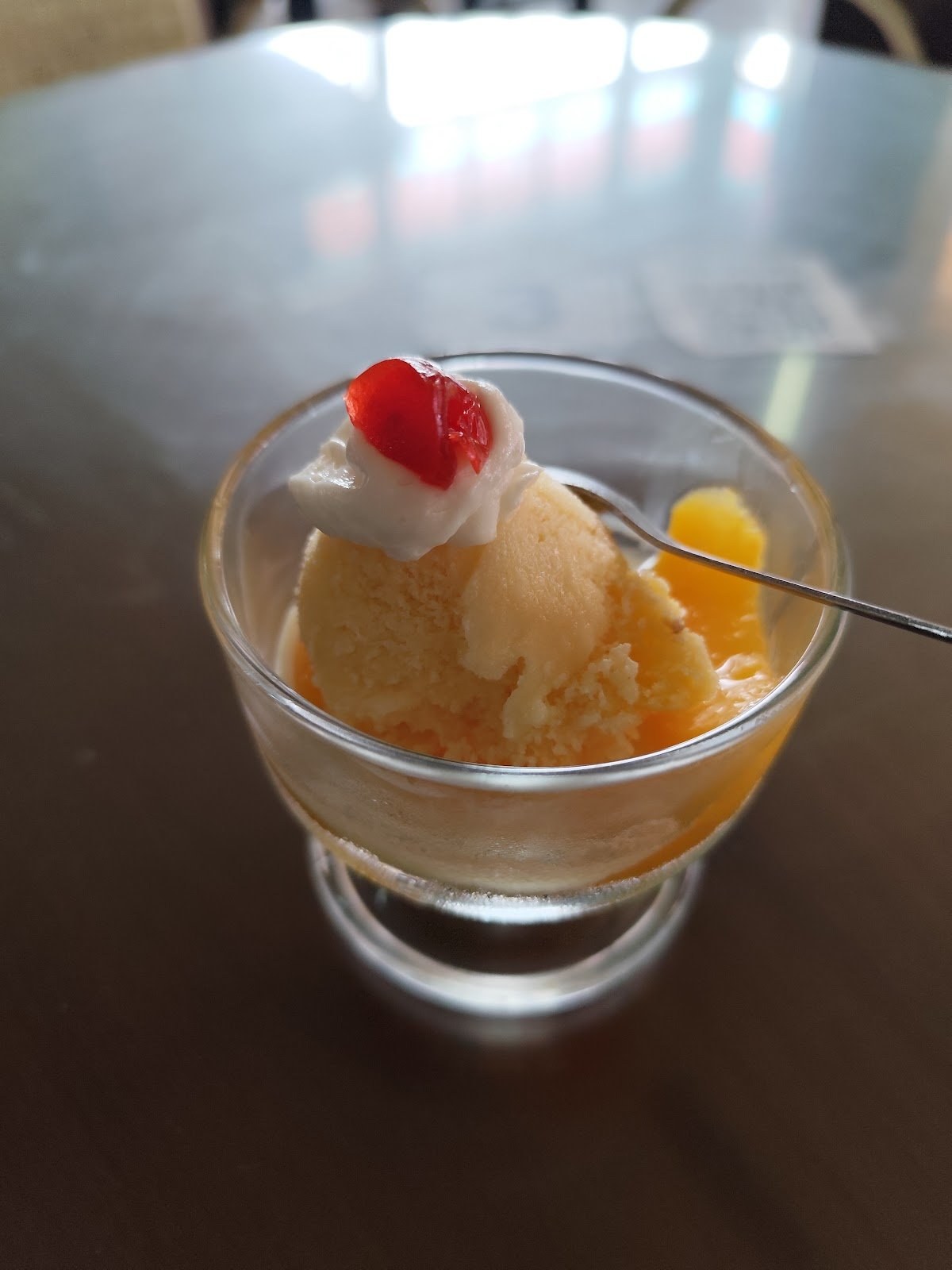 A glass cup of homemade ice cream at Toko Oen cafe in Malang
Up the Hill to Batu
Batu is less than an hour from Malang by car, and once you are there everything is close together. Our hotel did not even need air-conditioning; at night we simply opened the balcony door. In the evening we went to Bukit Bintang, a grassy hilltop where the lights of the valley below look like stars. Entry is free, you just pay for parking, and you can rent a mat to sit on for about Rp5,000. Stalls sell hot drinks, which you will need after dark.
Fruit Picking at Kusuma Agrowisata
Batu is famous for its apples, and on every road out of town you see signs and touts offering apple-picking tours. We went to Kusuma Agrowisata, a fruit farm and agro-park just outside the town centre. What you can pick depends on the season; the package with two kinds of fruit cost about Rp80,000 (≈ $5 USD) and included a fresh juice and entry to a garden area with photo spots. A staff member walks you through the orchard and helps you choose ripe fruit.
Selecta Flower Garden
The next morning we drove about 30 minutes to Selecta, an old hillside park famous for its flowers. Entry was around Rp40,000 (≈ $2.50 USD). It is not huge, but the terraced flower beds against the forested hills are lovely, and the hydrangeas in every shade of pink and blue were the best I have ever seen. If you want a view from above, the Sky Bike costs about Rp20,000 for two people.
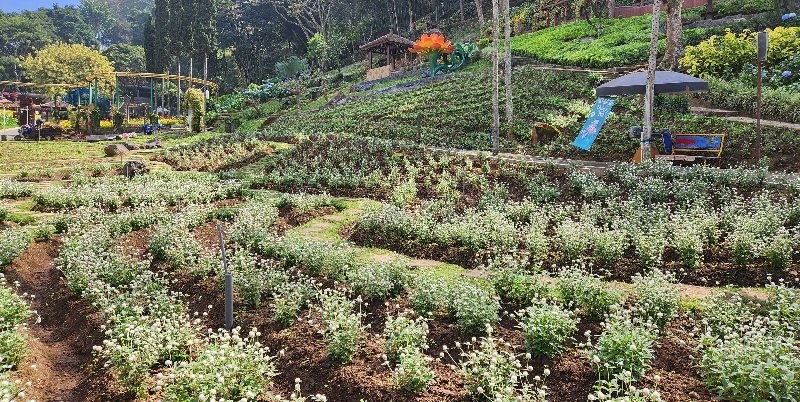 Terraced flower beds on the hillside at Selecta park in Batu
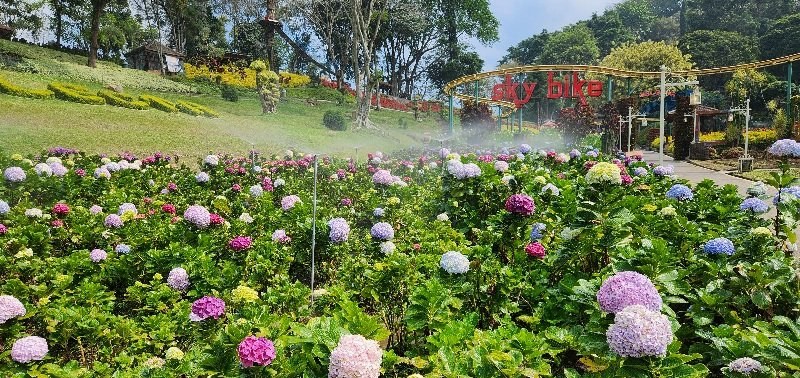 Pink, purple and blue hydrangeas with sprinklers at Selecta flower garden
Museum Angkut and Jatim Park 3
Museum Angkut is a giant transport museum, and do not judge it by the first hall. Behind it are themed zones for old Batavia, Chinatown, Europe and Hollywood, packed with vintage cars, bicycles, horse carts and even aircraft. Weekday tickets were about Rp100,000 (≈ $6 USD) and a little more at weekends. The exit leads to Pasar Apung, a floating food court with dishes from several countries.
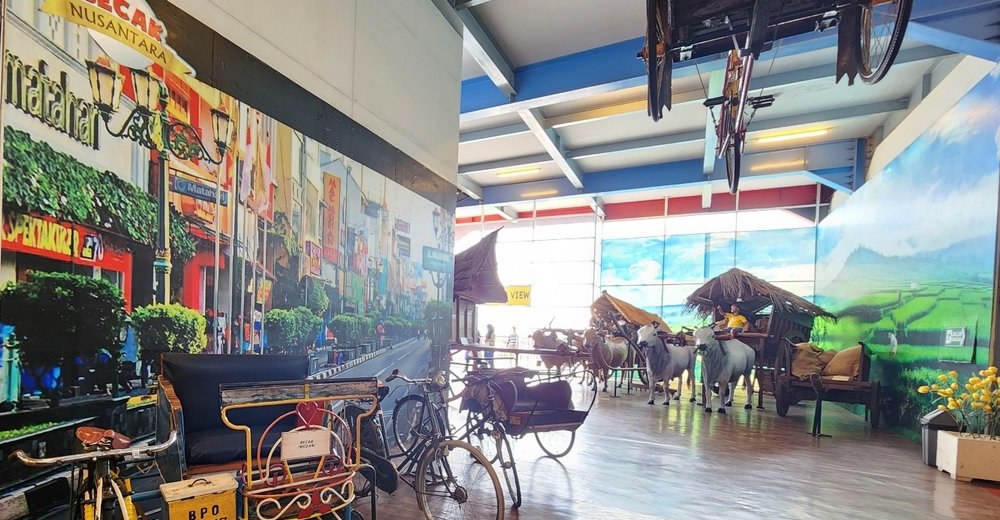 Old bicycles, a pedicab and ox carts on display at Museum Angkut in Batu
On our last afternoon we tried Jatim Park 3, which starts inside a mall-like building and then opens into a big dinosaur-themed park. A combo ticket for the Dino Park and The Legend Star was about Rp140,000 (≈ $8.50 USD) on a weekday. It is aimed at families, but I enjoyed the skeleton hall and the boat ride past robot dinosaurs.
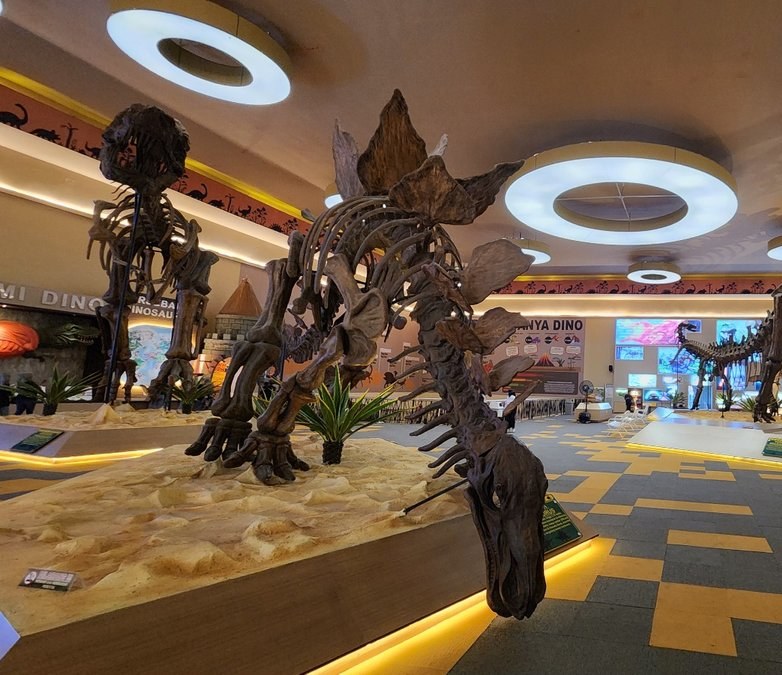 Dinosaur skeleton replicas in the hall of Jatim Park 3 in Batu
Tips for Malang and Batu
- Go in the dry season. From around May to October the mornings are clear, but nights in Batu can feel cold, so bring a jacket.
- Use Malang as a base for the city, Batu for the parks. Two nights in each is ideal.
- Visit on weekdays. Batu fills up with families from Surabaya at weekends and on school holidays.
- Check opening hours. Museum Angkut and Jatim Park 3 open around midday, so do farms and gardens first.
- Carry small notes. Village entrances, parking and mat rentals are all paid in cash.
Final Thoughts
Malang and Batu are not as famous abroad as Bali or Bromo, but they were the perfect pause in a busy trip: cool air, colourful streets, flowers, fruit and a little silly theme-park fun. Next time I want to come back for the apple harvest and spend a whole day doing nothing but eating.