Everyone told me Bali was too crowded in July and August, and that the best escape was just one boat ride east. So this year, at the height of the dry season, my friend and I skipped most of Bali and went straight to the Gili Islands and Lombok. Six days of clear skies, calm sea, turtles and almost no traffic noise later, I think they were right.
Getting There
There are no direct flights from Vietnam, so we flew into Bali first. From there you have two choices. You can take a short domestic flight to Lombok, drive about 60 kilometres to Bangsal harbour and then cross to the islands in 10 to 20 minutes. Or you can take a fast boat straight from Bali. We did the second: a fast boat from Padang Bai to Gili Trawangan cost us around Rp385,000 (about $24 USD) one way and took roughly two and a half hours. Book a bigger boat and sit at the back if you get seasick, because even in the dry season the crossing can be bumpy.
The Three Gilis
The Gilis are three small, flat coral islands off the north-west coast of Lombok, and each has its own personality:
- Gili Trawangan (Gili T) is the biggest and liveliest, with the most restaurants, bars and dive shops.
- Gili Air is calmer, with lots of pretty resorts at reasonable prices.
- Gili Meno is the most untouched, with only a few resorts and restaurants.
The best thing about all three is the silence. There are no cars or motorbikes. People get around by bicycle, on foot or by cidomo, the little horse-drawn carts. Bikes can be rented almost everywhere for around Rp50,000 a day (about $3 USD), and cycling all the way around one island takes an hour or so. Some inland tracks are sandy and rough, so expect to push the bike now and then. A cidomo loop around Gili T takes about half an hour and costs a few hundred thousand rupiah.
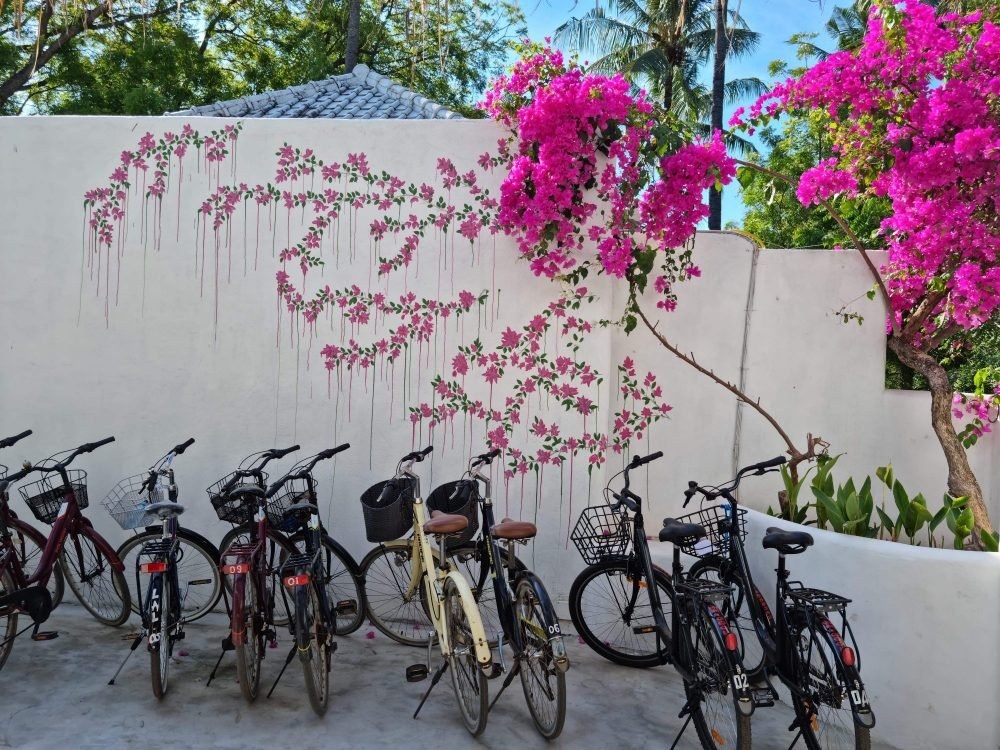 Rental bicycles parked in front of a white wall with pink bougainvillea on Gili Air
Moving between the islands is easy. Each one has a small harbour with public boats, the timetable is written on a board, and a hop costs around Rp20,000 and takes 10 to 20 minutes. Just check the time of the last boat so you do not get stuck.
Snorkelling With Turtles
The main reason most people come to the Gilis is under the water. On Gili T there are several turtle points close to the beach, and in the morning you can often see green turtles swimming right below you just a few metres from the sand. On our first afternoon the tide was low and I did not expect anything, but a turtle glided past almost as soon as I put my face in the water. Shops along the main road rent masks, fins, life jackets, waterproof bags and even GoPros. Bring or rent reef shoes: I cut my ankle on the coral on day one.
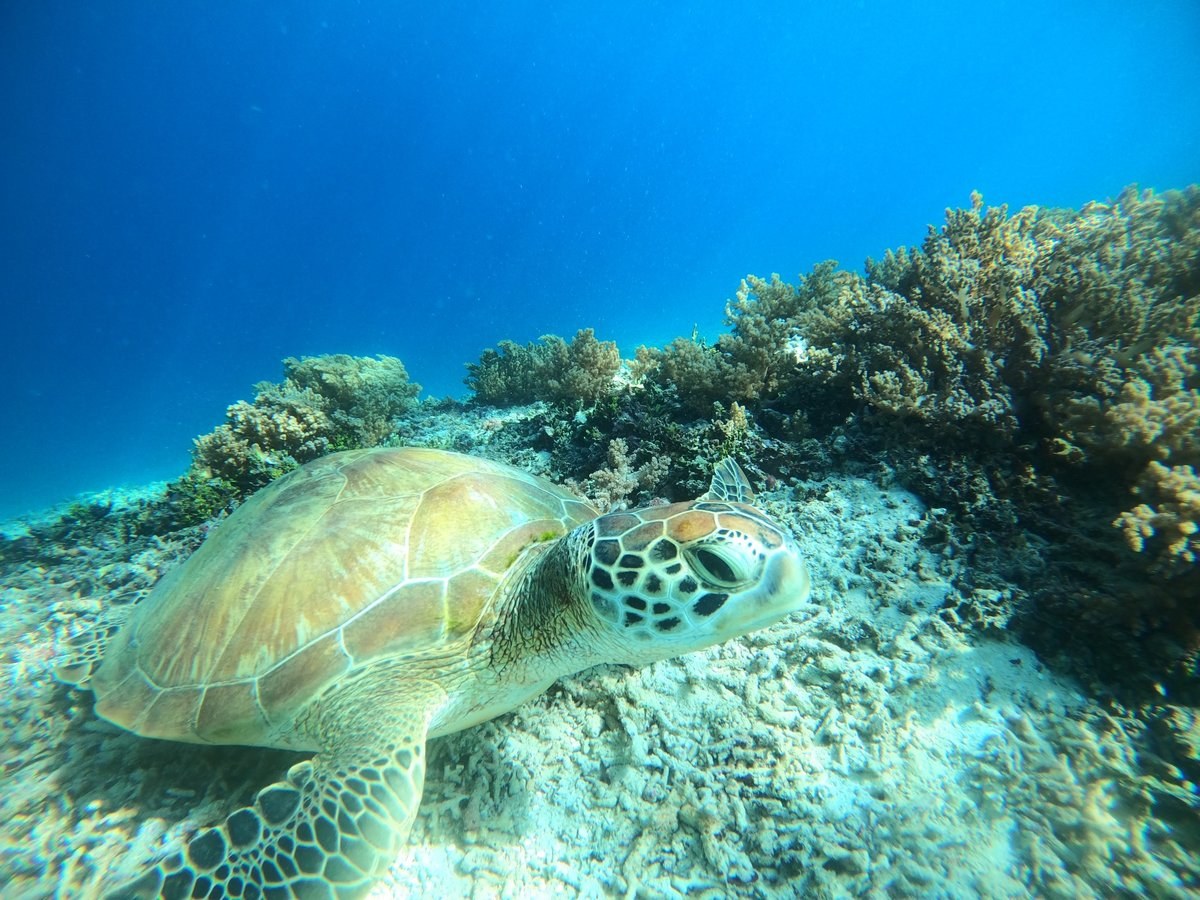 A green sea turtle resting on the coral reef off Gili Trawangan
On day two we joined a boat trip around all three islands. Shared tours cost around Rp200,000 per person (about $12 USD), while a private boat is roughly Rp900,000 to Rp1,000,000 for the whole group, usually including gear and a guide who films you with a GoPro. Many boats have a glass bottom, so you can watch the coral pass beneath your feet between stops. Our route covered three classic spots:
- The fish garden off Gili Air, full of colourful tropical fish and coral.
- The turtle point off Gili Trawangan, where we met turtles again within minutes.
- The underwater statues off Gili Meno, a ring of human-sized sculptures slowly being covered by coral. It is the most crowded spot and the current can be strong, so stay close to your guide.
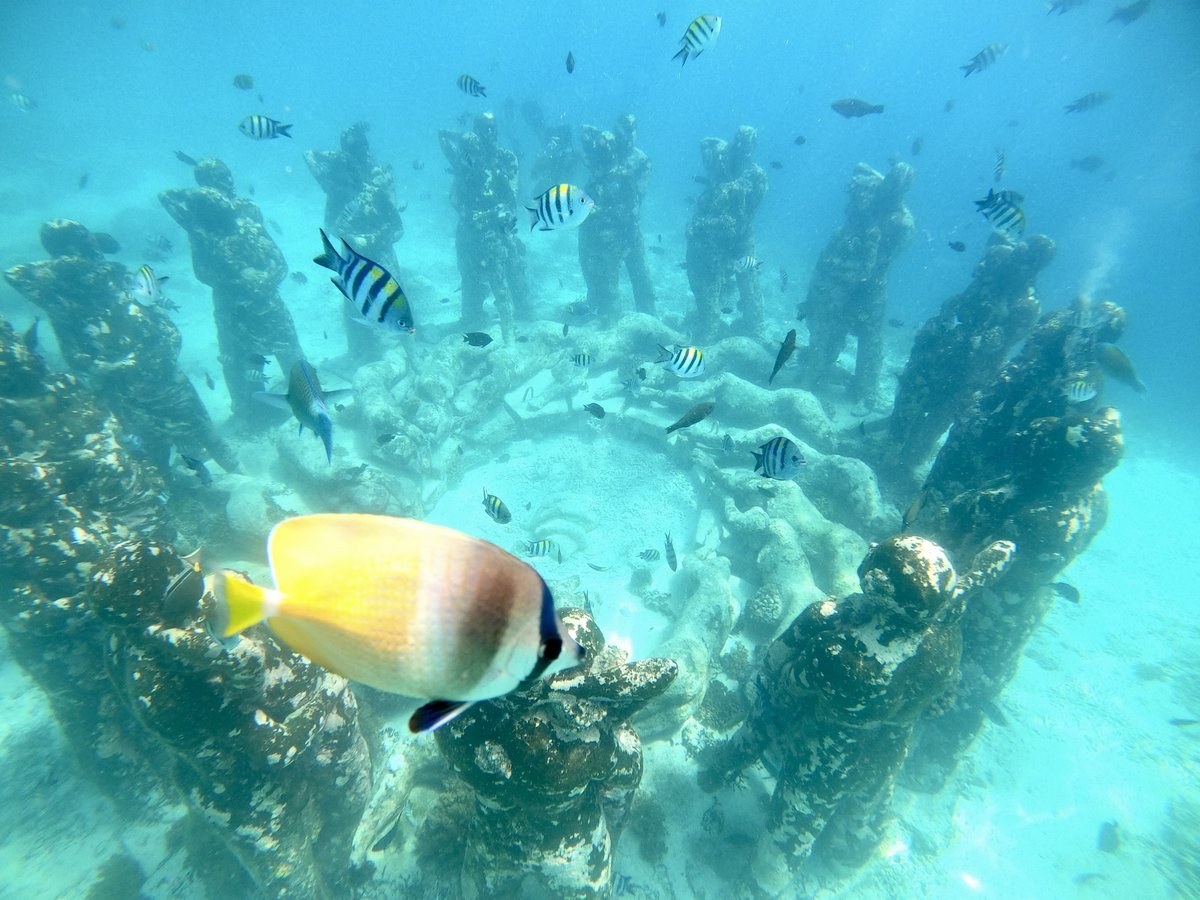 A circle of underwater statues covered in coral off Gili Meno, with tropical fish swimming above
We also stopped for a swim and a rest on the beach at Gili Meno. Go snorkelling in the morning if you can: the light is better, the sun is gentler and there are fewer boats.
Sunsets, Seafood and Slow Evenings
In the late afternoon everyone cycles to the west coast of the islands, where the bars and beach clubs face the sunset. Pick any spot you like, order a cold drink and watch the sky turn orange with only the sound of the waves, the music from the bars and the clip-clop of horses behind you. In the evening, the east side of Gili T near the harbour gets lively with live music.
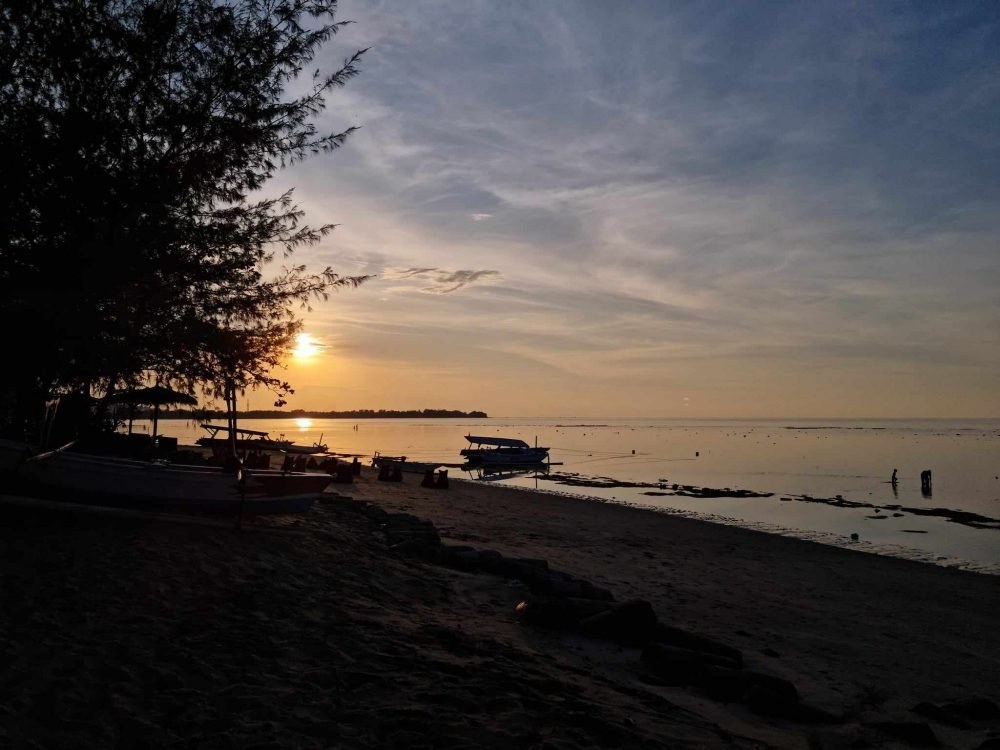 Sunset over the calm sea from a beach on the Gili Islands
For dinner, look for the restaurants grilling fresh seafood and sate. Wood-fired pizza is also surprisingly popular here, which says a lot about how many European visitors come to the islands.
A Day on Lombok
After four slow days on the islands we crossed back to Bangsal and rented a motorbike at the harbour to explore Lombok’s coast. The road south along the west coast is in good condition but it twists and climbs around the hills, and traffic drives on the left, so take it easy. The views are worth it: quiet bays, green hills and long beaches with hardly any tourists, mostly local families out for the weekend.
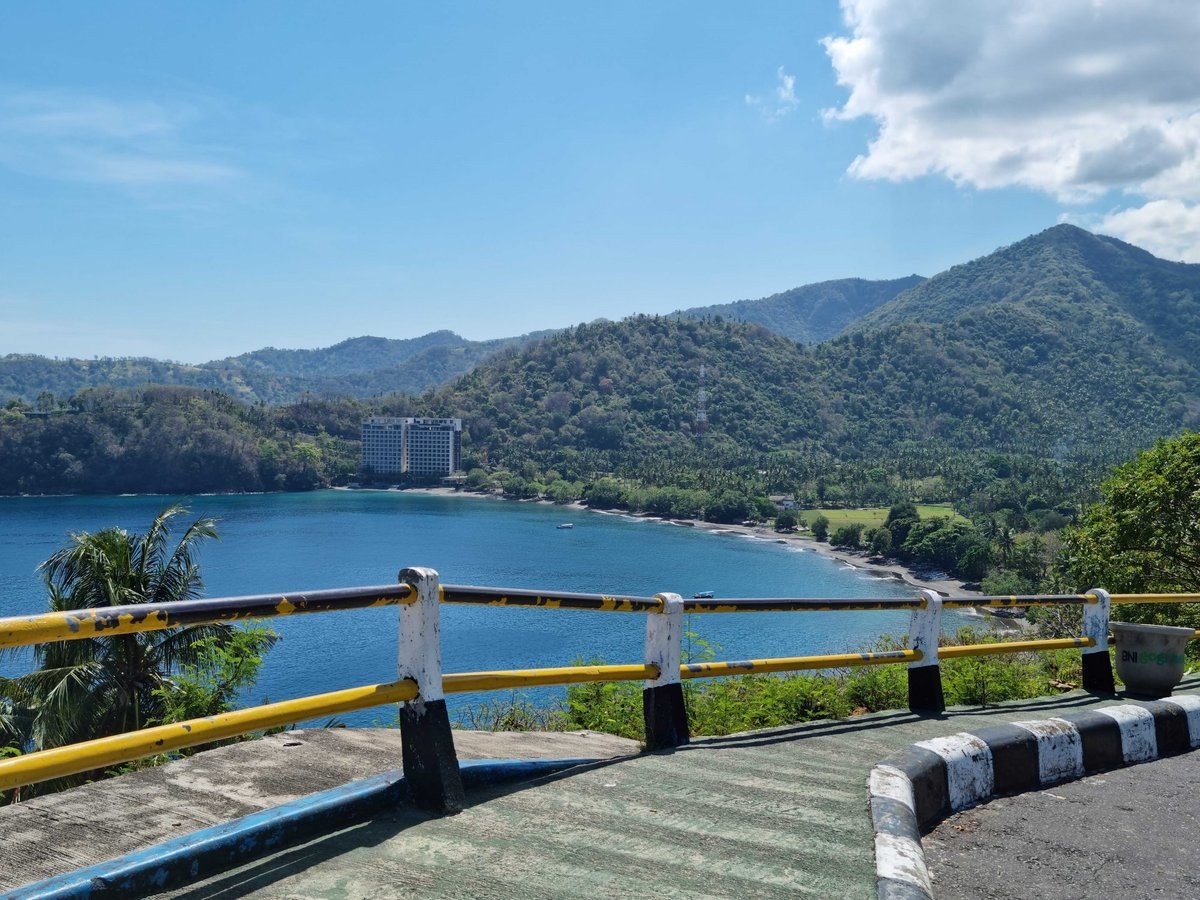 A blue bay and green hills seen from the coastal road on Lombok
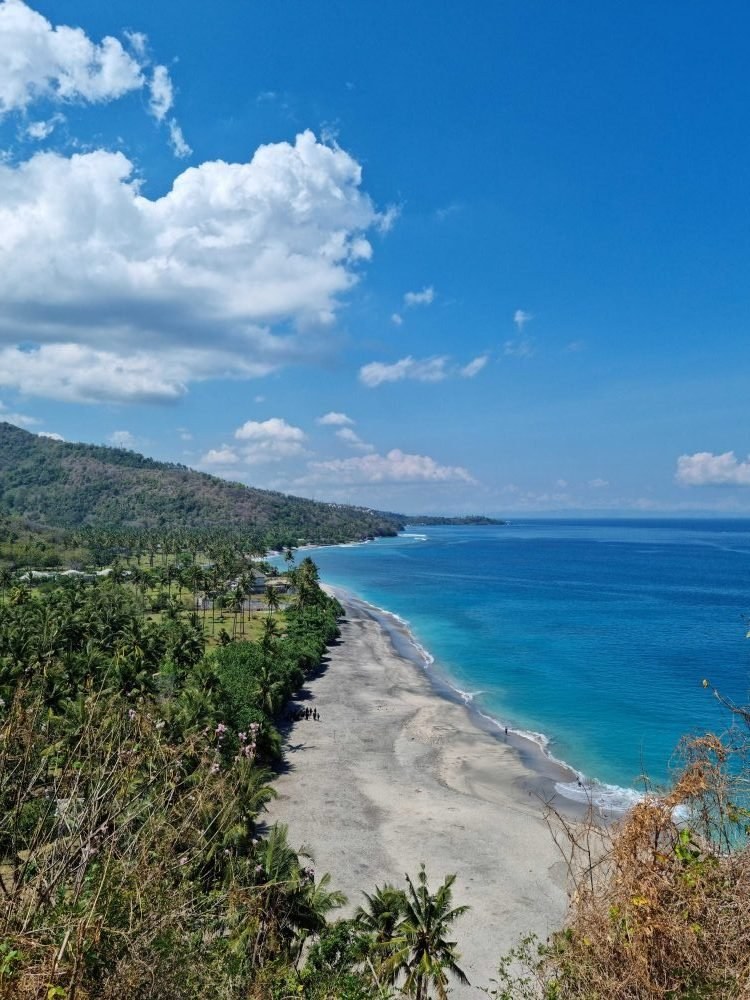 A long empty beach and turquoise sea seen from a hill on the Lombok coast
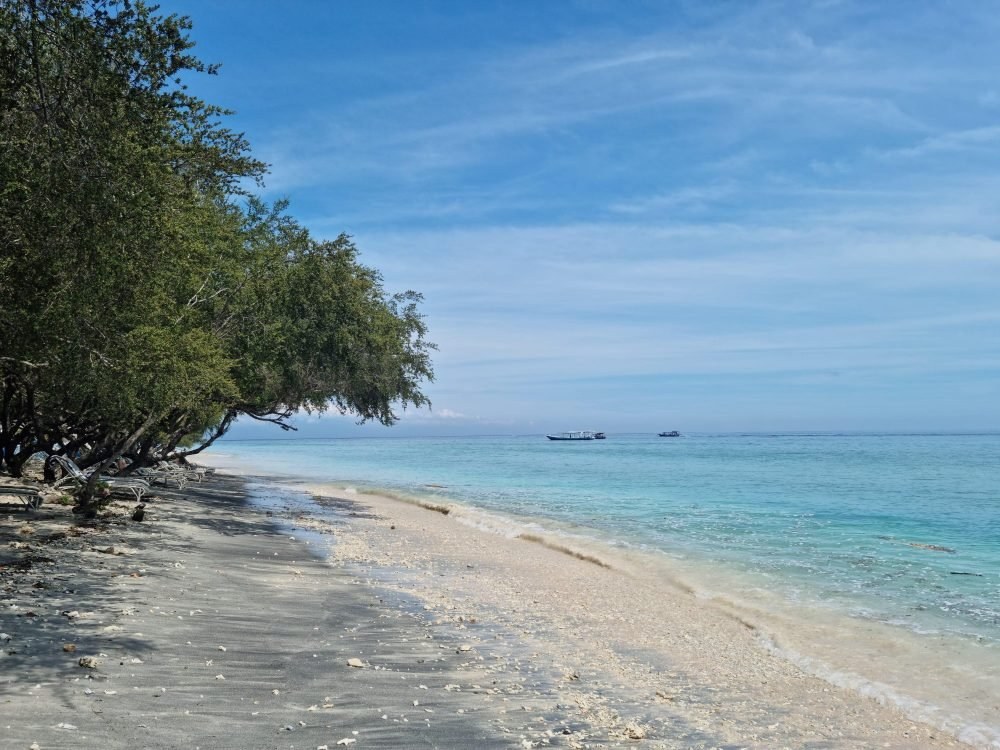
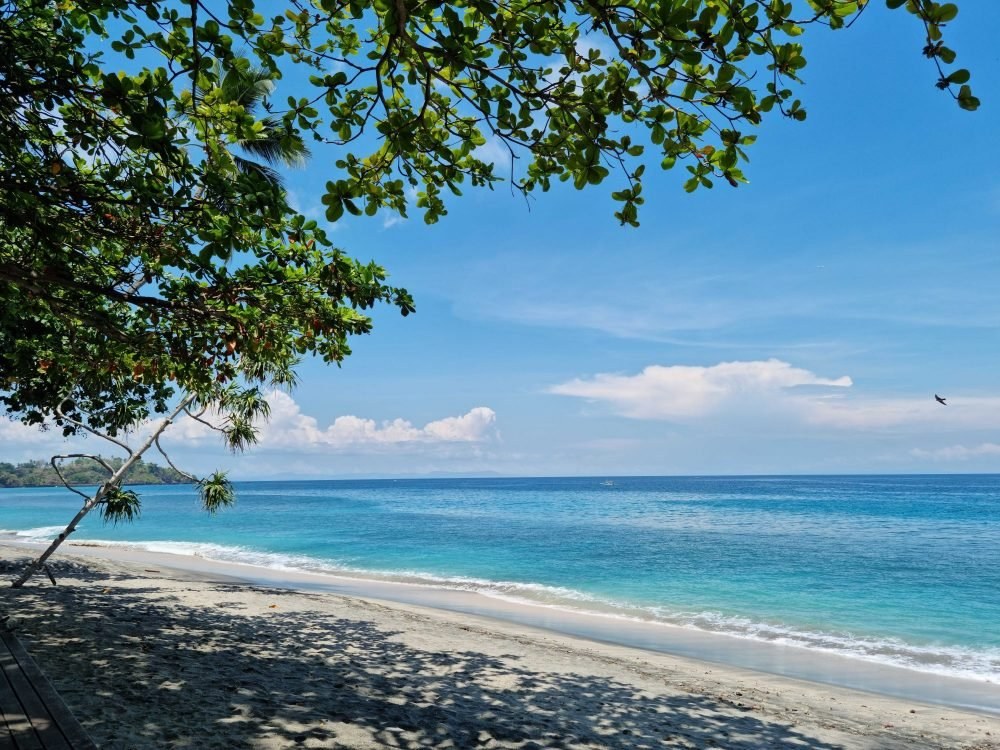 Clear turquoise water and a shady beach on the coast of Lombok
On our final morning we hired a driver to the south, around two hours from Mataram. Bukit Merese, a bare grassy hill above Tanjung Aan beach, is free to visit apart from parking, and a ten-minute walk up a gravel track gives you a huge view over the bays and the Indian Ocean. In the dry season the hills are golden-brown rather than green. On the way back we stopped at Sukarare, a village famous for hand-woven songket cloth, where a piece starts from around Rp150,000 and the women weaving at the looms let you try a few rows yourself.
Tips for Lombok and the Gilis
- Come between April and September for dry weather and calm seas.
- Bring reef shoes and sun protection. The reflection off the white sand and water is intense.
- Do not touch or chase the turtles. Give them space and they will often swim right up to you.
- Agree on prices first for horse rides, carts and private boats.
Final Thoughts
I came for the turtles and stayed for the quiet. No engines, no traffic jams, just bicycles, horse carts and the sea in every shade of blue. Lombok itself felt like Bali many years ago, green, slow and friendly. If you need a real break from city life, this is the place to switch off.