Almost everyone who visits Taipei ends up doing the same day trip: the hillside town of Jiufen and the railway village of Shifen. Parts of it felt like a tourist conveyor belt, but between a thundering waterfall, a sky lantern with my wishes on it and a cup of tea on a balcony above the sea, it ended up being one of the best days of my week in Taiwan.
I did it on my own by train and bus, without a tour. Here is the route that worked for me.
Getting Around: Ruifang Is the Key
The two places are close on the map, but there is no direct connection between them. Everything goes through Ruifang station, which you reach by local train from Taipei Main Station or Songshan station.
From Ruifang, the little Pingxi line branches off into the hills towards Shifen, with trains roughly once an hour. For Jiufen you switch to a bus outside Ruifang station (several routes go up the hill, including 788, 827 and 1062) or take a taxi.
Since the Pingxi trains are not frequent, I did Shifen in the morning and Jiufen in the afternoon, so I would be in Jiufen when the lanterns light up. If you want to hop off at other stations such as Pingxi or Jingtong, the Pingxi line one-day pass costs NT$80 (≈ $2.70 USD) and gives unlimited rides on the branch.
Morning in Shifen
Shifen Old Street and the Railway Tracks
The Pingxi line was built about a century ago to carry coal out of the valley, and Shifen station is the biggest stop on it. The old street grew up right along the tracks. Shops and snack stalls sit a couple of metres from the rails, and when a train comes, everyone simply steps aside and lets it squeeze through.
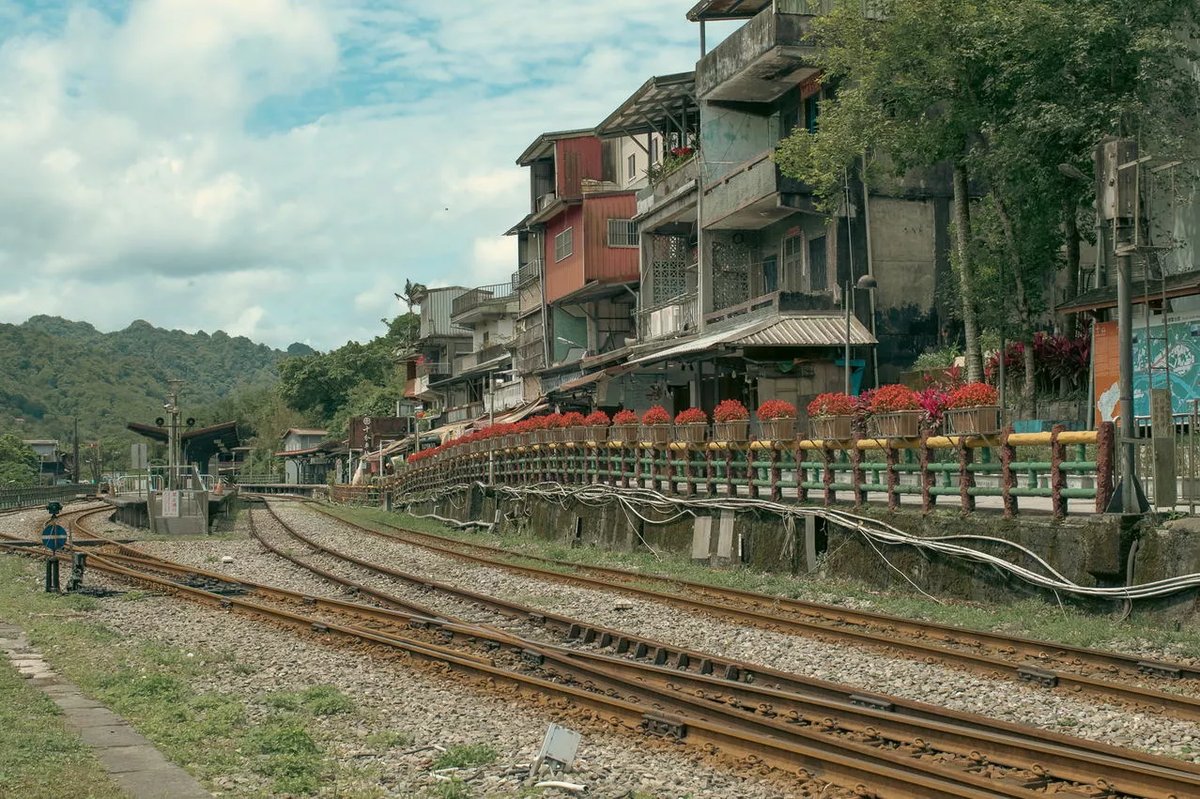 The railway tracks running past old houses and flower boxes in Shifen
Releasing a Sky Lantern
The thing everyone comes here for is the sky lantern. There are lots of lantern shops along the tracks and prices are almost identical: around NT$200 to NT$250 (≈ $7 to $8 USD) depending on whether you choose a single-colour or a four-colour lantern. You write your wishes on the paper panels with a brush, then the staff walk you onto the tracks between trains, light the lantern and help you hold it until it fills with hot air.
Letting go was surprisingly emotional. Some lanterns float high over the hills, others come down quickly. Mine went up nicely.
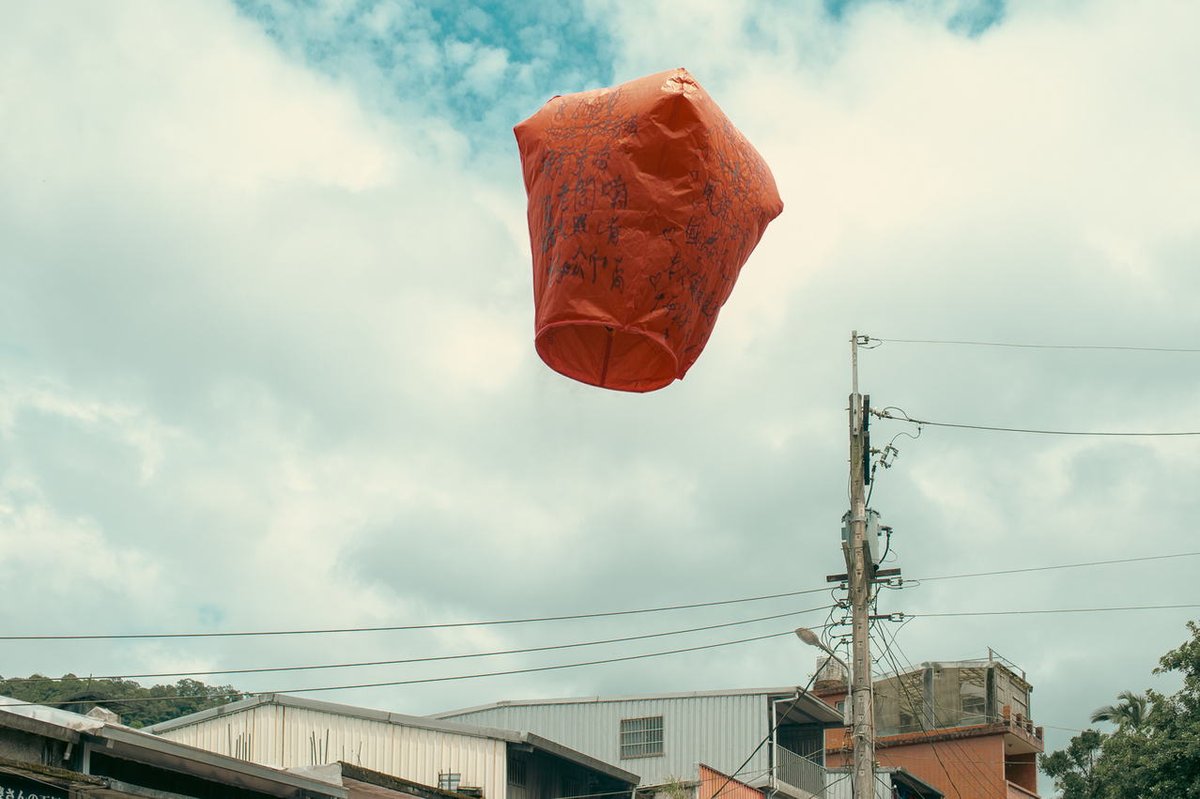 A red sky lantern rising above the rooftops of Shifen
For a snack I tried the peanut ice cream roll: a thin crepe filled with shaved peanut brittle, scoops of taro ice cream and, if you dare, a bit of fresh coriander. The coriander sounds odd, but it really works. The grilled chicken wing stuffed with fried rice is another local favourite and is worth the queue.
Jingan Suspension Bridge
Before heading to the waterfall, I walked out onto the blue and white Jingan Suspension Bridge, which you can see from the station. Built in the 1940s for carrying coal, it is about 128 metres long and crosses the Keelung River. From the middle you get a great view of the valley and of lanterns drifting over the town.
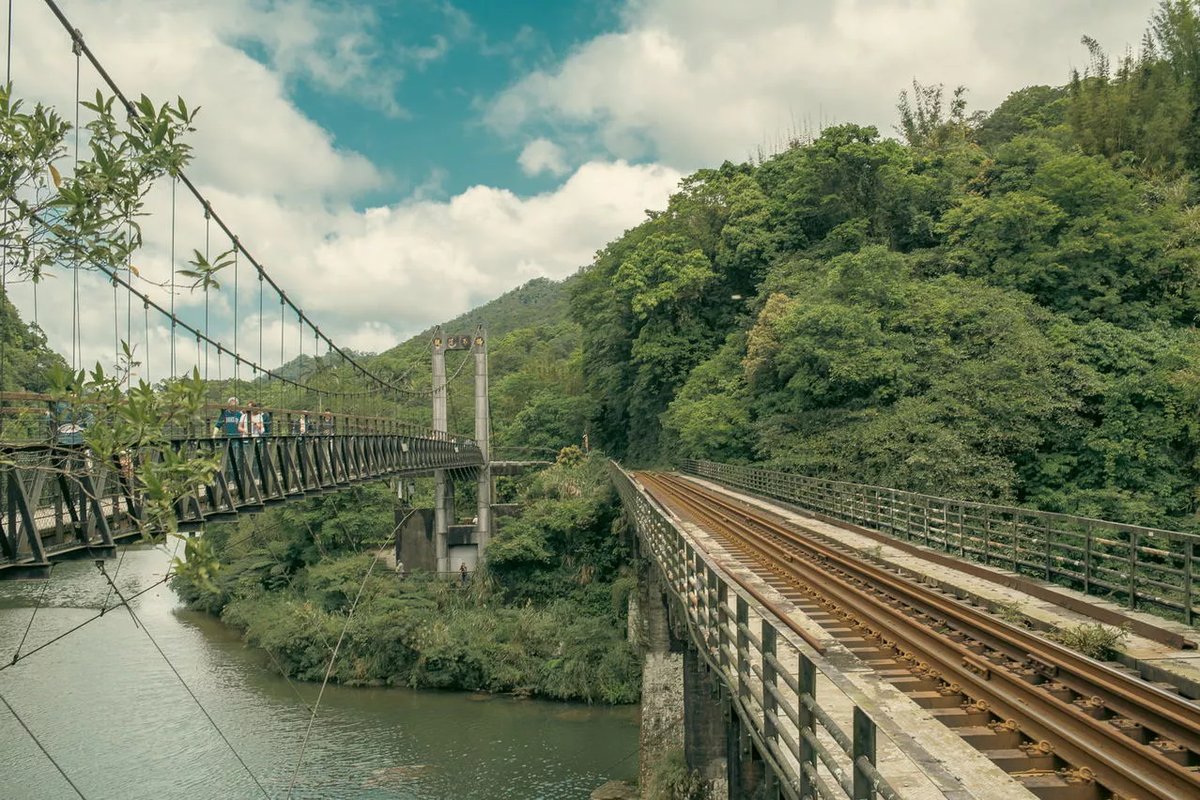 Jingan Suspension Bridge and the Pingxi railway crossing the Keelung River
Shifen Waterfall
Shifen Waterfall is about 1.5 kilometres from the station, an easy walk of 25 to 30 minutes on a flat path. On the way you pass river potholes carved into the rock and a suspension bridge right beside the railway line. The waterfall park was open from 9 am to 4:30 pm when I visited, and entry is free.
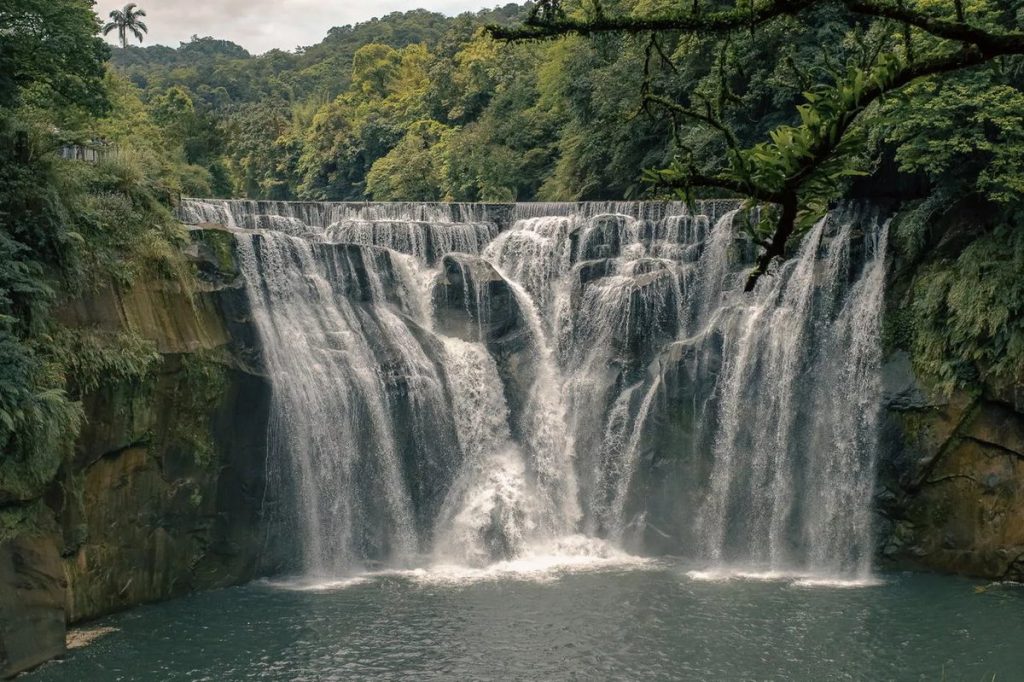
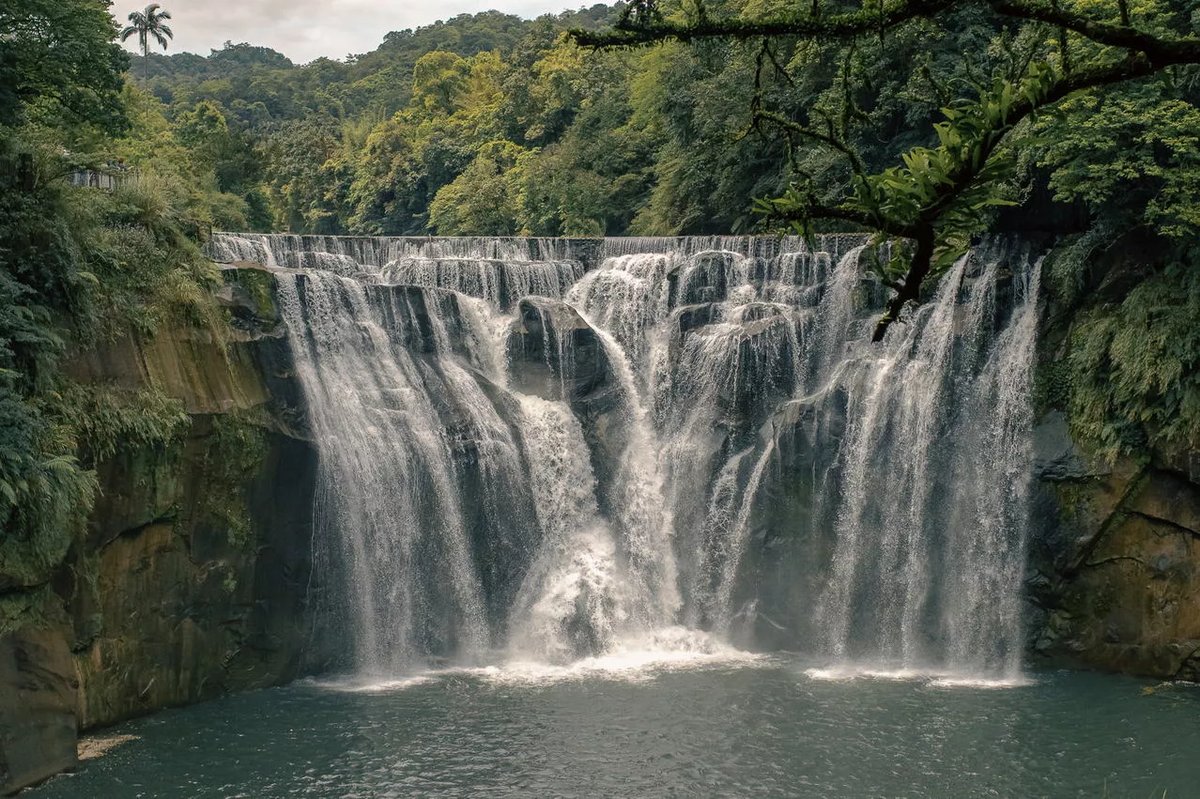 The wide curtain of Shifen Waterfall pouring into a green pool
The waterfall is around 20 metres high and 40 metres wide, the largest curtain-type waterfall in Taiwan, which is why people call it the Niagara of Taiwan. It sounds like an exaggeration until you stand on the lower platform with the spray on your face. There are three viewing platforms, so do not skip any.
Afternoon and Evening in Jiufen
Back at Ruifang I caught the bus up the mountain. Jiufen was a gold mining town, and the narrow old street, Jishan Street, now winds along the hillside packed with snack shops, tea shops and souvenir stalls. It was drizzling and misty, which apparently is normal here, but most of the street is covered so I barely needed my umbrella. What I did need was patience: it is extremely crowded.
What I Ate
Jiufen is a grazing town. I started with a bowl of fish ball soup from one of the old stalls: soft, sweet fish balls in a light broth with seaweed and celery, and still cheap by old-street standards. Then I picked up a caozai guo, a chewy rice cake filled with savoury or sweet fillings, from a takeaway shop where locals were buying ten at a time.
The famous dessert is taro balls. One popular shop sits right on the old street, while another is up a long staircase near the old theatre and has a seating area with sea views.
A-Mei Teahouse and a Quiet Balcony
Near the bottom of the old street, the steps lead past A-Mei Teahouse, a wooden building hung with rows of red lanterns that many people say inspired the bathhouse in Spirited Away.
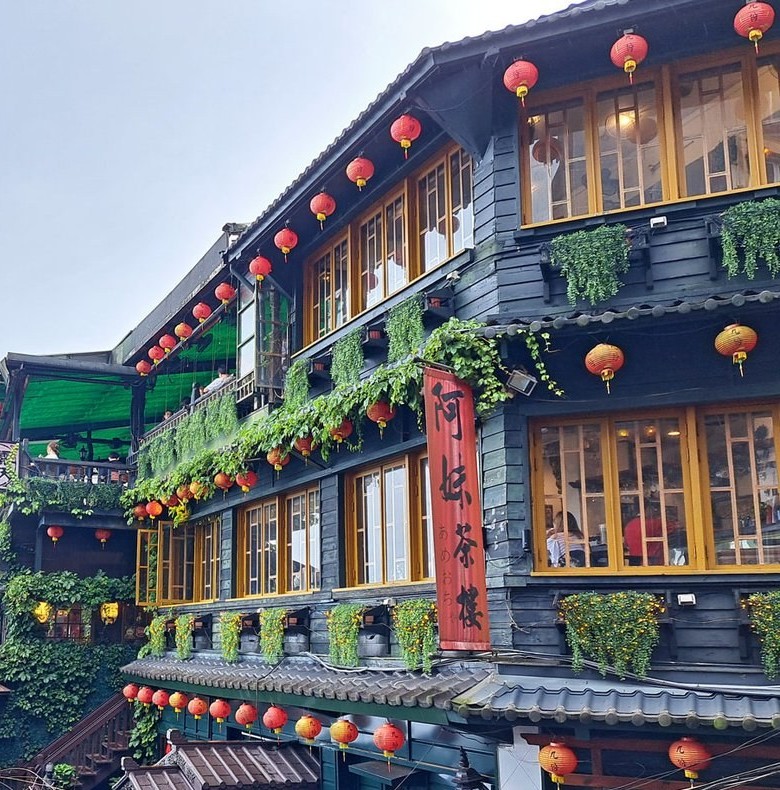 A-Mei Teahouse in Jiufen decorated with red lanterns on a misty day
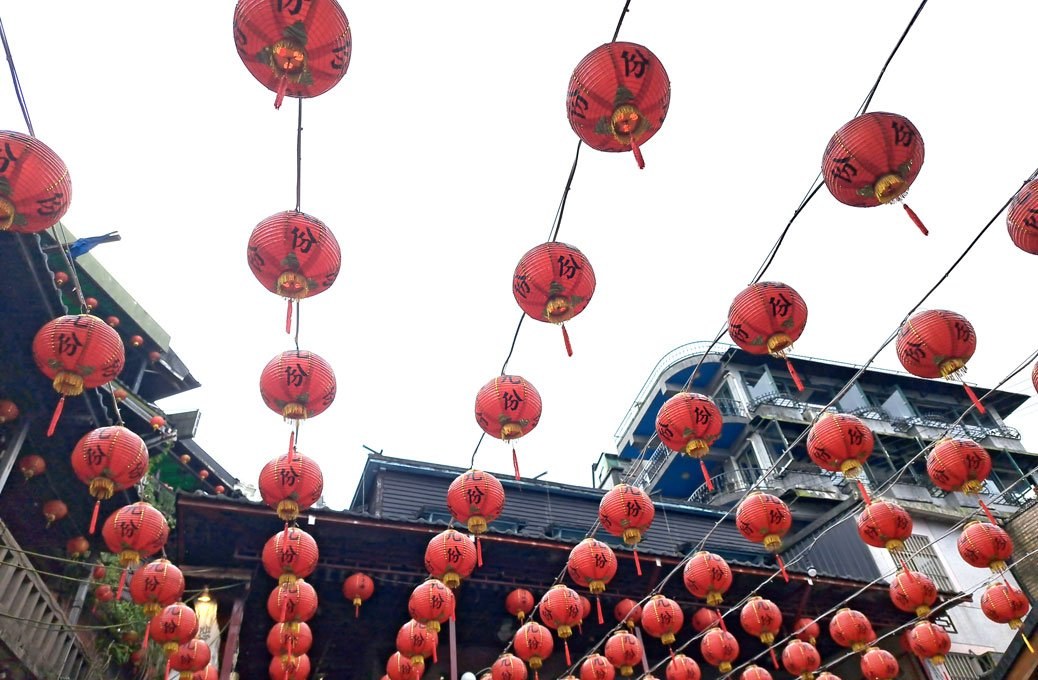 Rows of red lanterns hanging over the stairs in Jiufen
Just below is the Shengping Theatre, once one of the biggest cinemas in Taiwan and now restored and free to visit. Instead of queueing for the big teahouses, I found a small family-run cafe with a balcony and a minimum spend of only NT$100 (≈ $3.30 USD) per person, while the famous view teahouses usually start from around NT$250 to NT$300. The tea was nothing special, but the view over the hills and the coast was perfect.
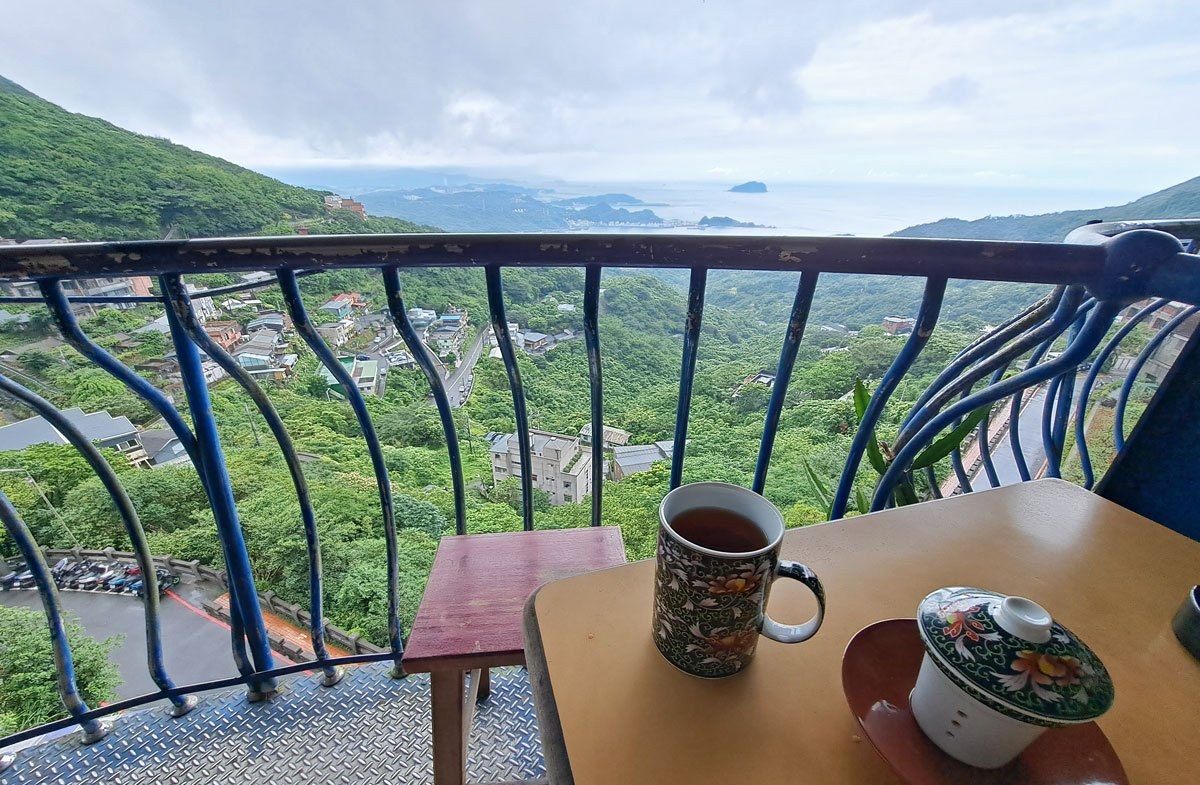 A cup of tea on a balcony overlooking the hills and coastline from Jiufen
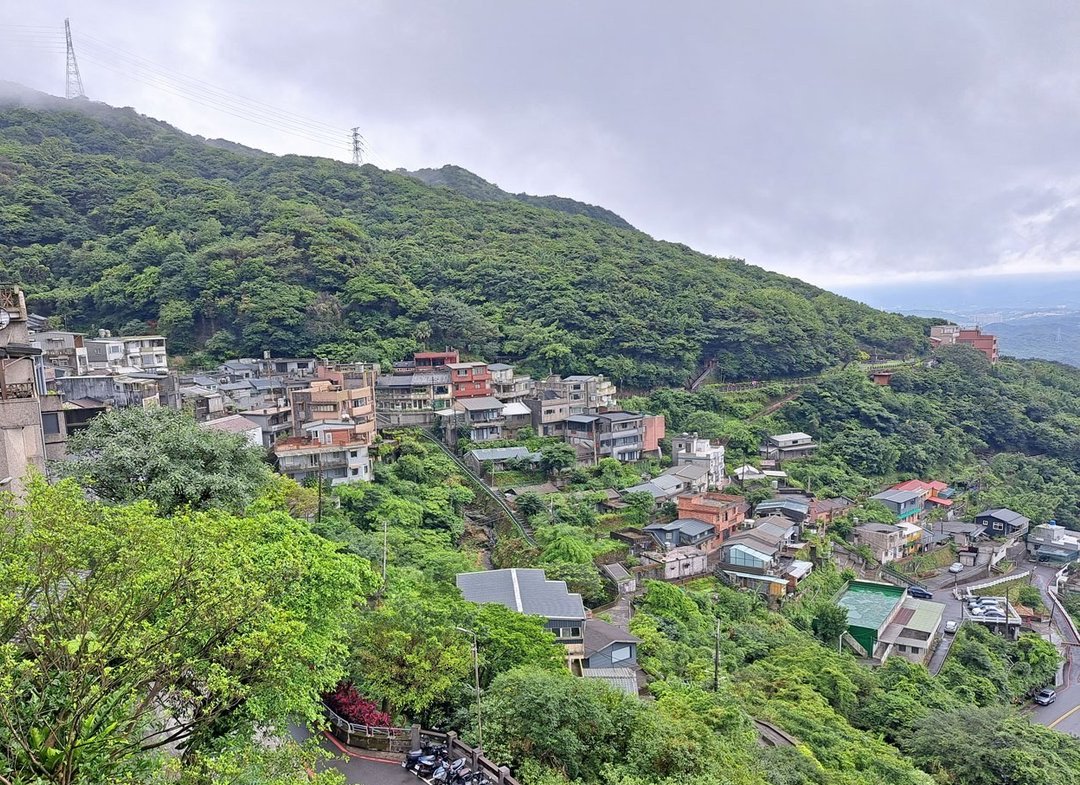 Houses of Jiufen spread across the green mountainside
Tips for the Jiufen and Shifen Day Trip
- Check train times first. Pingxi line trains run about once an hour, so plan around them.
- Go on a weekday. Both old streets are packed on weekends.
- Eat early in Jiufen. The famous stalls get long queues around lunchtime.
- Bring an umbrella and good shoes. Jiufen is often wet, and the stairs are steep and slippery.
- Leave buffer time. The bus and road back to Taipei get busy in the evening.
Final Thoughts
Yes, Jiufen and Shifen are crowded and touristy. But they are popular for a reason. Watching a lantern float over the railway, feeling the spray of the waterfall and sipping tea while the mist rolls over the mountains made this the most memorable day of my trip. Just go early, take it slowly, and let yourself be a happy tourist for a day.