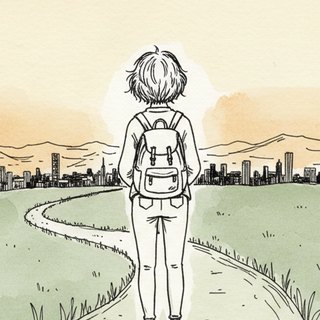
I have been to Seoul in winter and in spring, but everyone kept telling me that autumn is when the city is at its most beautiful. So this year I finally timed a trip for the last week of October, when the maples inside the old palaces turn red and the ginkgo trees along the streets go bright yellow. I gave myself two slow days for the royal quarter north of the city centre: Gyeongbokgung, Changdeokgung and the hanok lanes of Bukchon in between. A friend came along, and we walked almost everywhere.
Day One: Gyeongbokgung Palace
Gyeongbokgung is the biggest of Seoul’s five Joseon-era palaces and the one everyone visits first. Entry is only 3,000 won (≈ $2 USD), and if you are wearing a hanbok you get in free, which is why you will see so many rented outfits inside. The palace is closed on Tuesdays, something I almost learned the hard way.
We went in the morning, when the courtyards in front of the main throne hall are still calm. My advice is not to stop for too long at the front. The best autumn colour is deeper inside the grounds, so keep walking north.
Gyeonghoeru Pavilion
The first big “wow” for me was Gyeonghoeru, the huge banquet pavilion that stands on stone pillars in the middle of a square pond. On a clear autumn morning the sky is a ridiculous shade of blue, the mountains behind the palace are already turning brown and red, and the whole building is mirrored perfectly in the water.
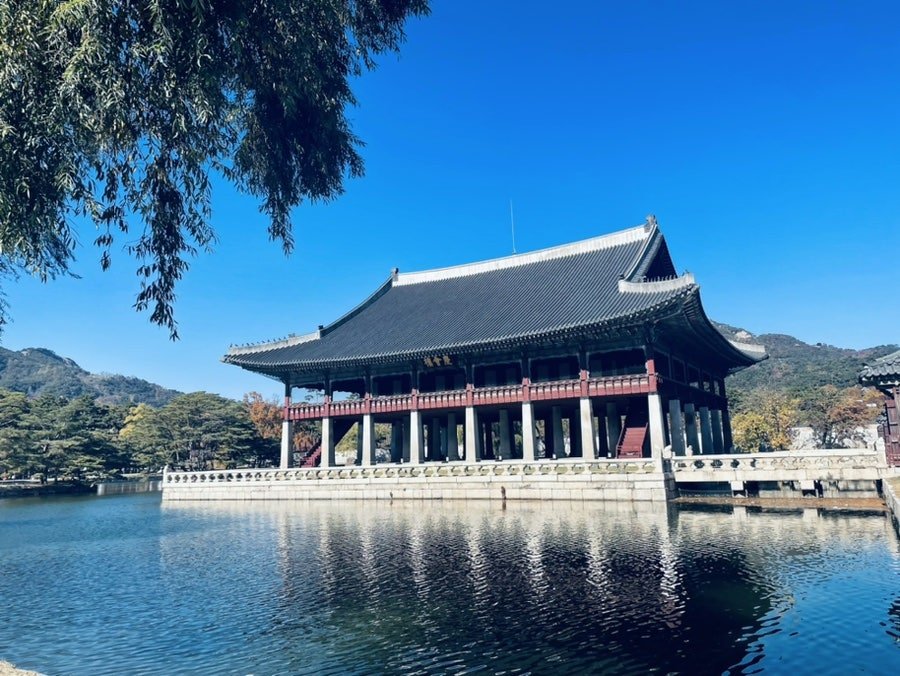 Gyeonghoeru Pavilion reflected in its pond under a clear blue autumn sky
Hyangwonjeong, the Real Reason to Come in Autumn
Right at the back of the palace is Hyangwonjeong, a small two-storey hexagonal pavilion on a round island, linked to the shore by a pretty wooden bridge. It reopened a few years ago after a long restoration, and the bridge was rebuilt on the north side, where historians say it originally stood.
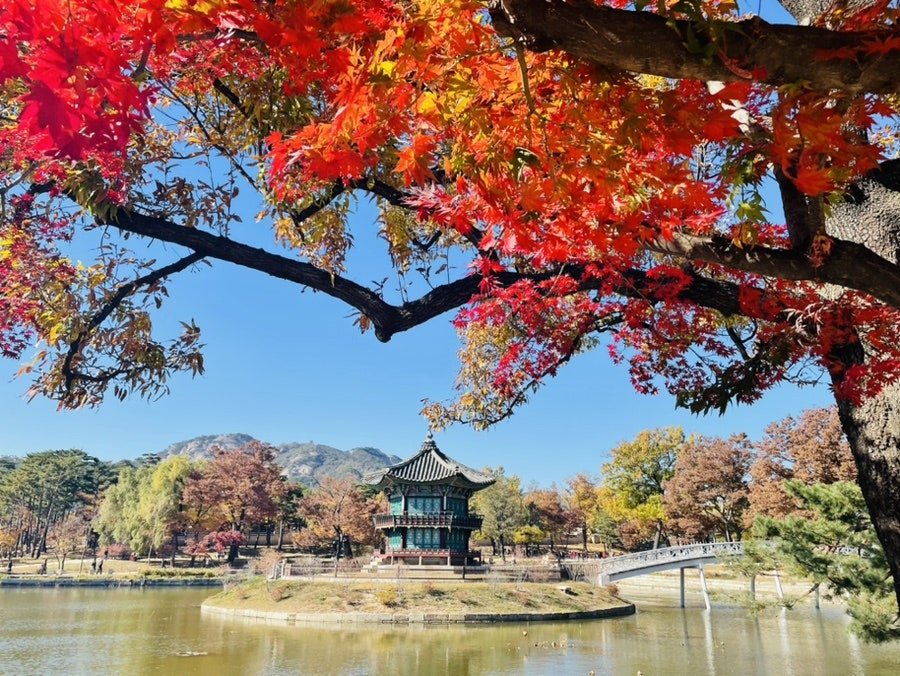 Hyangwonjeong Pavilion framed by bright red maple leaves
In late October the pond is surrounded by maples in every shade from orange to deep red, mixed with a few yellow trees. I walked a full loop around the pond, because the view keeps changing. The angle I liked most was from the far side near the National Folk Museum, where the branches hang low and frame the pavilion and its reflection.
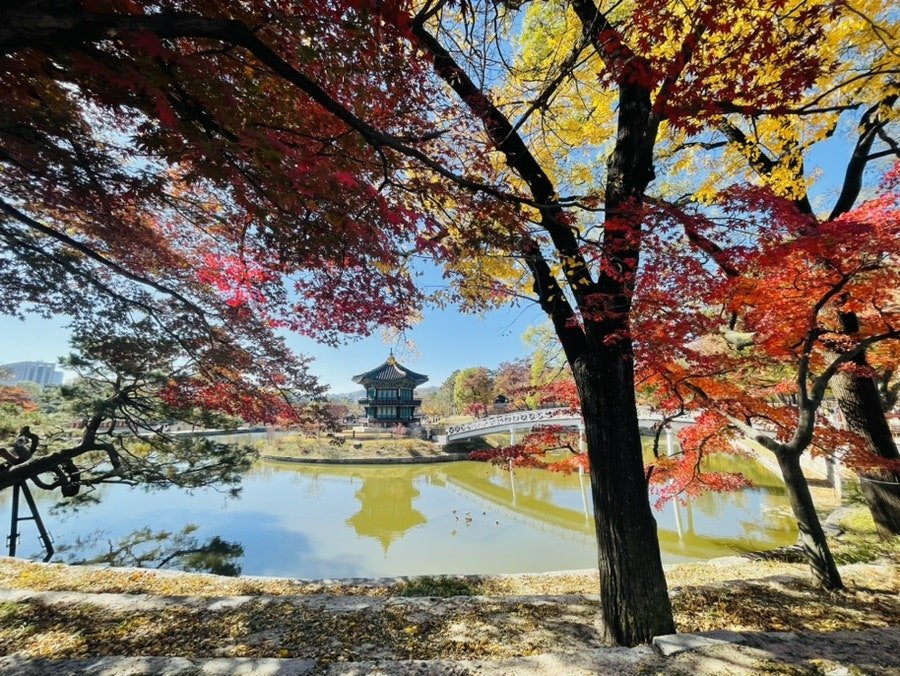 Autumn maples around the Hyangwonjeong pond at Gyeongbokgung
Ginkgo Trees Along the Palace Wall
We left by the east side and followed the stone wall towards Bukchon. The ginkgo trees along this road were glowing yellow against the old tiled roofs and the corner watchtower. The fallen leaves smell a bit strange, I have to warn you, but the colour is worth it.
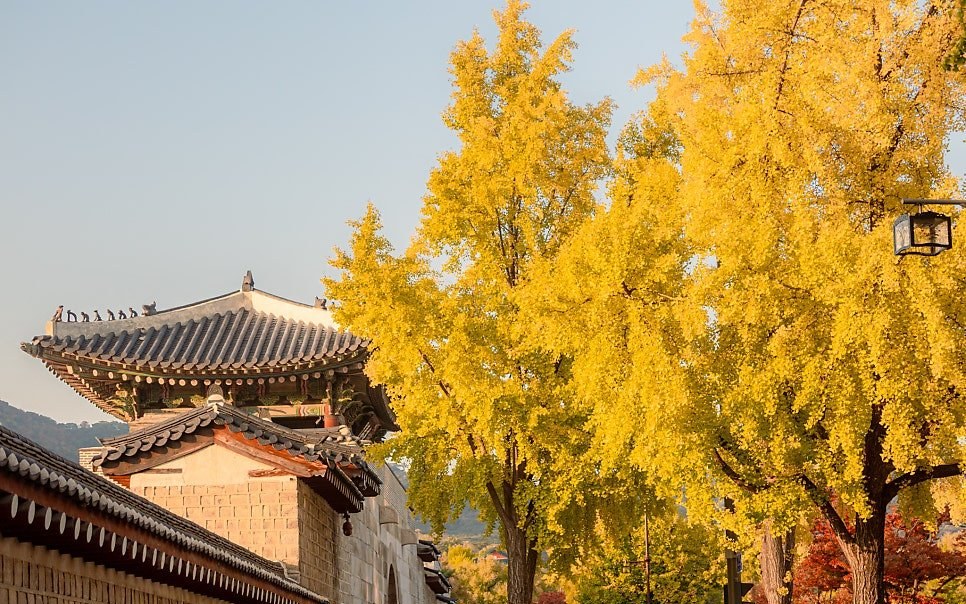 Yellow ginkgo trees beside the stone wall and corner tower of Gyeongbokgung
Wandering Through Bukchon
Bukchon Hanok Village sits on the slope between the two palaces. It is not a museum but a real neighbourhood of traditional wooden houses, so please be quiet. The busiest lanes are now restricted for tourists: you can only walk there between 10 am and 5 pm, and there are staff and signs reminding visitors.
We started at the bottom, where the yellow walls of a contemporary art gallery stand out among the ginkgo trees. Several galleries in this area have free exhibitions, and ducking into one is a nice break from the sun. Then we climbed slowly uphill. Near the top, the lanes open up and you can look over a sea of curved tile roofs towards the modern city and the hills in the distance.
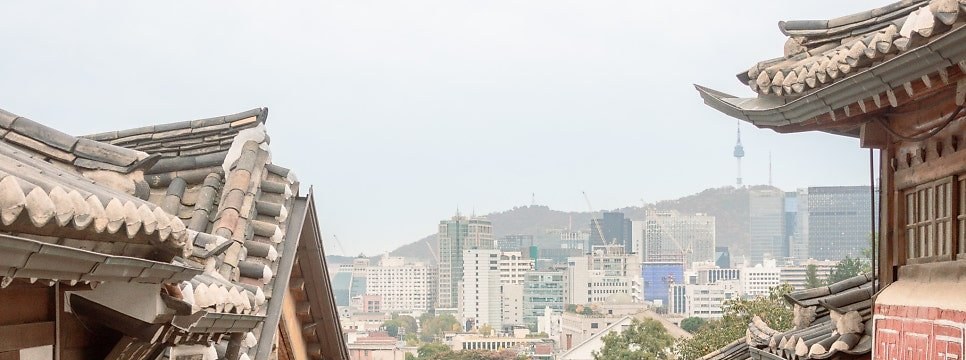 Curved tile roofs of Bukchon hanok houses with the Seoul skyline in the distance
Bukchon is full of small cafés and dessert shops, many inside renovated hanok, and honestly you can’t go wrong. We sat in one for an hour with a coffee and a seasonal cake, watching people in hanbok walk by with their photographers.
Day Two: Changdeokgung and the Secret Garden
If Gyeongbokgung is grand and formal, Changdeokgung feels softer. It was built to follow the shape of the hills instead of a straight line, and many Joseon kings actually preferred to live here. It is a UNESCO World Heritage Site, and the entrance ticket is also 3,000 won. Note that it closes on Mondays.
I spent a while just looking up. The painted eaves, called dancheong, are covered in green, red and blue patterns, which protect the wood as well as decorate it. Against a blue October sky they look unreal.
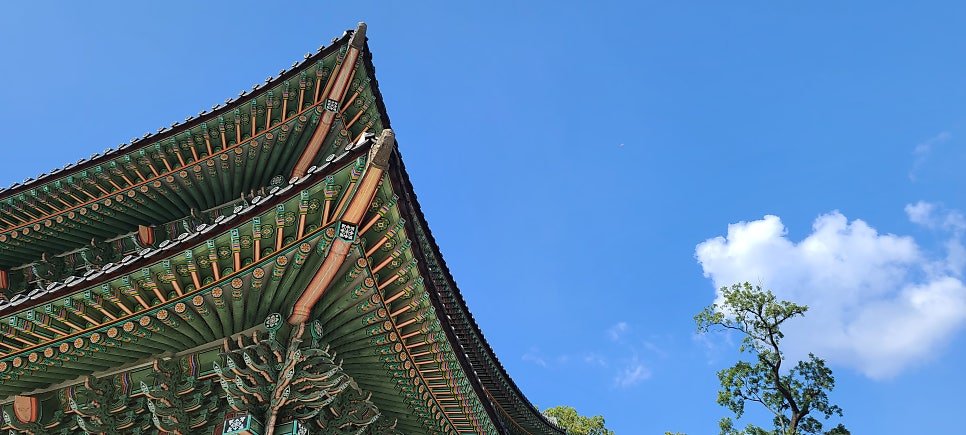 Colourful painted eaves of Changdeokgung against a blue sky
Huwon, the Secret Garden
The highlight is Huwon, the royal rear garden, which you can only enter on a guided tour that costs an extra 5,000 won (≈ $3.50 USD). Online tickets for the autumn weeks disappear within seconds of release, so set an alarm. We were lucky to get a slot.
The tour follows forest paths past ponds and pavilions. The most famous spot is Buyongji, a square pond with a small pavilion that seems to dip two of its feet into the water. Early in the afternoon, sunlight was falling through the trees in thin beams, and the whole place felt like a painting.
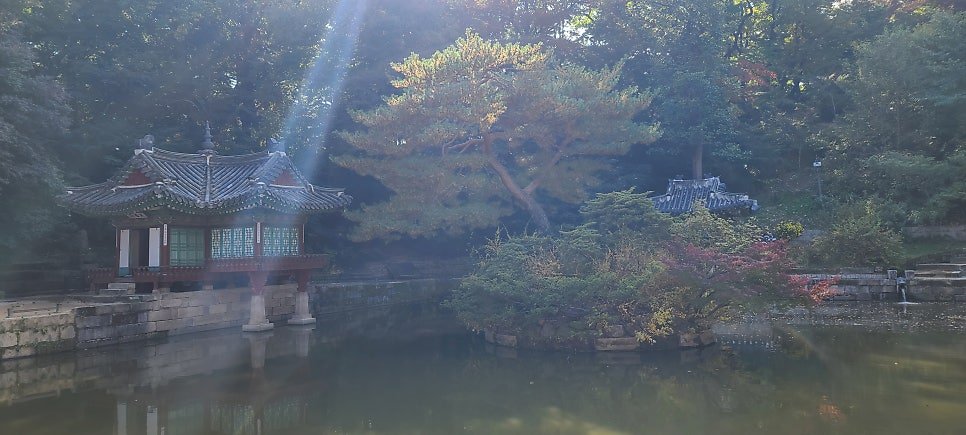 Buyongji pond and pavilion in the Secret Garden with sunlight through the trees
Further in, the maples were at their peak. The garden is much quieter than Gyeongbokgung because the number of visitors on each tour is limited, and walking under those red and orange leaves was the most peaceful moment of my whole trip.
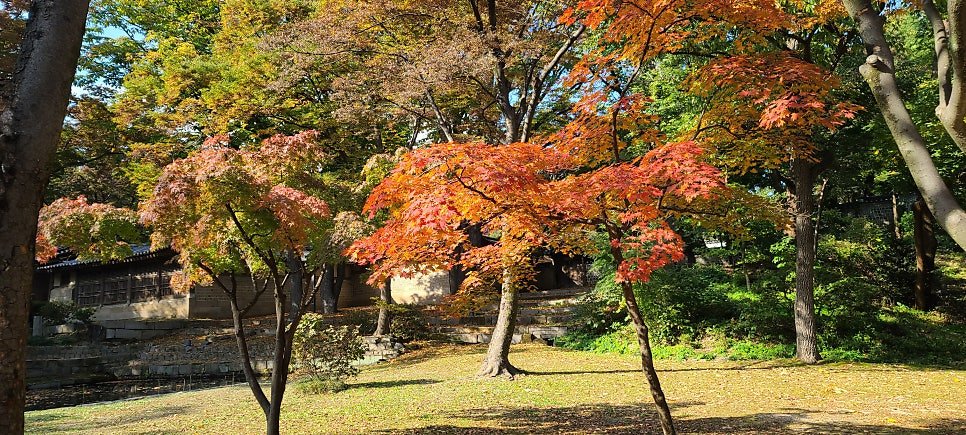 Red and orange maple trees on a lawn inside the Changdeokgung Secret Garden
Tips for Seoul’s Palaces in Autumn
- Timing: the palace maples usually peak from late October to early November. Ginkgo streets often turn a little earlier.
- Book Huwon early: reserve on the official royal palaces website as soon as tickets open. A few spots may be sold on site, but don’t count on it in autumn.
- Check closing days: Gyeongbokgung closes on Tuesdays, Changdeokgung on Mondays.
- Respect Bukchon: stick to the 10 am to 5 pm window, keep your voice down and don’t sit on doorsteps.
- Bring layers: mornings were around 8 to 10 degrees, but by midday I was walking in a T-shirt.
Final Thoughts
Coming from Vietnam, where we don’t really have this kind of autumn, I was not prepared for how emotional I would feel standing under a red maple in a palace garden that kings walked through for centuries. Seoul is a fast, loud city, but inside the palace walls in October, time slows right down. If you can only visit Seoul once, make it autumn.