Gyeongju had been on my list for years. It was the capital of the Silla kingdom for almost a thousand years, and people call it a “museum without walls” because royal tombs, temples and ruins are scattered right through the modern town. I finally went in the second half of April, after the first wave of cherry blossoms had already fallen. That turned out to be a happy accident: the crowds were smaller, the hills were a fresh, bright green, and Bulguksa was having its own second blossom season. Here is how I spent two very full days there, almost entirely on foot and by local bus.
Getting There and Getting Around
I took an early express bus from Seoul. The ride is meant to be three and a half hours, but count on closer to four, and the fare was a little over 30,000 won (≈ $21 USD). You can also take the KTX, but Singyeongju Station is quite far from the centre, while the bus terminal is right in town, within walking distance of most sights.
I stayed in a small, cheap guesthouse a few minutes from the terminal. If your room isn’t ready yet, several cafés and shops near the terminal will keep your luggage for around 5,000 won, which is much better than dragging a suitcase through the narrow lanes of Hwangnidan-gil. For the sights further out, city buses are frequent and easy.
Bulguksa Temple
I started with the biggest name. Buses 10 and 11 run from town to Bulguksa, and the stop is close to the temple gate. Entry to the temple itself is now free, which surprised me. Bulguksa was first built in the sixth century and is a UNESCO World Heritage Site together with the Seokguram grotto on the mountain above it.
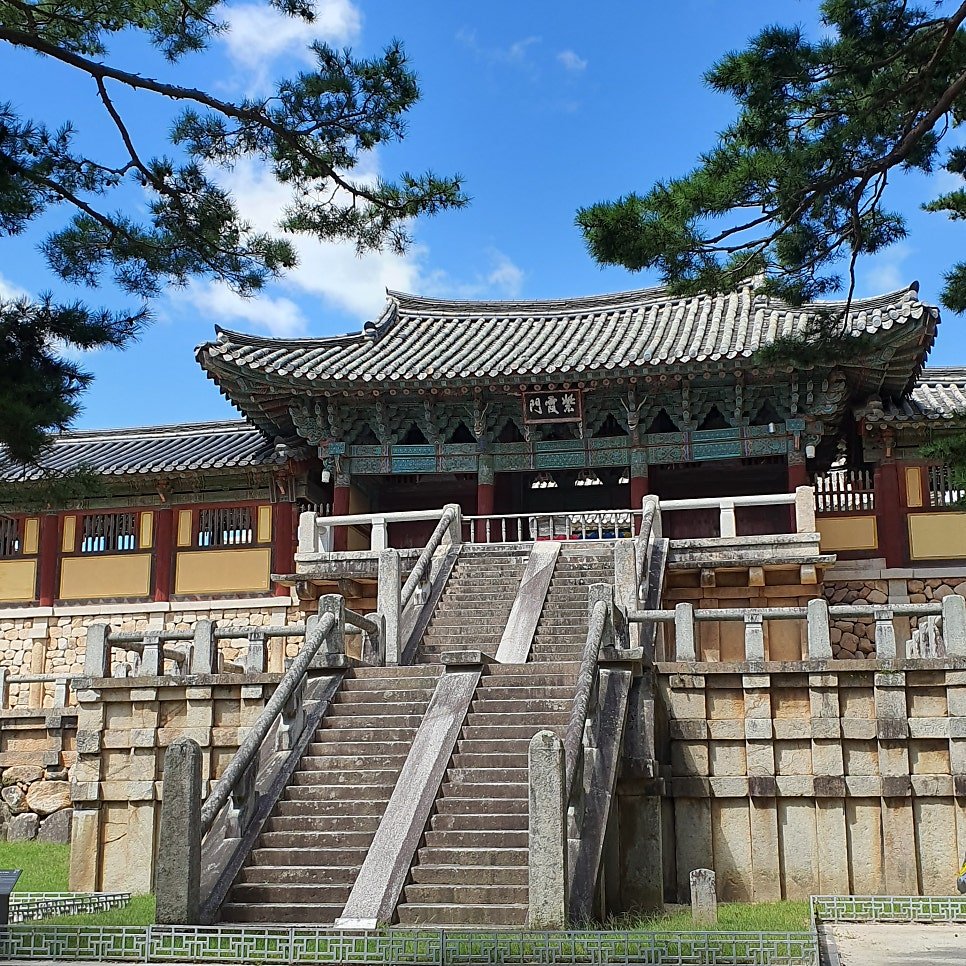 The stone stairways of Cheongungyo and Baegungyo leading up to Bulguksa
The first thing you see are the famous double stone stairways, Cheongungyo and Baegungyo, leading up to the main gate. Inside, the courtyard holds two stone pagodas that every Korean knows from school. Dabotap, the ornate one, is the pagoda printed on the 10-won coin, and the plain three-storey Seokgatap stands opposite it.
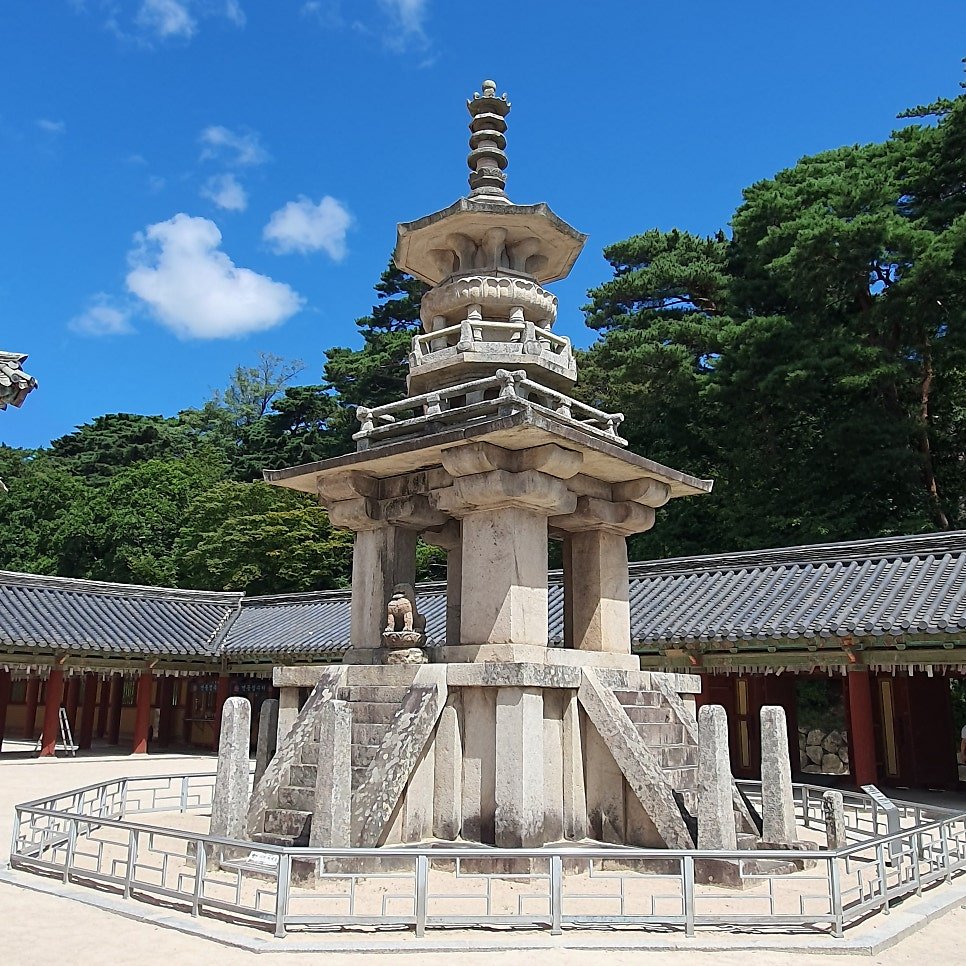 Dabotap stone pagoda in the courtyard of Bulguksa under a blue sky
Because Buddha’s Birthday falls in spring, the temple courtyards were already covered with hundreds of paper lanterns, rows of white ones on top and red, yellow and blue ones underneath. Standing in their shade with the sun shining through was one of my favourite moments of the trip.
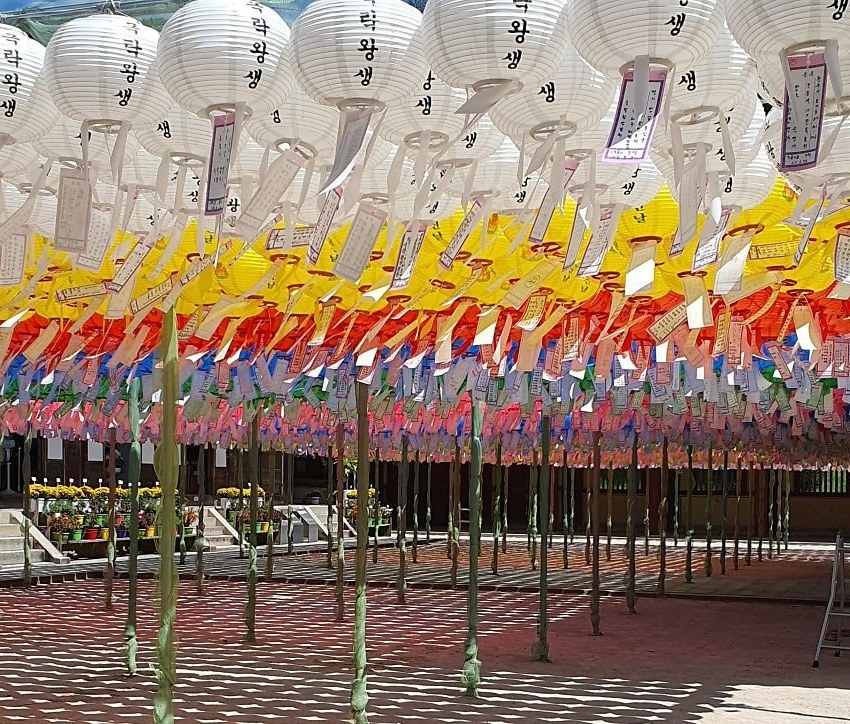 Rows of colourful paper lanterns hanging over a courtyard at Bulguksa
The other reason to come in late April is the double cherry blossoms around the temple grounds and car park. They bloom about two weeks after the normal cherry trees, so they are the last pink of the season. On weekends the access roads get jammed, so go early on a weekday if you can.
Hwangnidan-gil: Hanok Cafés and Street Snacks
Back in town I headed to Hwangnidan-gil, the most popular street in Gyeongju. Almost everything here, even the convenience stores and the chain coffee shops, is housed in a hanok-style building with a curved tiled roof. It reminded me a little of Hoi An: an old town that has filled up with cafés, but is still lovely to walk through.
I snacked my way down the street. The famous Hwangnam jjondeugi is a chewy, salty snack served like a carton of French fries (about 3,000 won), perfect with a cold beer. The 10-won bread, a giant coin-shaped pancake with Dabotap printed on it, is filled with stretchy mozzarella and also costs about 3,000 won (≈ $2 USD). A word of warning: the well-known restaurants on this street can have queues of two or three hours on weekends, so reserve if there is somewhere you really want to eat.
Daereungwon Tomb Park
Just next to Hwangnidan-gil is Daereungwon, a park of 23 grassy burial mounds of Silla kings and nobles. Entry is free. The mounds look like giant green hills, and in spring the grass is so bright it almost glows. I bought an iced coffee and just sat on a bench for half an hour. It is strange to say that looking at someone’s tomb is relaxing, but it really is.
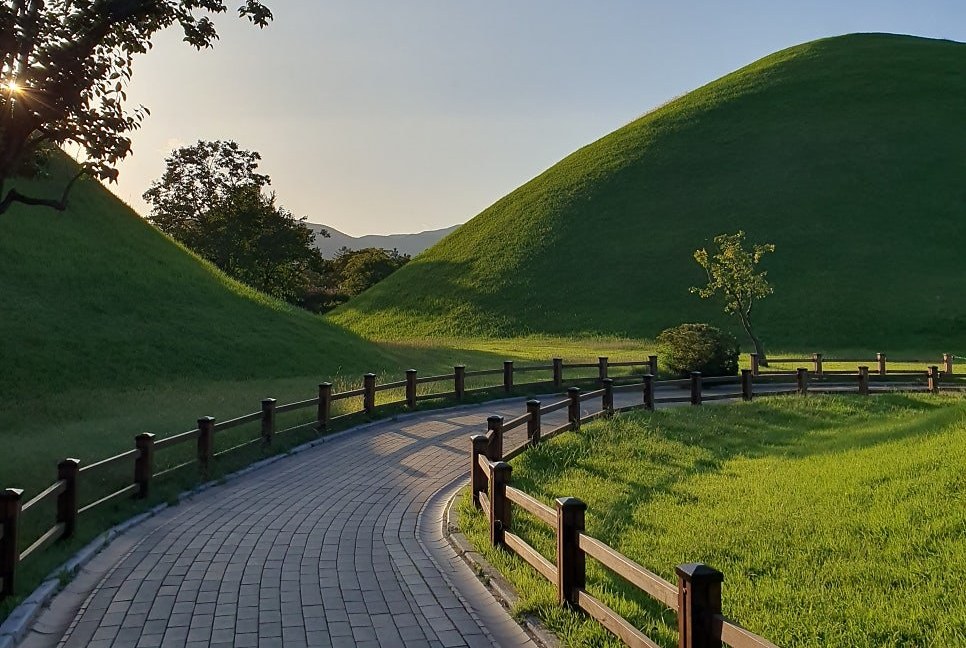 A curving walking path between the grassy royal tombs of Daereungwon
Cheonmachong is the only tomb you can enter (around 3,000 won). It is about 12.7 metres high and was excavated in the 1970s, when archaeologists found a golden crown and other treasures. What you see inside are replicas, as the originals are in the Gyeongju National Museum. Please don’t climb the mounds: if you want a picnic photo, sit on the lawn behind the paths.
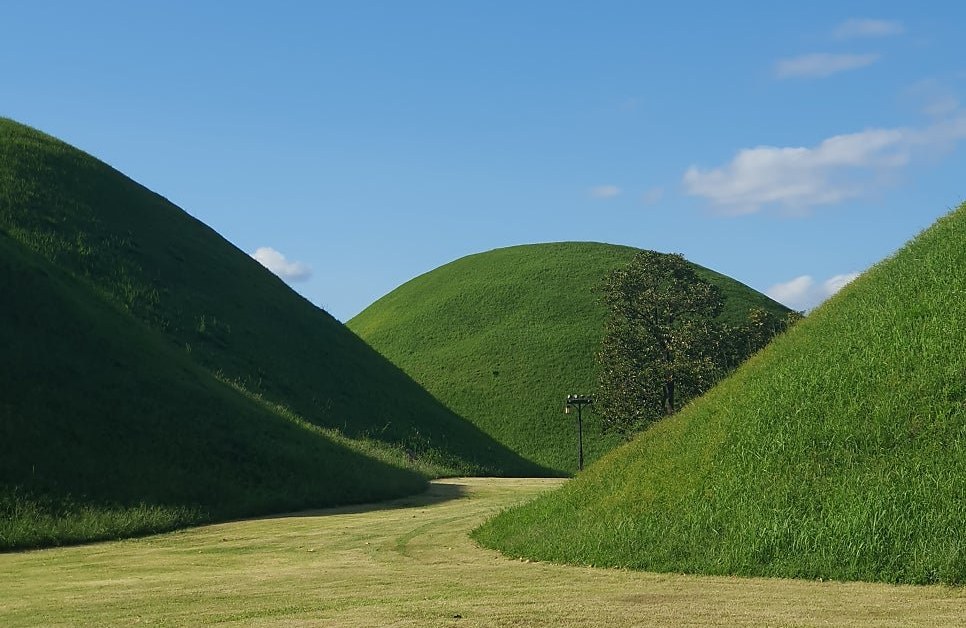 Three grassy Silla royal tomb mounds at Daereungwon under a clear sky
An Evening Walk: Donggung, Cheomseongdae and Woljeonggyo
The best of Gyeongju comes after dark, and all the night spots are within walking distance of each other. I timed my arrival at Donggung Palace and Wolji Pond (entry about 3,000 won) for sunset. The crowd is biggest right as the lights come on and thins out quickly afterwards, so stay a little longer and you get the reflections almost to yourself.
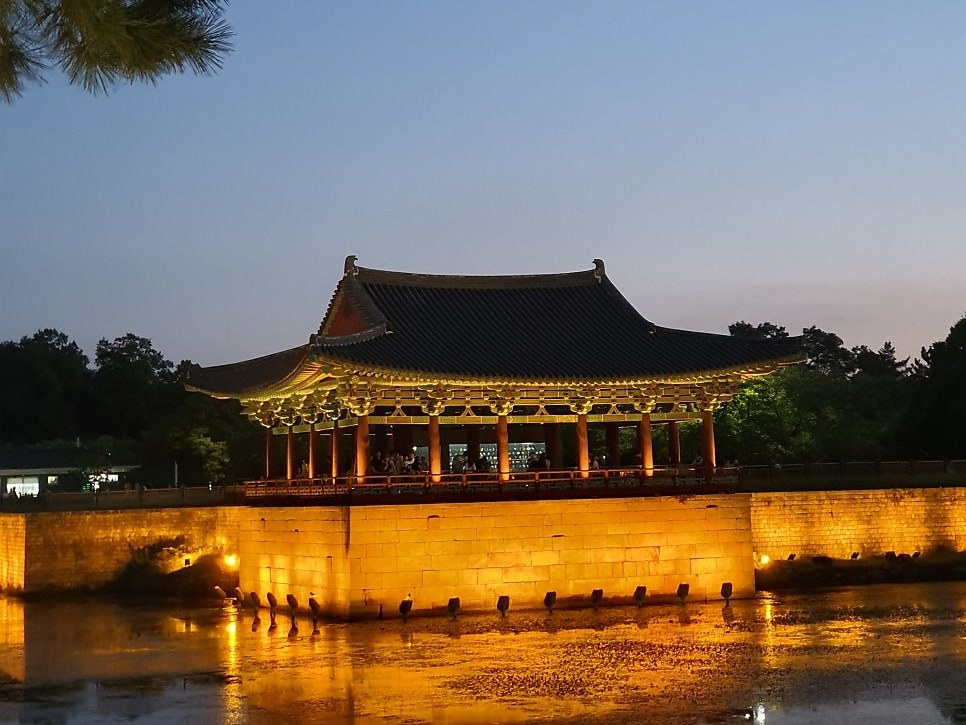 The illuminated pavilion of Donggung Palace reflected in Wolji Pond at dusk
From there it is a short walk to Cheomseongdae, the ancient stone observatory, which is lit up in pink at night. Then I continued to Woljeonggyo, a covered wooden bridge from the Silla period that was rebuilt in recent years. At night it glows red and green over the river, and you can walk right across it. Next door, the hanok lanes of Gyochon Village are calm and quiet in the evening, as most of the shops close early.
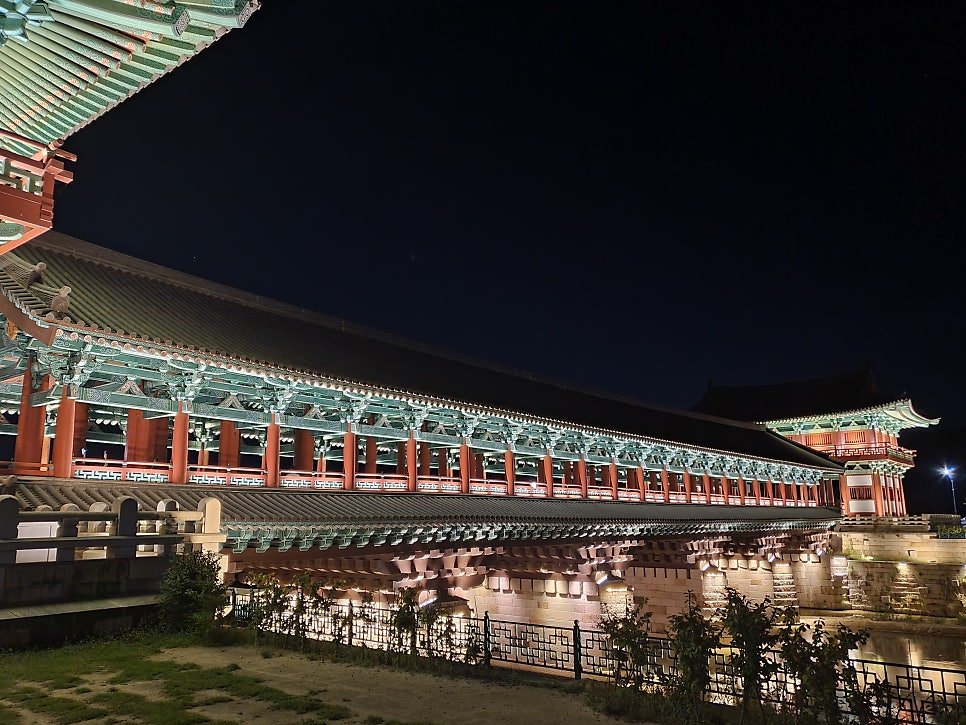 The illuminated Woljeonggyo covered bridge at night in Gyeongju
By the end of the day my phone said I had walked almost 30,000 steps.
Tips for Gyeongju in Spring
- Two blossom seasons: regular cherry blossoms peak in early April, while the double cherry blossoms around Bulguksa come about two weeks later.
- Go on a weekday: Hwangnidan-gil and the Bulguksa roads are packed on spring weekends.
- Eat dinner early: many restaurants near the bus terminal close surprisingly early, so don’t leave it until after your night walk.
- Wear good shoes: everything is walkable, which means you will walk a lot.
- Check opening hours on the official Gyeongju tourism site before you go.
Final Thoughts
Gyeongju felt completely different from Seoul or Busan: slower, greener and full of history you can simply walk into. Two days were enough to see the highlights, but I left wishing I had a third just to sit by the tombs with a coffee and do nothing. Next time I want to come back in autumn, when Bulguksa is famous for its maples.