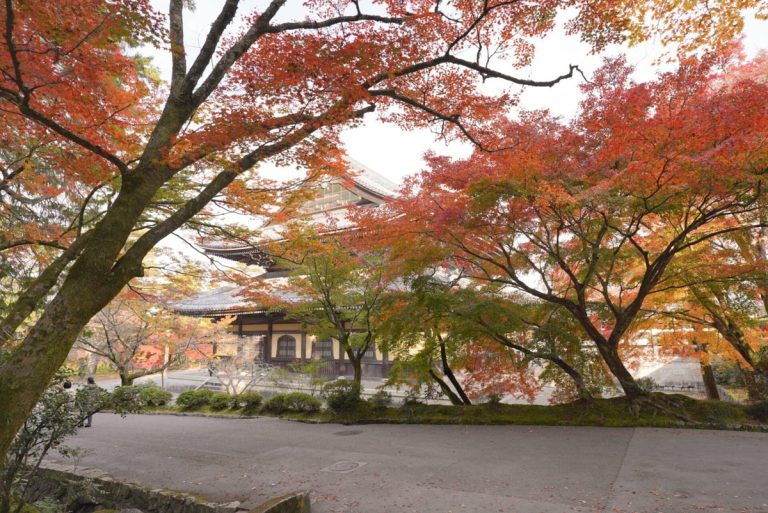
I had seen the photos a hundred times: wild deer wandering under pink cherry trees, giant wooden temples, bowing deer begging for crackers. I still was not prepared for how magical Nara feels in spring. A friend and I took a day trip from Osaka in early April, right at the peak of the cherry blossom season, and it ended up being my favourite day of the whole Japan trip.
Nara was Japan’s capital in the 8th century, long before Kyoto, and most of its great temples and shrines sit inside or around Nara Park, a huge green area on the east side of the city. Everything is walkable, so all you need is comfortable shoes and an early start.
Getting There and Beating the Crowds
From Osaka, the Kintetsu line takes you straight to Kintetsu Nara Station, which is the closest station to the park. From there it is about a 20-minute walk to Todaiji, or you can catch a local bus from the stop across the main road. JR Nara Station is a little further away but also works.
My biggest tip: go early. During the day the park is packed with tour groups and school trips, and the area in front of Todaiji felt as crowded as a city shopping street. Kasuga Taisha opens at 6:30 am and Todaiji at 7:30 am, and the first couple of hours are wonderfully calm. We arrived just before 8 am and had whole lawns almost to ourselves, apart from the deer and a few photographers with very long lenses.
The Deer of Nara Park
There are around 1,200 to 1,300 deer living in and around the park. According to legend, the god of Kasuga Taisha arrived in Nara riding a white deer, so the animals have been treated as sacred messengers for centuries. Today they are protected as a natural monument, and they are technically still wild: they eat, sleep and wander wherever they like, including across the roads, where cars patiently stop for them.
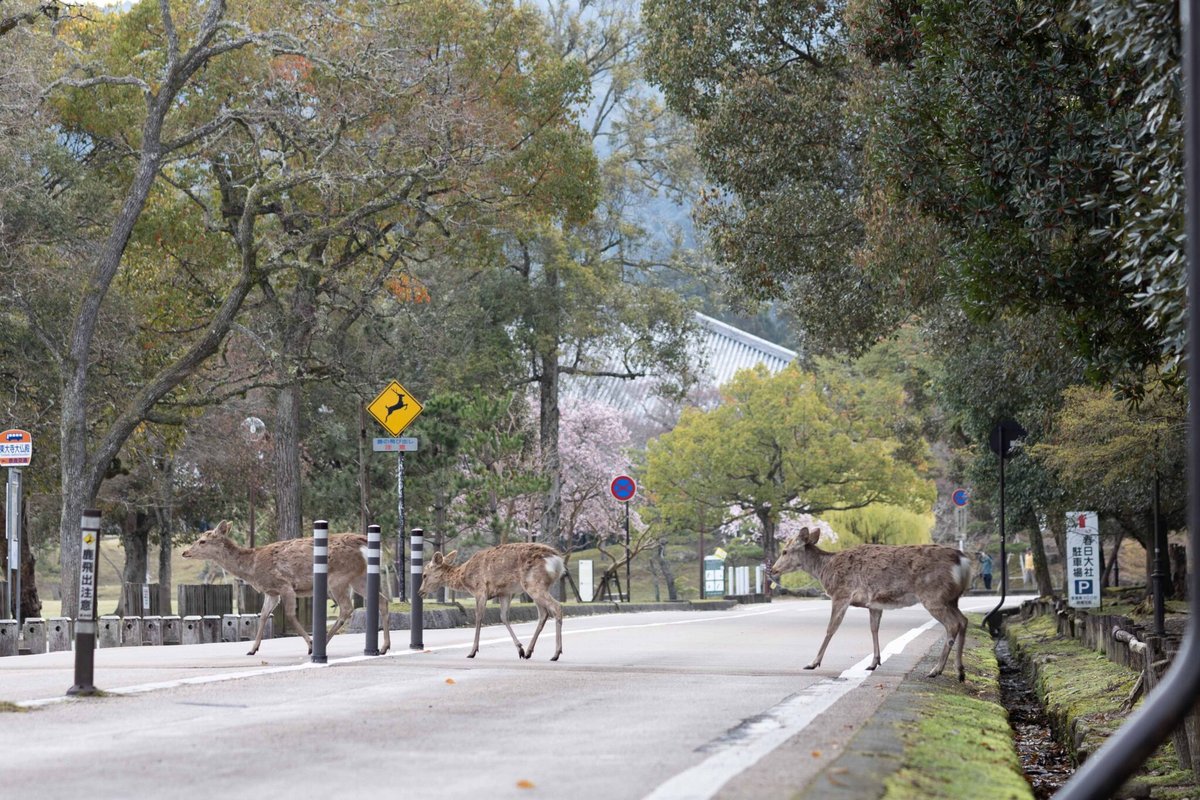 A group of deer crossing a road in Nara Park while traffic waits
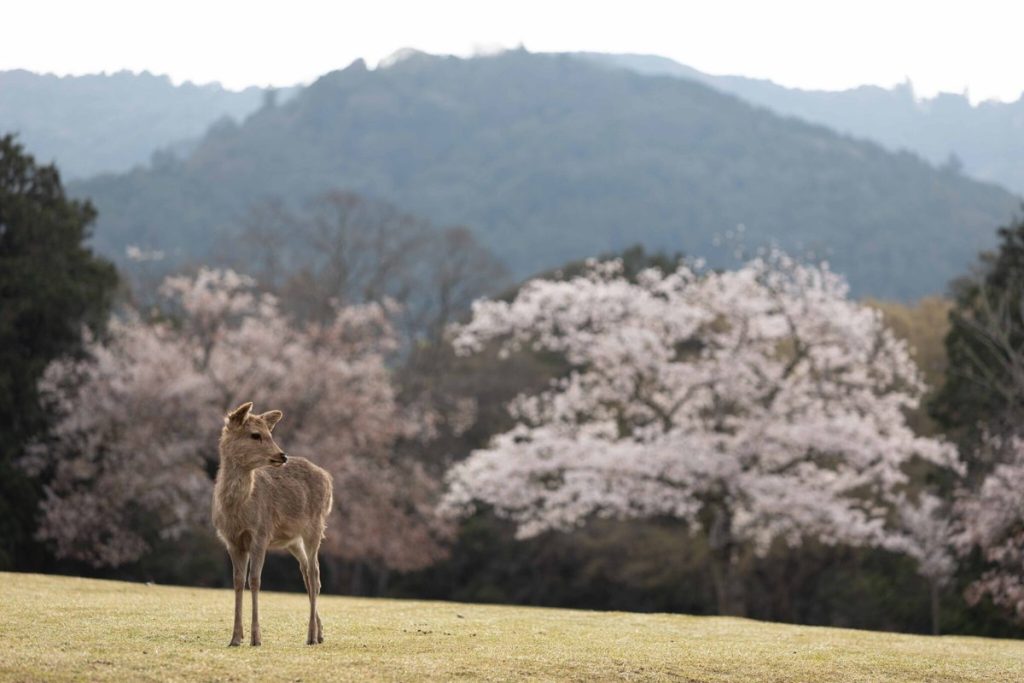
The best cherry blossom and deer combination was on the open lawns of Tobihino and Kasugano, between Todaiji and Kasuga Taisha. Deer were dozing in the shade of trees in full bloom, and every few minutes a gust of wind sent petals floating down on them. I took far too many photos.
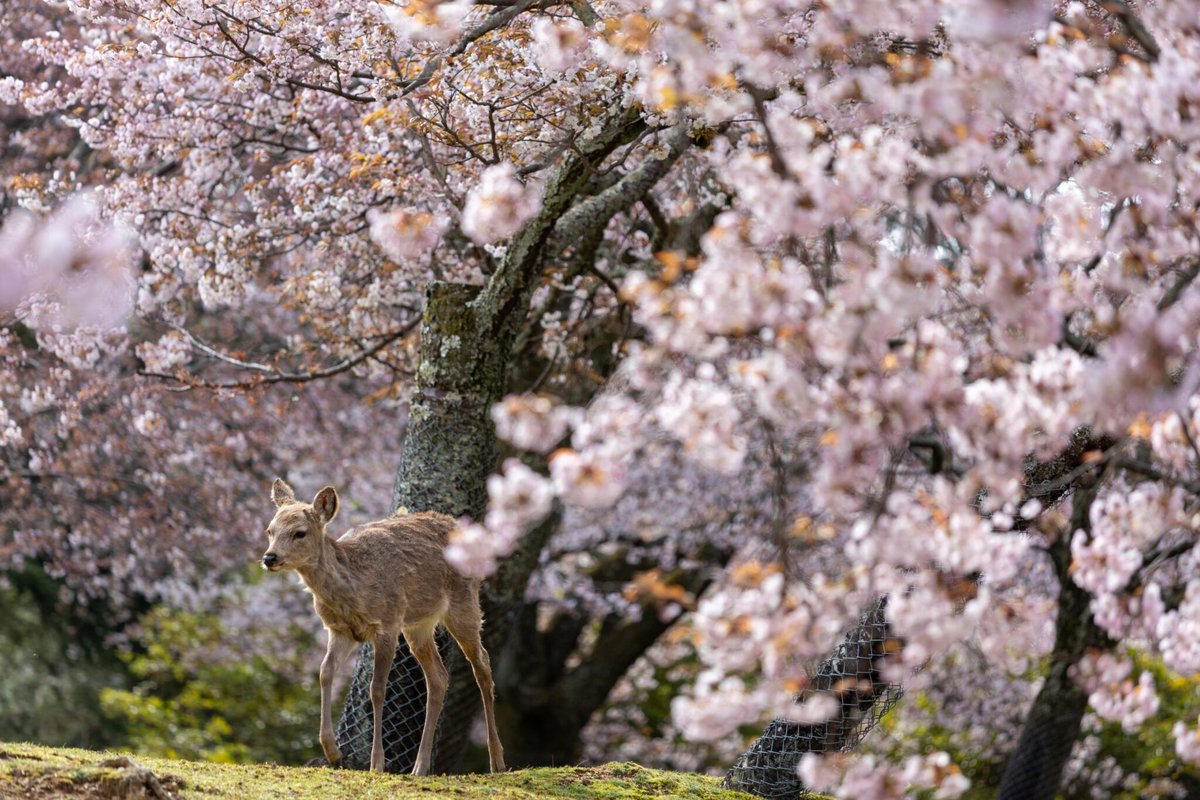 A young deer standing under branches of pink cherry blossoms
You can buy shika senbei (deer crackers) from little carts around the park. Some deer really do bow before you give them one, which is adorable. But be warned: the moment they see food, they become very pushy. When I bought a skewer of sweet mitarashi dango for ¥100 (≈ $0.70 USD) near Todaiji, a ring of deer slowly closed in around me and stared until I finished. Keep snacks out of sight, do not tease them with crackers, and watch out for bags and paper maps, which they love to nibble.
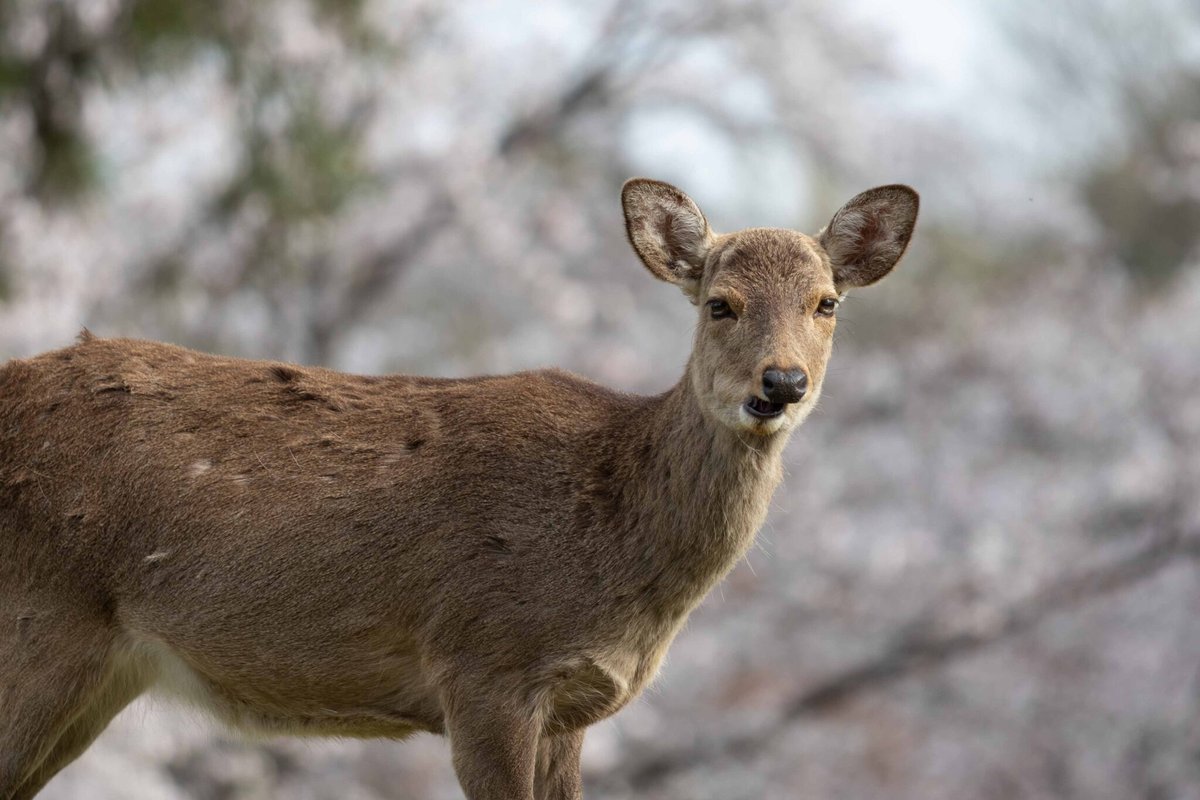 Close-up of a curious deer with blurred cherry blossoms in the background
Todaiji and the Great Buddha
The approach to Todaiji starts at the Nandaimon, a massive wooden gate rebuilt in 1203. Look up on both sides to see the two fierce guardian statues carved by the famous sculptors Unkei and Kaikei. Each is about 8.4 metres tall, and incredibly, they were completed in just 69 days.
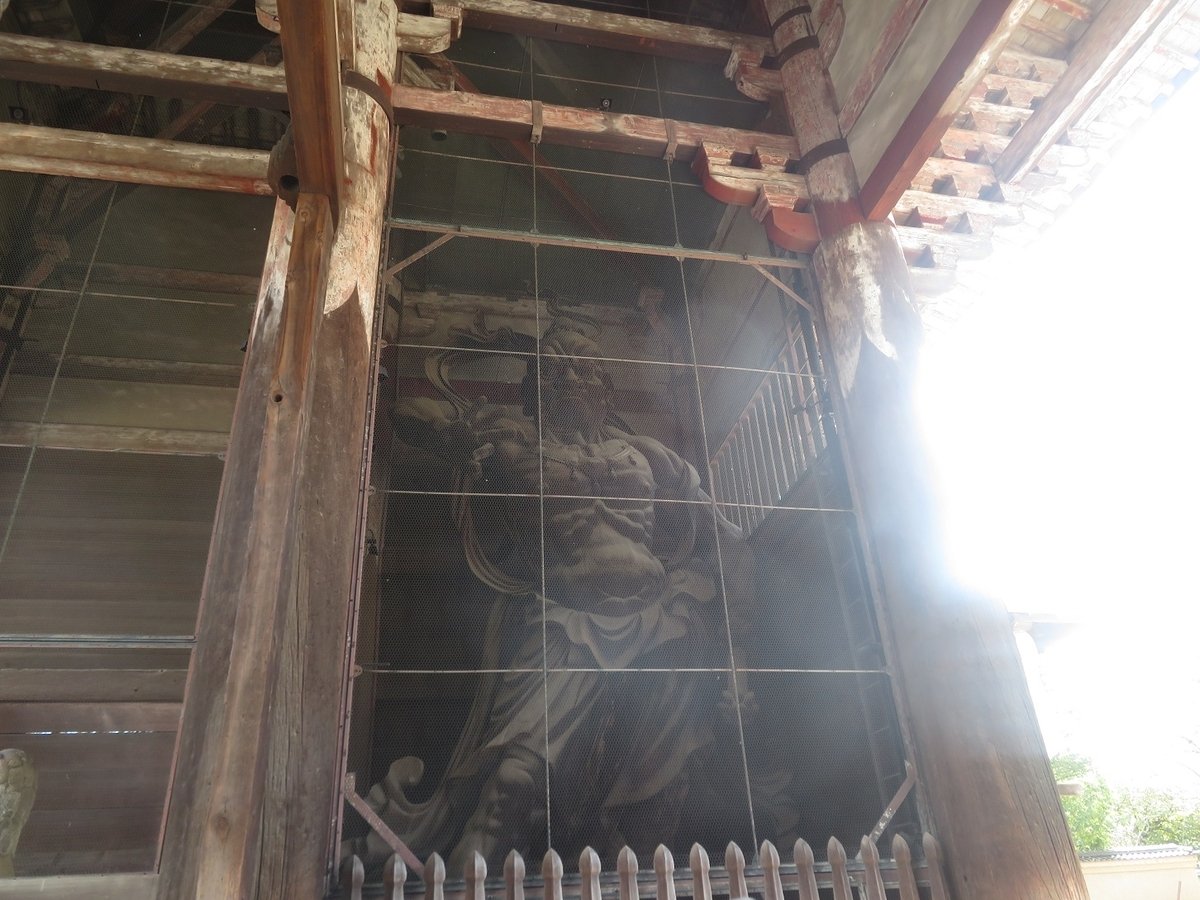 One of the huge wooden guardian statues inside the Nandaimon gate of Todaiji
The middle gate is usually closed, so walk around to the side entrance to reach the main hall, the Daibutsuden. It is about 57 metres wide and 48 metres high, one of the largest wooden buildings in the world, and yet the original hall was even wider. A weeping cherry tree in the garden next to it was in full bloom on our visit, which made the view even better.
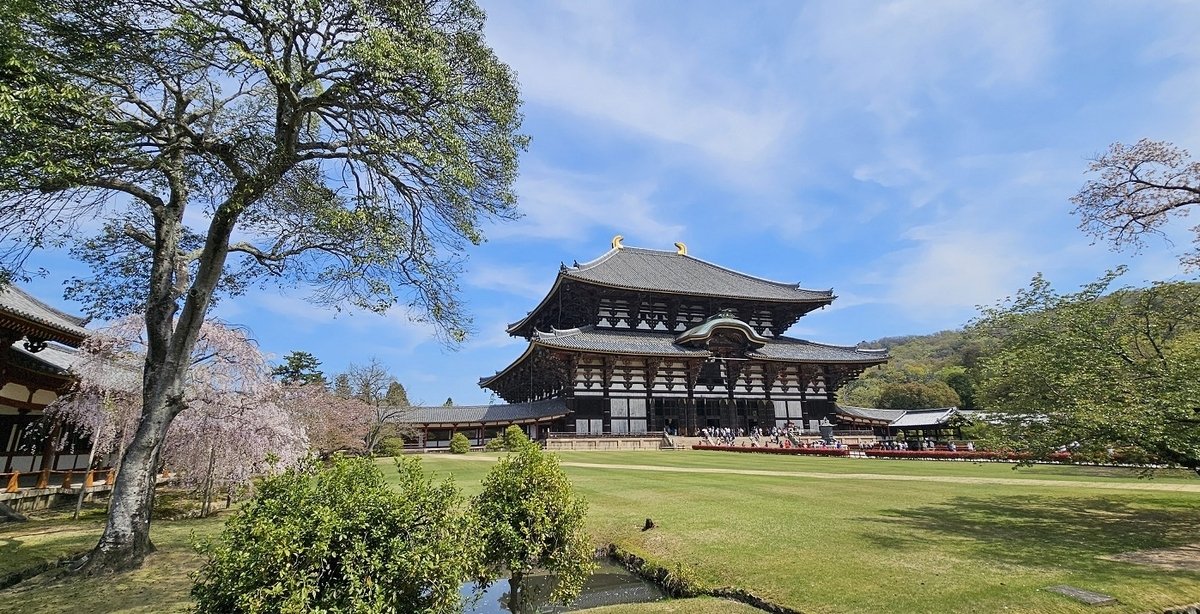 The Daibutsuden hall of Todaiji under a blue sky with a weeping cherry tree on the left
Inside sits the Great Buddha, a bronze statue around 15 metres tall. The area right in front of it is a busy walkway, so for a calmer look, move to the side or walk behind it. Admission to the hall is ¥800 (≈ $5.30 USD) for adults. Do not miss the two large Bodhisattva statues on either side of the Buddha, which would be the star attraction almost anywhere else.
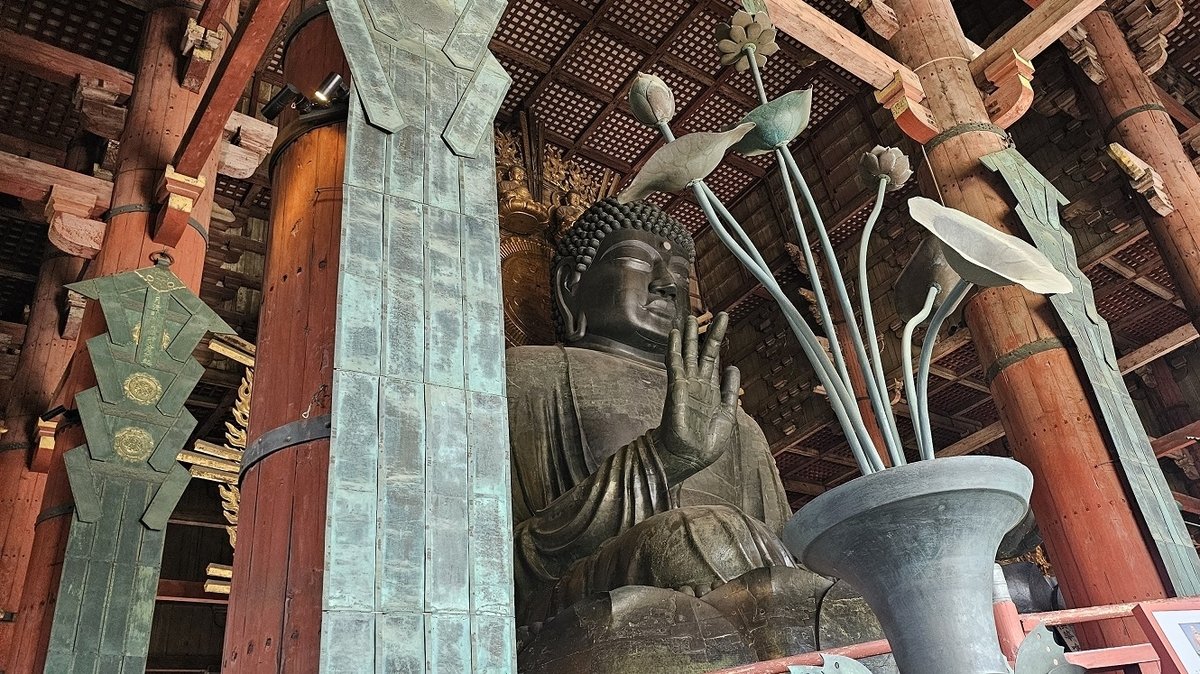 The bronze Great Buddha of Todaiji seen from the side between wooden pillars
Wakakusayama and Kasuga Taisha
From Todaiji we walked uphill to Mount Wakakusa, a grassy hill whose lower slopes are open to visitors from 9 am in season. The climb is short but steep, and the reward is a wide view over the rooftops of Nara with mountain cherry trees in bloom and, of course, more deer.
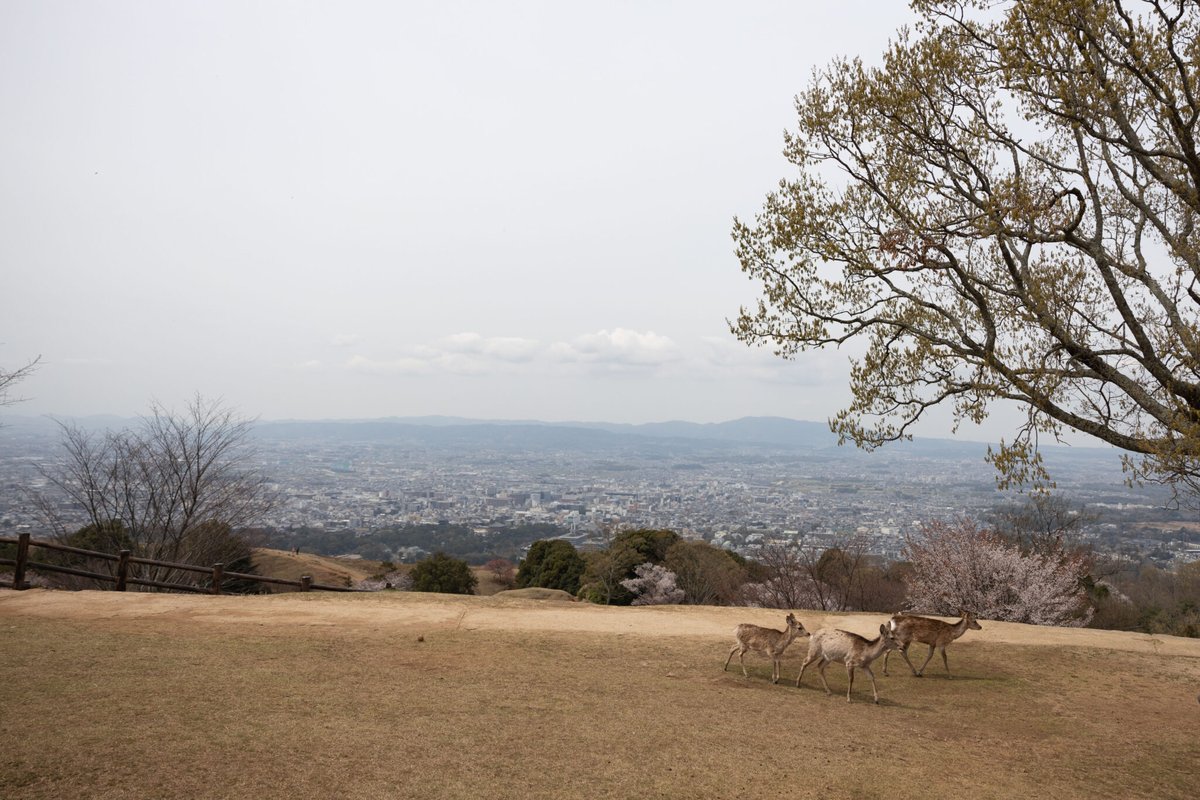 View over Nara city from the grassy slopes of Mount Wakakusa with deer grazing
Our last stop was Kasuga Taisha, a World Heritage shrine founded in the Nara period to protect the capital. Its forest paths are lined with stone lanterns, and there are roughly 3,000 lanterns in total, donated over many centuries. They are all lit only twice a year, in February and August, but inside the shrine there is a dark room that recreates the effect. One small detail: the main gate is on the south side of the shrine, so if you come from Todaiji, you have to walk around.
Tips for Visiting Nara in Spring
- Time the blossoms. The cherry trees in Nara Park usually peak in late March or early April. Check the blossom forecast a week before you go.
- Start at sunrise if you can. The park is peaceful before 9 am and very crowded by late morning.
- Respect the deer. They are wild animals. Feed them only the official crackers, and keep children close when the deer gather.
- Kofukuji’s pagoda is under repair. The famous five-storey pagoda near the station is covered for long-term restoration, so do not plan your photos around it.
- Wear good shoes. We walked well over 15,000 steps without even noticing.
Final Thoughts
Nara in spring is pure joy. Where else can you watch a deer nap under a cherry tree, then stand in front of a 15-metre bronze Buddha, all before lunch? It is an easy day trip from Osaka or Kyoto, but I would happily spend a night here next time, just to have the park to myself again in the early morning.