Everyone who has been to Japan told me the same thing before I left: Tokyo is for sightseeing, Osaka is for eating. The locals even have a word for it, kuidaore, which roughly means “eat until you drop”. So a friend and I gave ourselves one simple mission for our two days in the city: skip the diet, walk a lot, and try as many of the famous snacks as our stomachs allowed.
We split the eating into two parts. One morning was for Kuromon Market, Osaka’s old fresh-food market, and one long late morning and afternoon was for the neon-covered streets of Dotonbori. The two areas are only about fifteen minutes apart on foot, so you can easily combine them in one day if you are brave.
Morning at Kuromon Market
Kuromon Market is a covered shopping street about 580 metres long with roughly 150 shops. People call it “Osaka’s kitchen”, and the name comes from a black gate that once stood at a temple nearby. The easiest way in is from Nippombashi Station on the Sennichimae subway line: take exit 10 and the market entrance is right there.
Come early. Most stalls open around 9 am and many of the seafood shops start packing up around 5 pm, so this is not an evening spot. We arrived just before ten on a grey, humid morning and the arcade was already busy with tour groups and shoppers, but the roof keeps you dry if the rainy-season showers start.
Sea Urchin, Oysters and Grilled Scallops
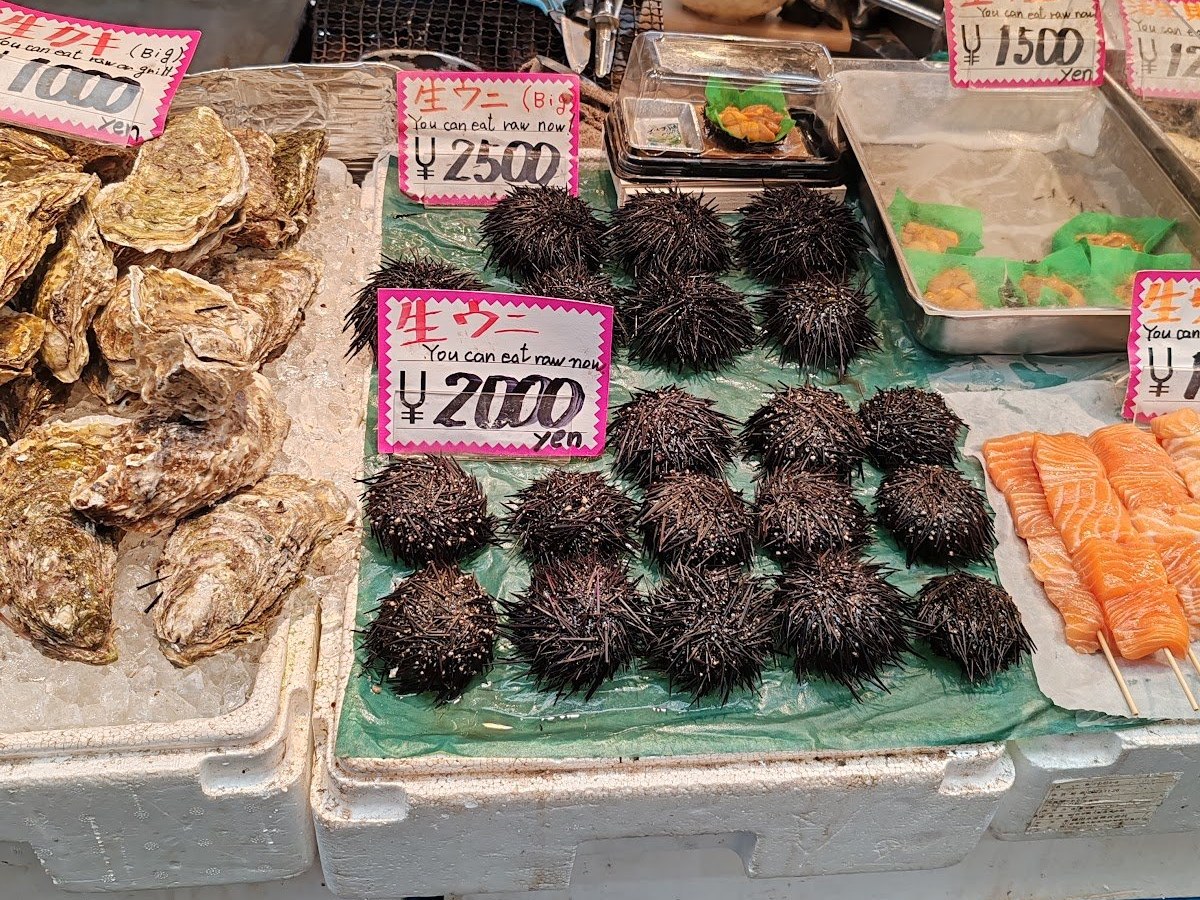 Sea urchins and fresh oysters with handwritten price tags at Kuromon Market
The seafood stalls are the main show. Huge oysters, whole sea urchins, scallops on the half shell and skewers of salmon sit on ice with handwritten signs saying “you can eat raw now”. Point at what you want and the staff will open it, grill it or slice it for you on the spot. A whole raw sea urchin cost around ¥2,000 (≈ $14 USD) and a big oyster around ¥1,000 (≈ $7 USD). It is definitely tourist pricing, but the quality is excellent and you get to eat it fresh from the shell, which is hard to beat.
For something cheaper, look out for the fruit stalls. Cut melon on a stick was just ¥200 (≈ $1.40 USD), sweet and ice-cold, and we ended up buying it three times over our two visits. Next to the fruit there are pickle shops, tofu and soy milk sellers, and stands grilling eel and wagyu skewers.
A Tuna Feast
Our big splurge was at a tuna specialist in the middle of the market. They display the different cuts of tuna, from lean red meat to fatty belly, and will cut your choice into sashimi, sushi or a rice bowl. We picked a plate of tuna sashimi and, because there was a small table grill, some wagyu beef to cook ourselves. The two plates together came to ¥7,700 (≈ $53 USD).
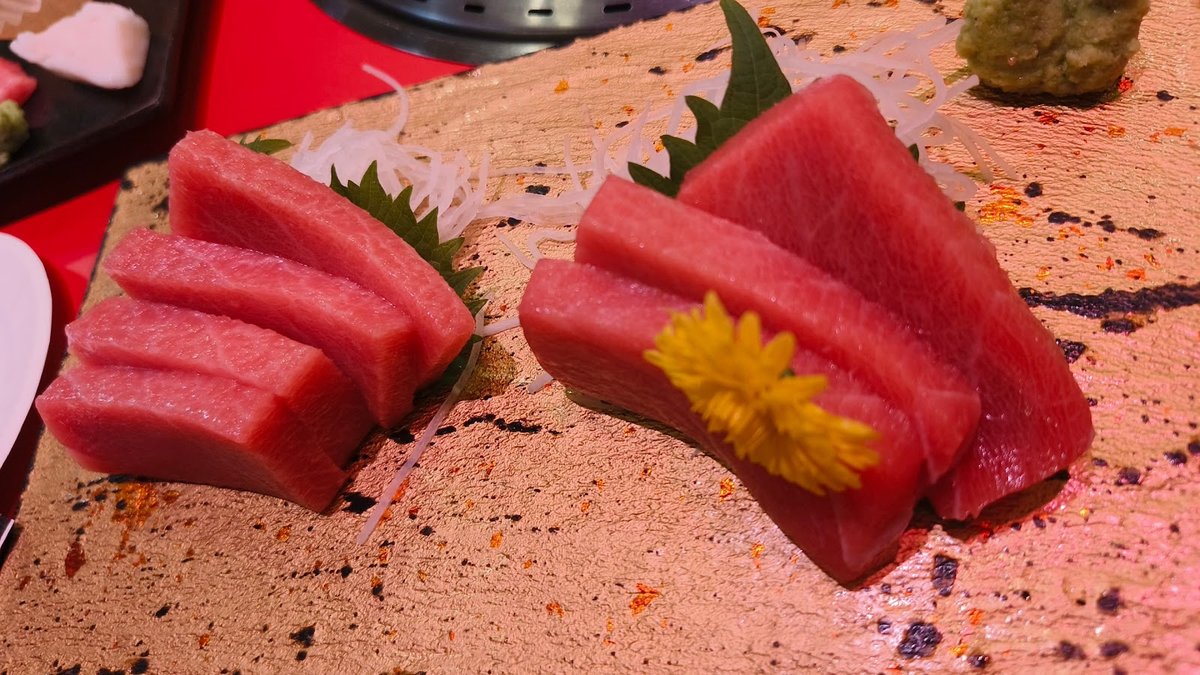 Thick slices of fresh tuna sashimi on a wooden board at Kuromon Market
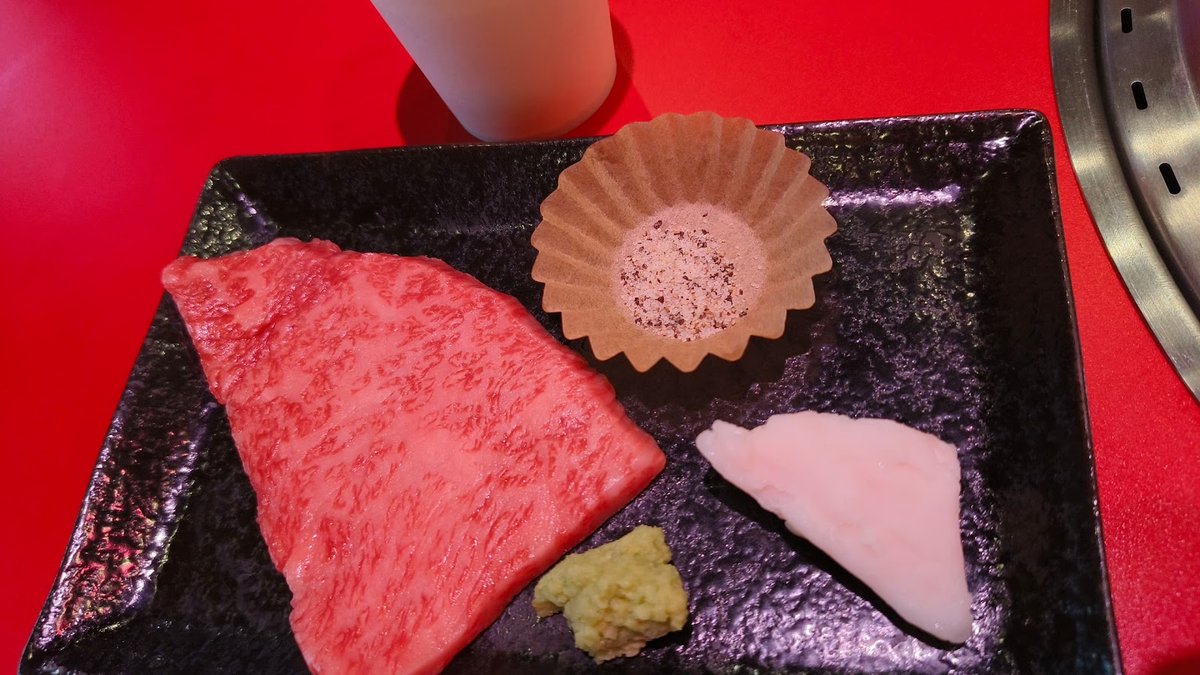 A marbled slice of wagyu beef ready for the table grill
Expensive for a market lunch, yes. But the tuna was thick, cold and almost buttery, and the wagyu melted after a few seconds on the grill. In Saigon I would never pay this much for lunch, but on holiday it felt like the right place to treat ourselves.
An Afternoon of Grazing in Dotonbori
After a rest at the hotel we walked over to Dotonbori, the canal-side strip famous for its giant signs: a mechanical crab, a dragon bursting out of a ramen shop, a giant octopus and, of course, the running man billboard. The trick here is to eat small portions so you can keep going.
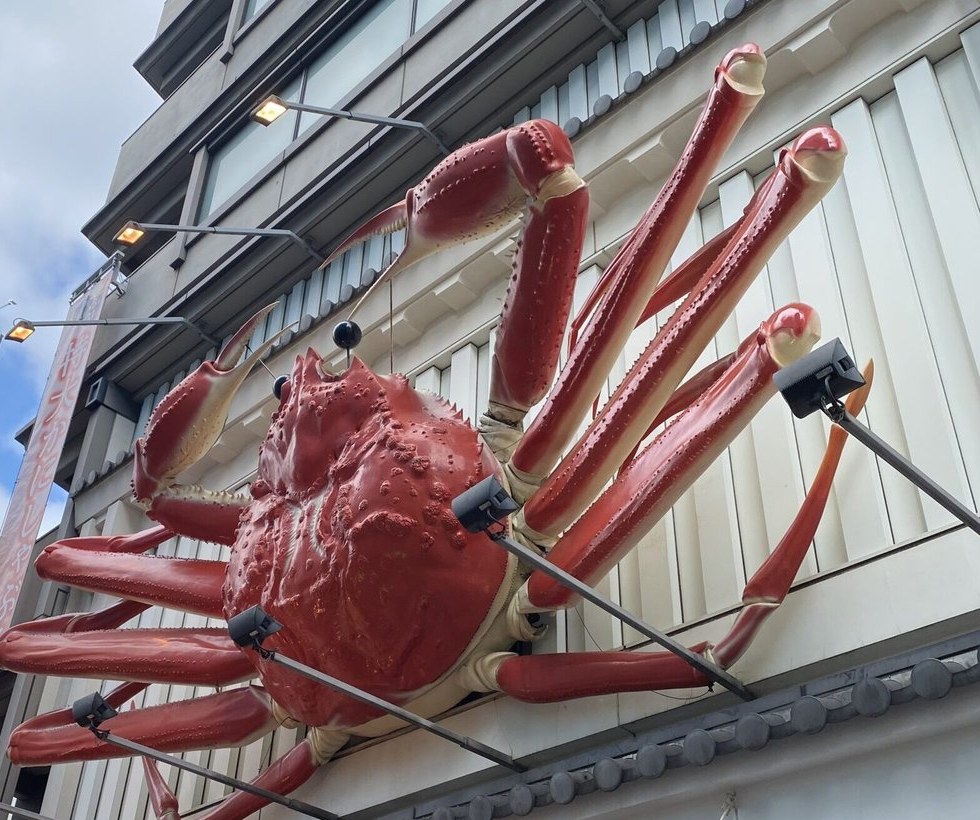 The famous giant moving crab sign above a restaurant in Dotonbori
Ramen at the Dragon Shop
We started at Kinryu Ramen, the place with the huge green dragon on the roof. The broth is a light, milky pork-bone soup, and the best part is that garlic chives, kimchi and garlic are free, so you can load up as much as you like. It is open around the clock, which makes it a handy late-night option too.
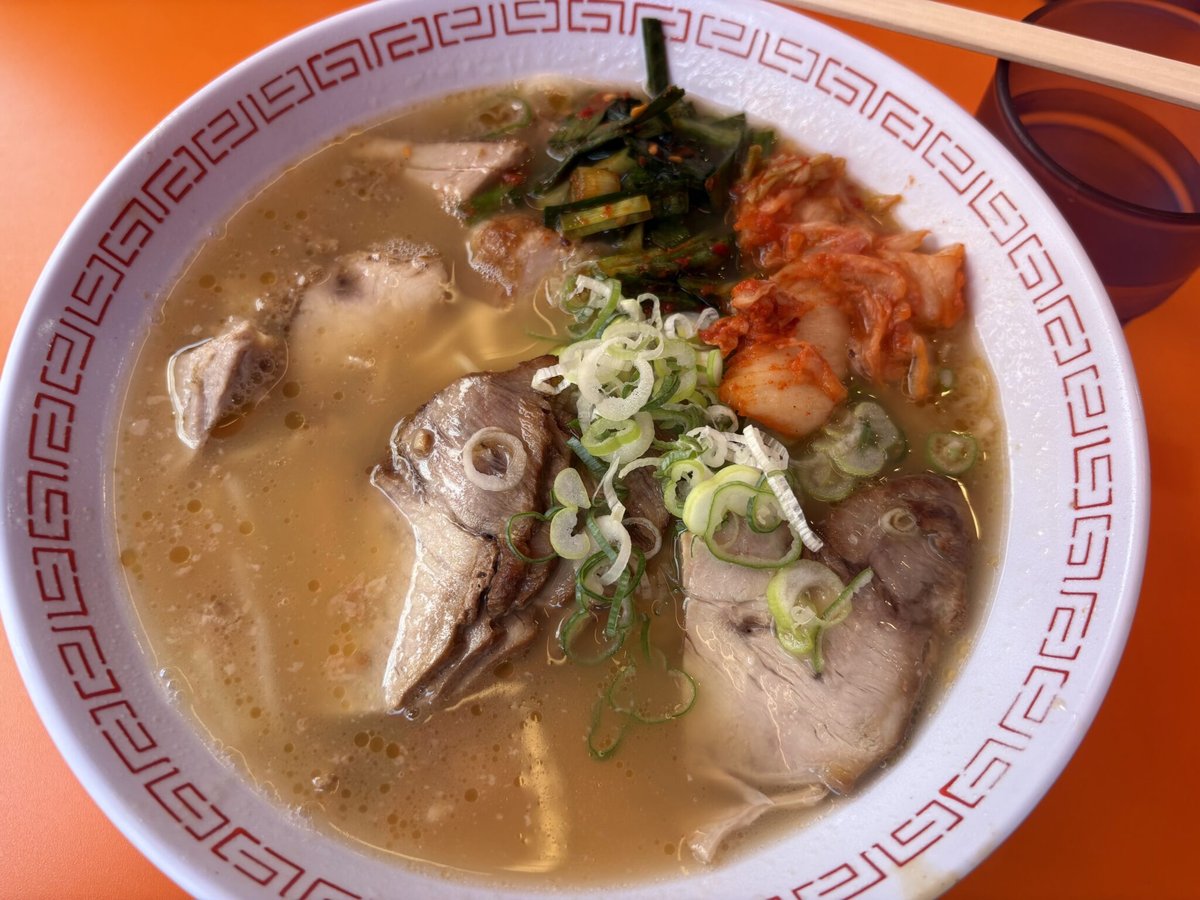 A bowl of tonkotsu ramen topped with kimchi, chives and pork
A Takoyaki Taste Test
You cannot come to Osaka without takoyaki, the little batter balls with octopus inside, so we did a mini taste test. Kukuru always has a queue, but the line moves and the balls are big, soft and full of chunky octopus pieces with a strong dashi flavour. Acchichi Honpo lives up to its name (“hot hot”): molten inside and generously covered in sauce and mayonnaise. Another stall, Kureoru, sells boxes from just four pieces, perfect when you only want a bite. If you see takosen, takoyaki pressed between two large shrimp crackers, try that too.
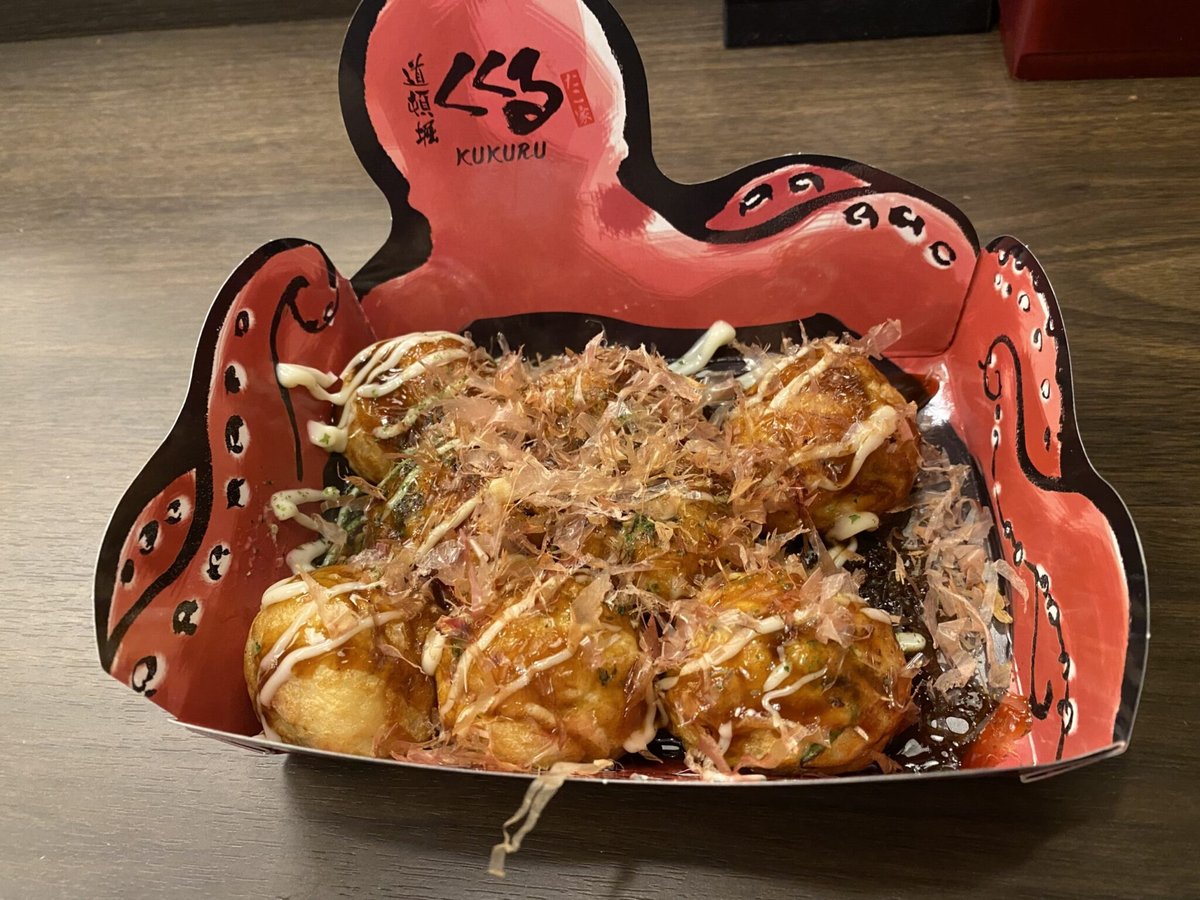 Takoyaki topped with bonito flakes and mayonnaise in an octopus-shaped box
Kushikatsu: Remember the Rule
Next stop was Kushikatsu Daruma, easy to find thanks to the giant chef statue outside. Kushikatsu are deep-fried skewers of meat, seafood and vegetables, and the famous house rule is no double dipping in the shared sauce. We went at around 4 pm and walked straight in; by the time we left, there was a long line outside. Beef and lotus root were our favourites.
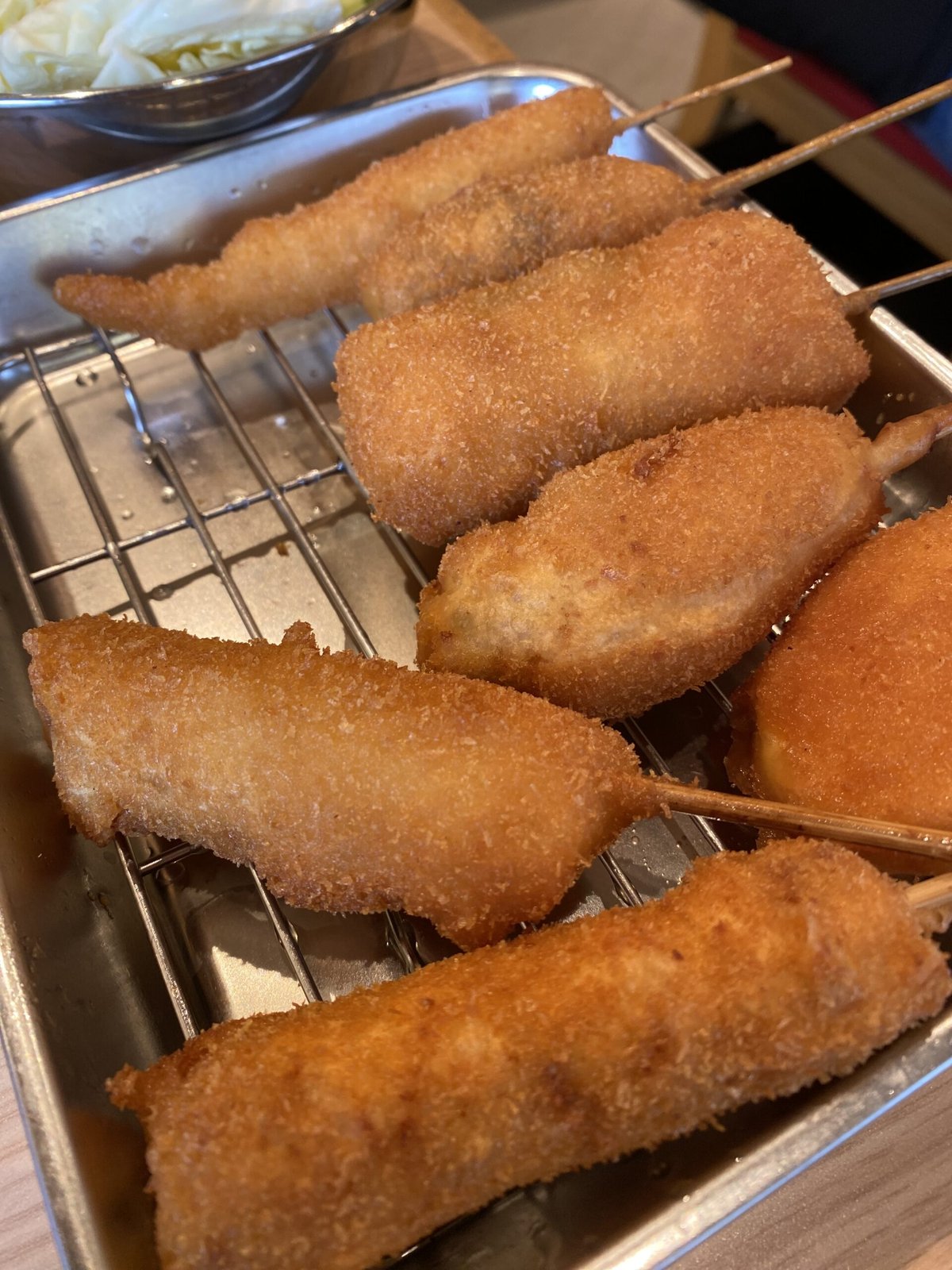 Golden deep-fried kushikatsu skewers on a metal rack
On the way out we grabbed a steamed crab bun from the takeaway window of Kani Doraku, the restaurant under the giant crab. It is small, soft and full of crab flavour, the ideal walking snack.
Okonomiyaki to Finish
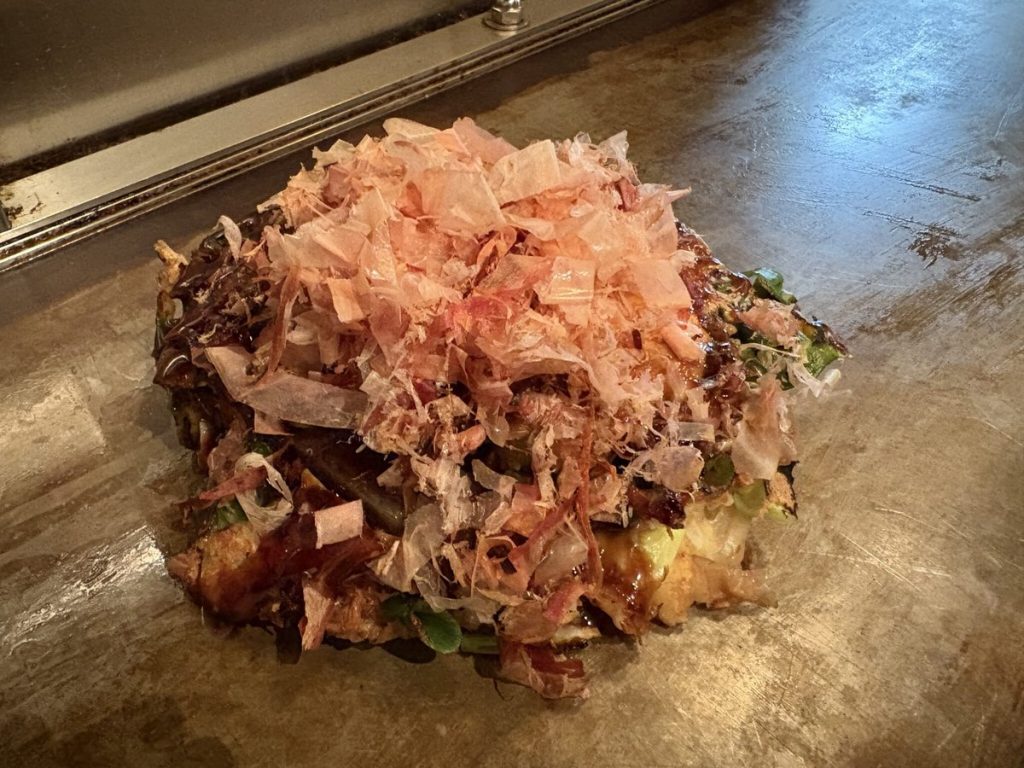
We finished at a calmer, sit-down okonomiyaki restaurant. Our savoury pancake was made with beef tendon and konjac, with a light, fluffy batter and a mountain of dancing bonito flakes on top. We also shared a plate of tonpei-yaki, pork wrapped in a thin omelette, which goes dangerously well with a cold beer.
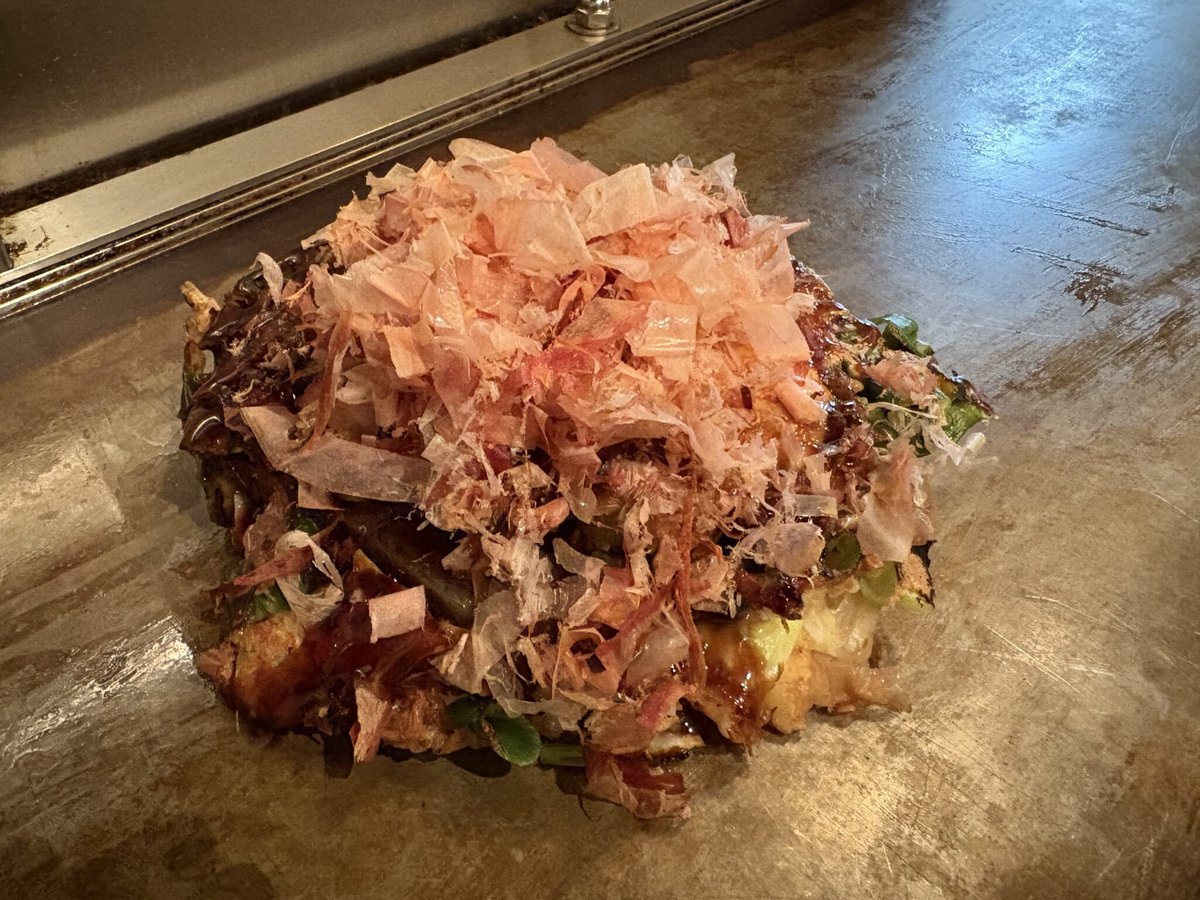 Okonomiyaki covered in bonito flakes and sauce on a hot iron griddle
Tips for Eating Your Way Through Osaka
- Go to Kuromon in the morning. Stalls open around 9 am and many seafood shops close by late afternoon.
- Start Dotonbori before lunch. The popular shops get long queues in the evening; mid-morning and mid-afternoon are much easier.
- Share everything. Order one portion between two people so you can try more places.
- Carry cash and wet tissues. Cash keeps the queues moving at small stalls, and takoyaki sauce gets everywhere.
- Dress for the heat. Early summer in Osaka is hot and sticky with sudden showers, so bring a small umbrella and drink plenty of water.
Final Thoughts
Osaka absolutely lived up to its reputation. In two days we barely visited a single museum, and I do not regret it at all. Between the fresh seafood at Kuromon and the endless snacks under the neon signs of Dotonbori, this is a city where the food is the attraction. Come hungry, wear comfortable shoes, and do not double dip.