
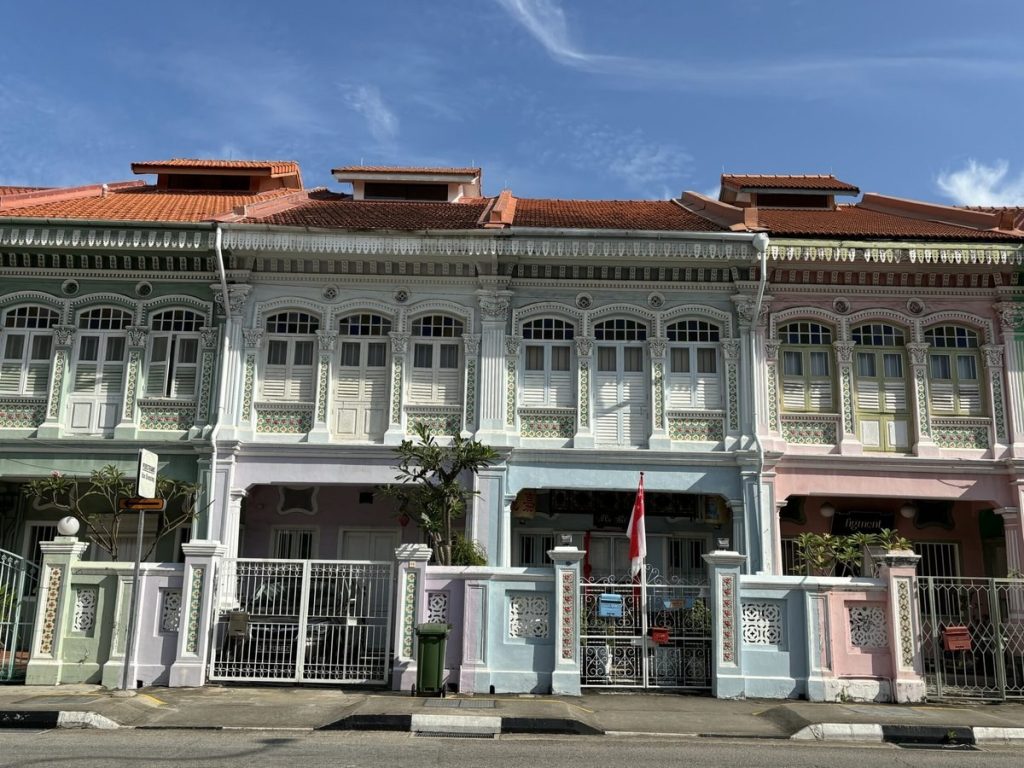
On my previous trips to Singapore I spent most of my time around Marina Bay and Orchard Road. This time I wanted the opposite: older neighbourhoods where people actually live, with low buildings, cheap food and streets you can wander without a plan. So I gave one morning to Tiong Bahru and a full day to Katong and Joo Chiat, two of the city’s most charming heritage areas. May in Singapore is hot and sticky, with the odd afternoon thunderstorm, so I started early both days and rested in cafés whenever the sun got too strong.
Katong and Joo Chiat: Singapore in Pastel Colours
Katong and Joo Chiat in the east of the island are the heartland of the Peranakan, or Straits Chinese, community. Their ancestors were Chinese traders who married into local Malay families; the men are called Baba and the women Nyonya, which is also the name of their cuisine. Wealthy Peranakan families built their homes here, and the area still has the best-preserved collection of their colourful houses.
Getting there is easier than it used to be. I took the Thomson-East Coast Line to Marine Parade station and walked north to Joo Chiat Road in about ten minutes.
Breakfast: Banh Mi in Katong
Here is something I did not expect: Joo Chiat has a lot of Vietnamese restaurants, a legacy of the Vietnamese community that once settled in the area. Of course I had to test them. At a bright, modern sandwich shop on Joo Chiat Road I ordered a traditional banh mi and a passion fruit iced tea for S$8 (≈ $6 USD) in total. The bread was crisp, the pickles crunchy, and it honestly tasted close to home, though a Saigon street vendor would have added more coriander.
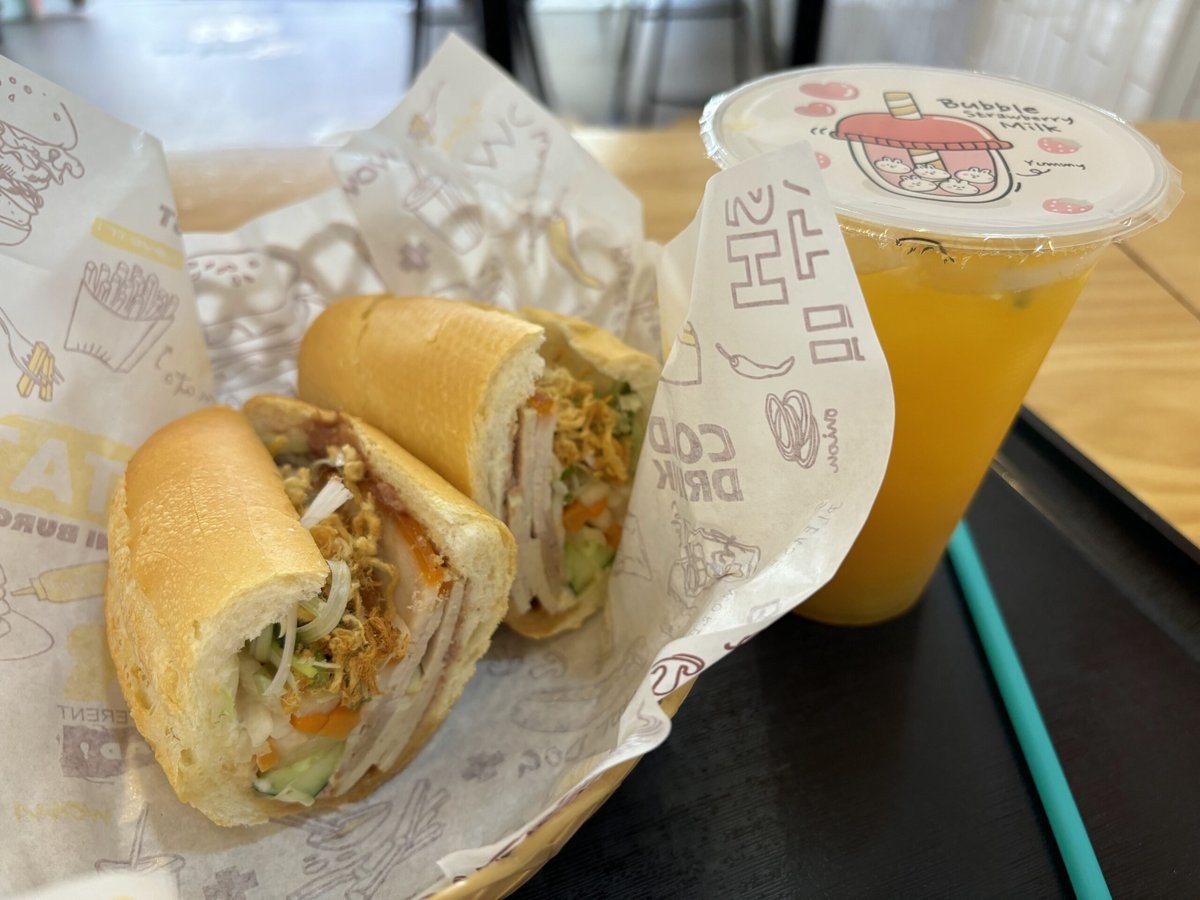 A Vietnamese banh mi sandwich and a passion fruit iced tea in Katong
Joo Chiat Road and Koon Seng Road
Walking back along Joo Chiat Road, I felt like I was inside a postcard. The two-storey shophouses here mix Chinese, European and Malay styles: shops on the ground floor, homes upstairs, with carved plaster, louvred windows and patterned tiles. Look down, too, because some paving stones carry little round “Joo Chiat Heritage” plaques.
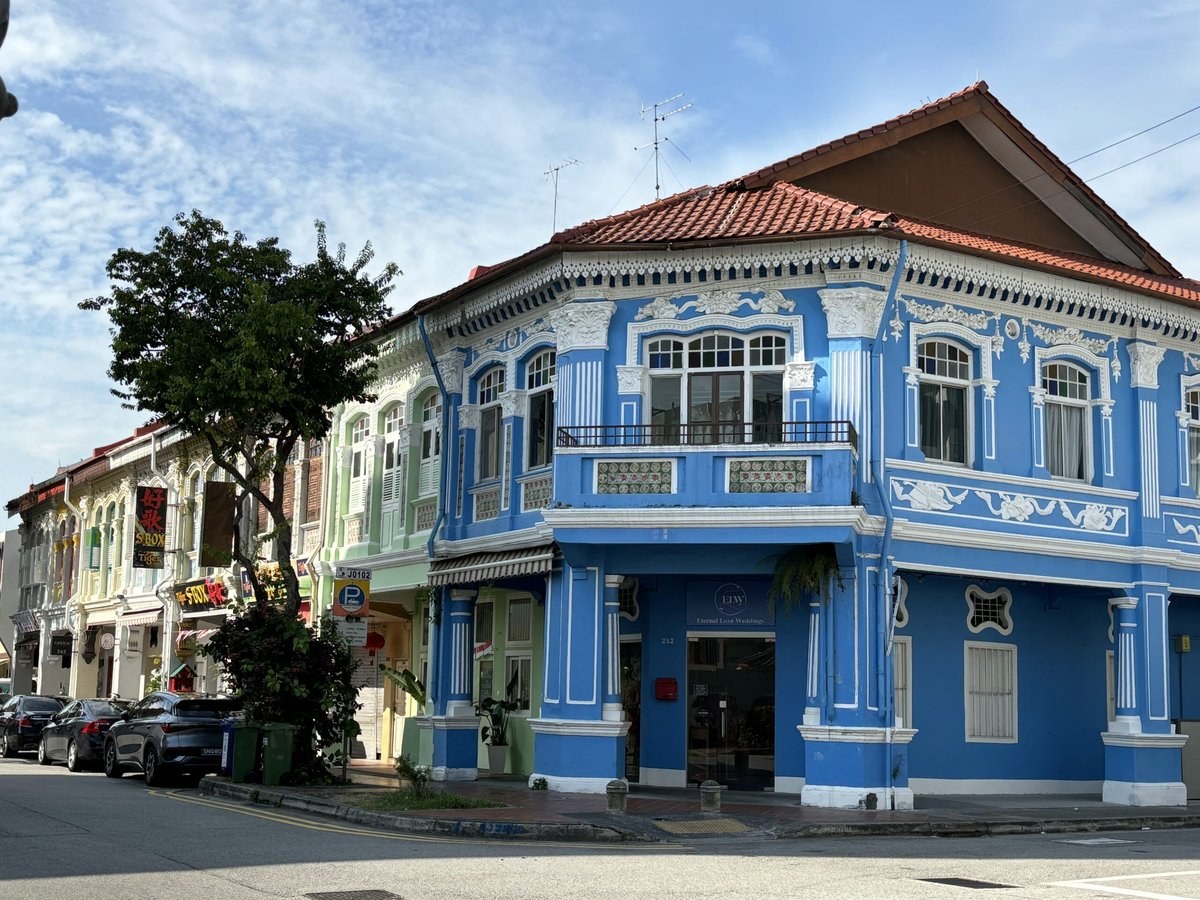 A bright blue Peranakan corner shophouse with white plaster details in Joo Chiat
The most famous spot is a short detour onto Koon Seng Road, where two rows of pastel terrace houses face each other: mint, pink, lilac and cream, each with its own gate and front garden. Most were built in the early 20th century and are now protected, so the facades cannot be changed. Remember that people live here. Keep your voice down, do not open gates, and take your photos from across the street, watching out for passing cars.
Raised Terrace Houses and a Peranakan Shop
Near the i12 Katong mall, a few streets hide another style: terrace houses raised on short stilts, with curving staircases leading up to the front door. They felt more like homes than shops, and the colours, bright pink with yellow windows next to soft blue, were even bolder.
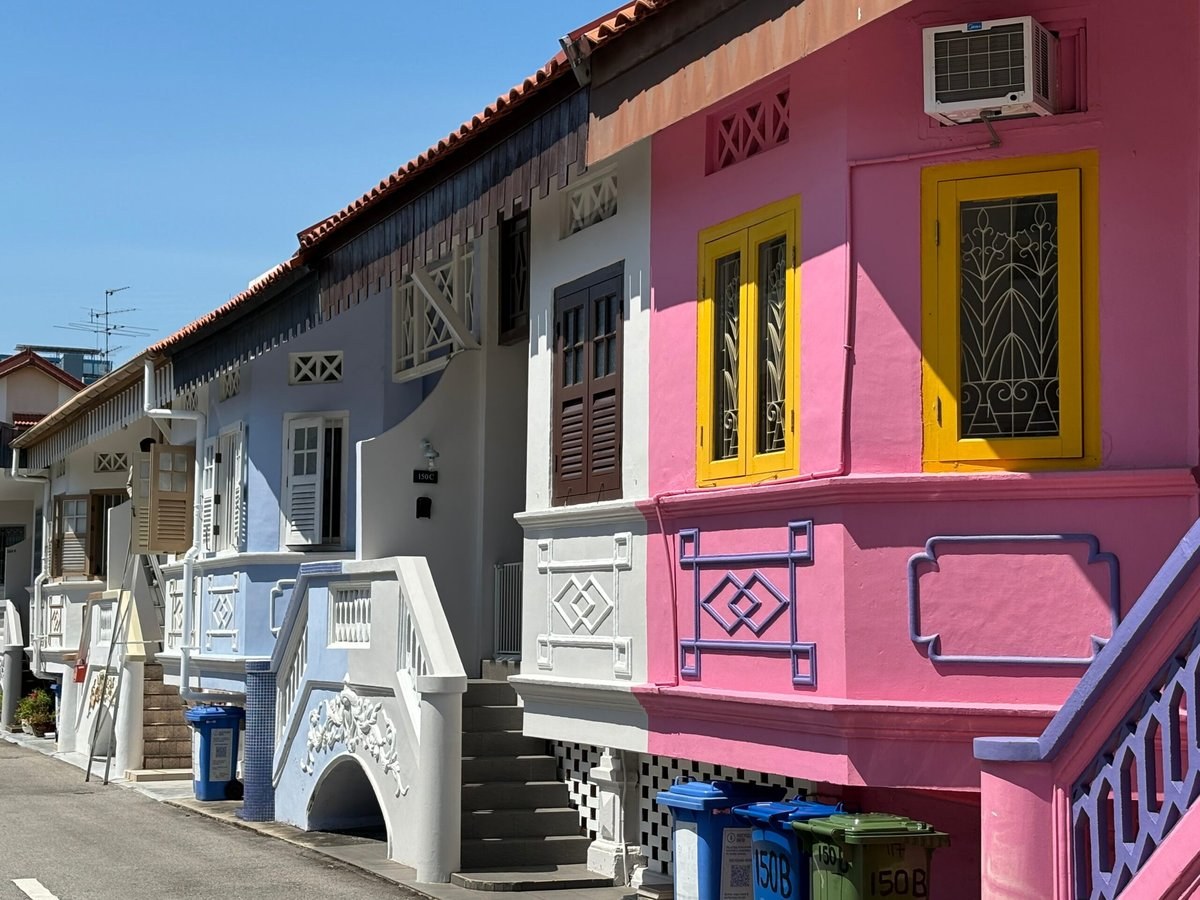 Colourful raised Peranakan terrace houses with decorative front staircases in Katong
Close by is Kim Choo Kueh Chang, an old family shop selling Nyonya cakes and rice dumplings, plus Peranakan crafts at the back. A staircase leads upstairs to a small display of Peranakan furniture and porcelain, set up like a real home. The bright pink and green kamcheng jars with their lids and little knobs were my favourite, and seeing everything together finally showed me what the inside of these houses would have looked like.
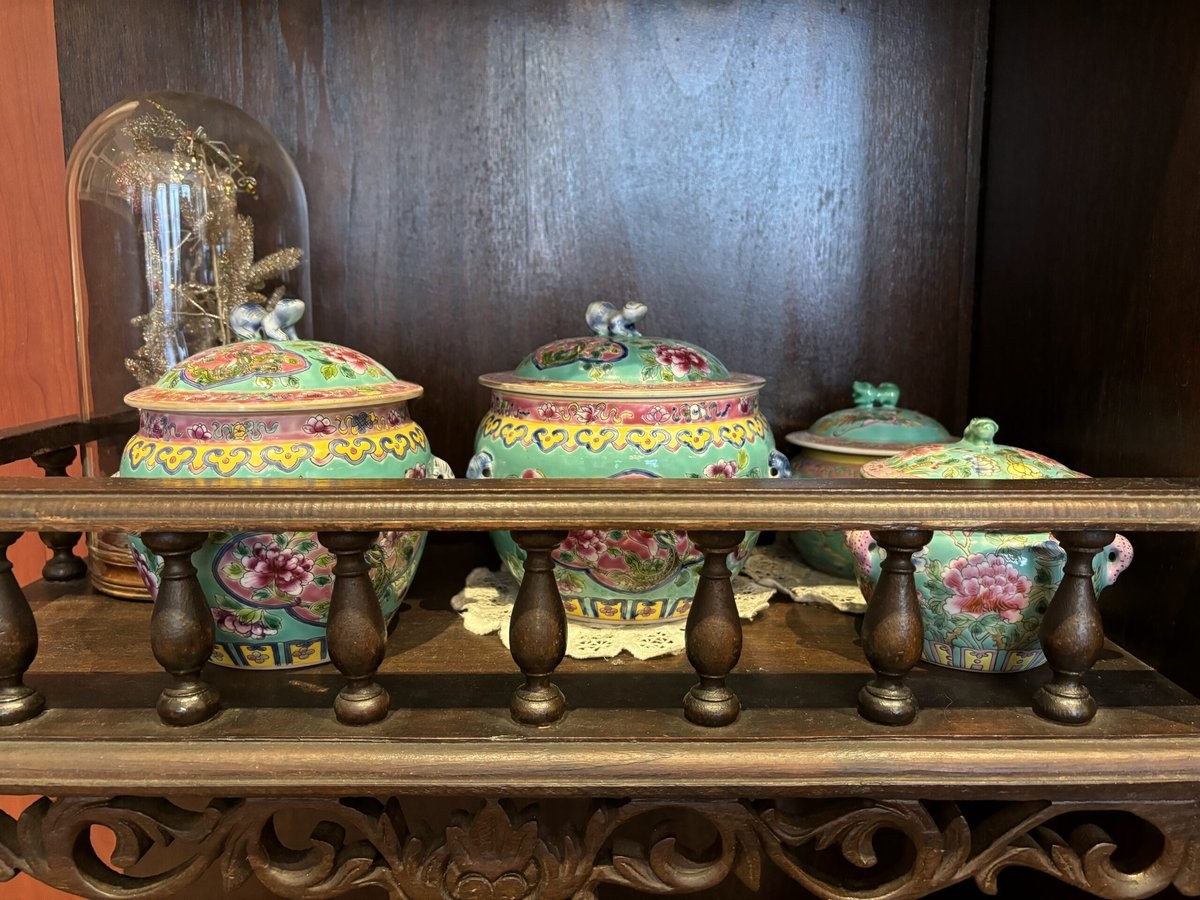 Colourful Peranakan porcelain kamcheng jars on a carved wooden shelf
When the heat became too much, I hid in a café inside the former Joo Chiat police station, a white colonial building that has been turned into a coffee shop.
The Great Katong Laksa Taste Test
You cannot visit Katong without eating laksa, the spicy coconut noodle soup the area is famous for. I did a small taste test. First, a small bowl from a stall in the food court of Roxy Square for about S$6: the broth was thick, creamy and full of shrimp flavour, with short rice noodles you eat with a spoon. Then I crossed the footbridge to 328 Katong Laksa, where a small bowl was around S$7.30. Its broth was thinner but spicier, with springier noodles. My vote goes to the first, but try both and decide for yourself.
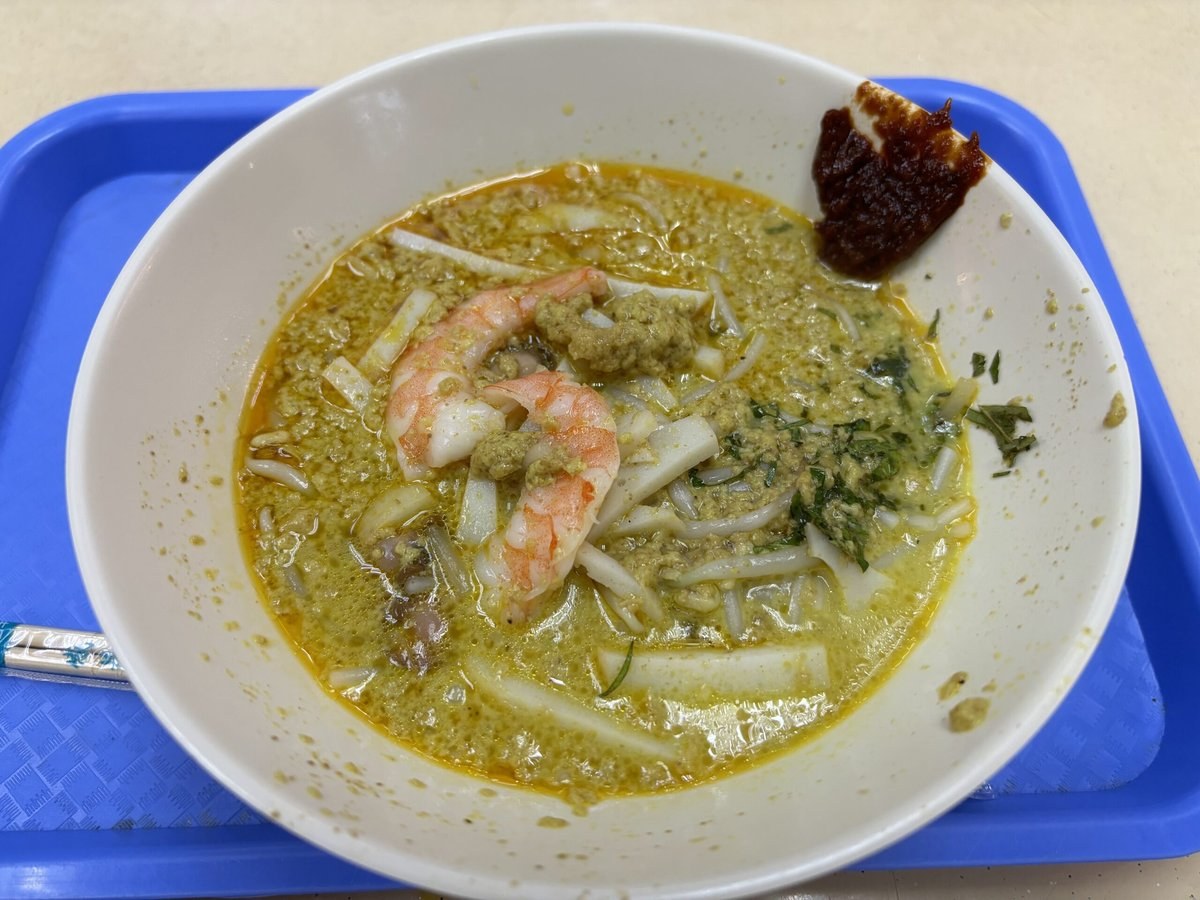 A bowl of creamy Katong laksa with prawns, rice noodles and sambal
Tiong Bahru: Art Deco and Old-School Breakfasts
Tiong Bahru, just southwest of Chinatown, feels completely different. Instead of pastel Peranakan houses, you get low-rise Art Deco flats from the 1930s onwards: white walls, rounded corners, curved balconies and spiral staircases at the back. It was one of Singapore’s first public housing estates, and today the quiet lanes are full of cafés, small shops and big shady trees. From Tiong Bahru MRT (East-West Line) it is a 10 to 15 minute walk.
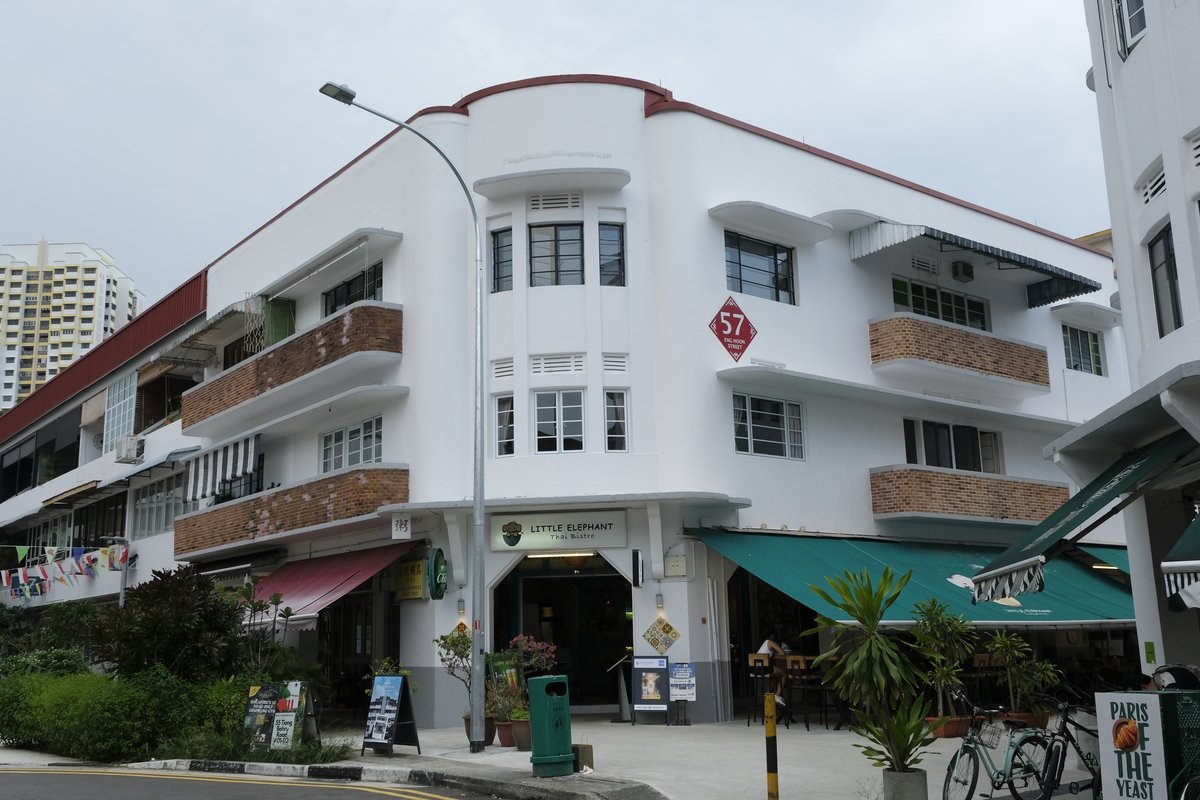 A white Art Deco corner block with curved balconies in Tiong Bahru
Tiong Bahru Market
My first stop was Tiong Bahru Market, a rounded white building with a wet market downstairs and a food centre upstairs. The star for me was chwee kueh from a stall that has been going since 1958: soft steamed rice cakes topped with a savoury, slightly spicy relish, about S$2.50 for five. Nearby, a Teochew kueh stall sells mini ang ku kueh in different colours and fillings, including peanut, yam, coconut and red bean. My whole breakfast cost less than a coffee in the city centre.
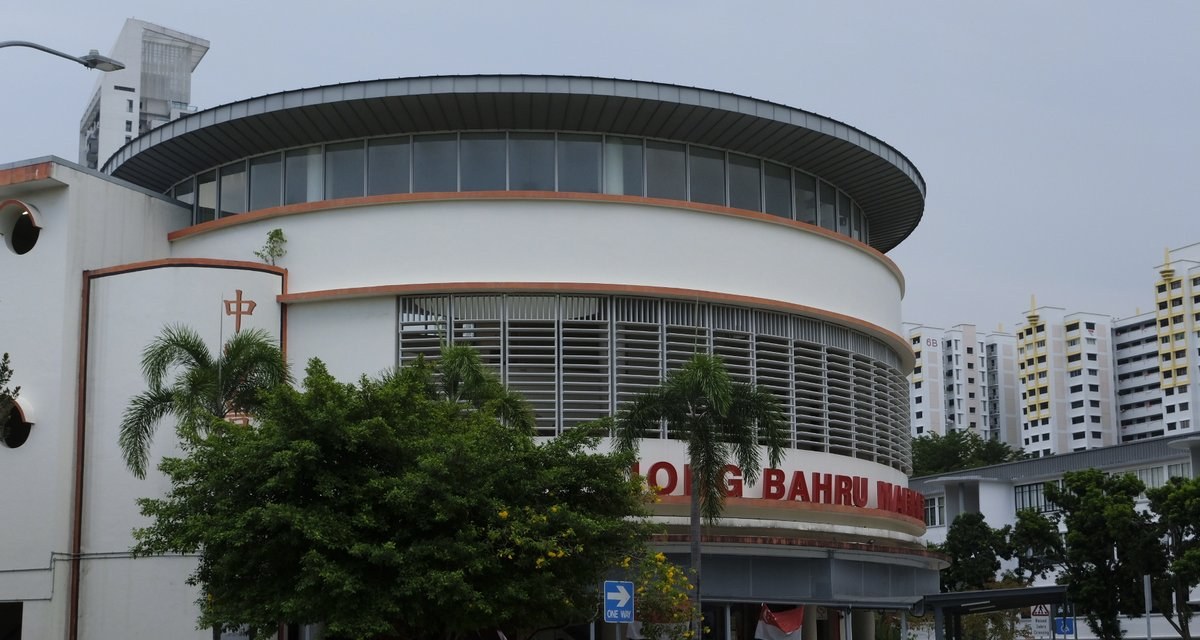 The curved white facade of Tiong Bahru Market surrounded by trees
Afterwards I wandered towards Yong Siak Street, a short lane with an independent bookshop, plant-filled cafés and plenty of benches. The famous Tiong Bahru Bakery nearby already had a queue at 10 am, so if you want their croissants, go early.
Tips for Exploring Both Neighbourhoods
- Go early. Mornings are cooler, the light is softer for photos and the hawker stalls are fully stocked.
- Be respectful. The colourful houses are private homes, so stay on the pavement.
- Carry small notes. Hawker meals are cheap, and small change makes paying at old stalls easier.
- Carry a small umbrella. It works for both the sun and sudden afternoon showers.
Final Thoughts
Katong and Tiong Bahru showed me a side of Singapore that skyscrapers and shopping malls never will: neighbourhoods with history, character and very good food at fair prices. If you have already seen Marina Bay, give yourself a day for these two areas. Bring an empty stomach and comfortable shoes, and do not rush.