Every November I tell myself I’ll finally see Hakone in autumn, and every November something gets in the way. This year I actually went: two days in early November, which turned out to be one soggy day and one perfect one. Conveniently, Hakone has a plan for both kinds of weather. Rain means hot springs. Sun means the lake, the volcano and the ropeway.
Getting There and the Pass
I went from Shinjuku on the Odakyu Line instead of JR. It takes a bit longer, but the fare is lower, there’s no change in Yokohama, and because Shinjuku is where the line starts, you can let one train go and sit down on the next. At Odawara I switched to the Hakone Tozan Railway.
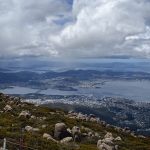
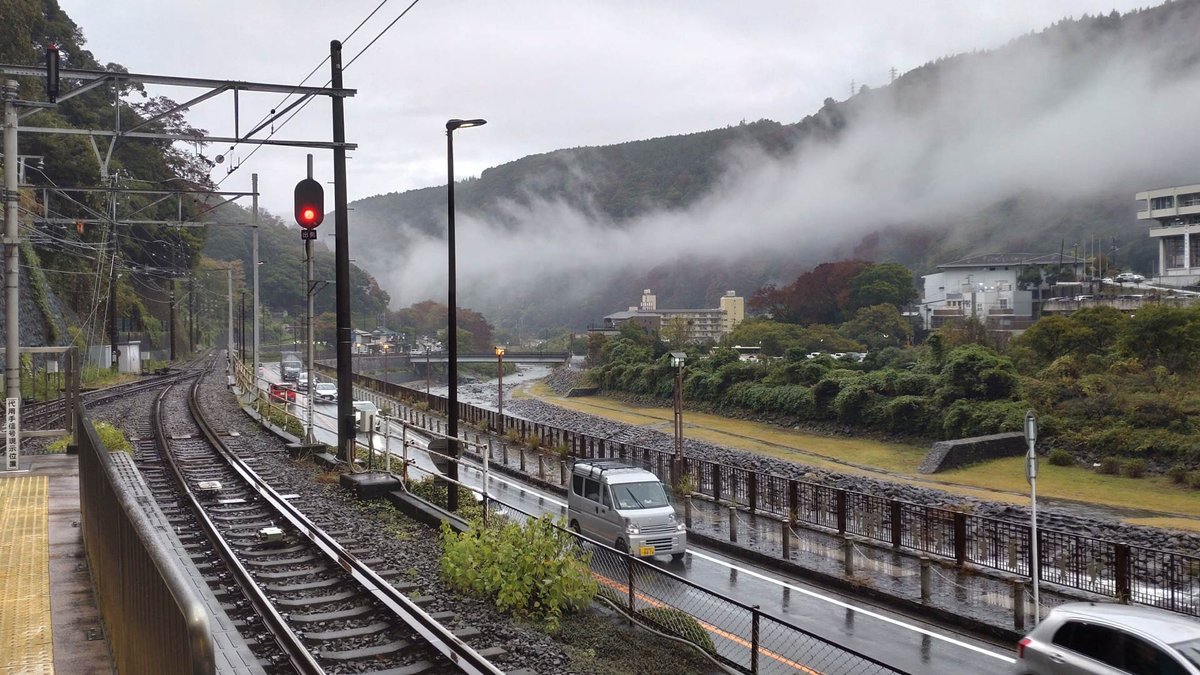 Low cloud over the wooded hills beside the railway tracks at Hakone-Yumoto on a rainy autumn day
That little mountain train deserves its own paragraph. Once it leaves Hakone-Yumoto it crawls uphill, bending around curves and stopping at switchbacks where the driver changes ends and you head off the other way. Getting to Chokoku-no-Mori takes a little over half an hour, even though it’s not far. Nobody minds, because the newer cars have enormous windows, some reaching nearly to your shoes.
For a loop like this I’d always get the Hakone Freepass. Two days cost 7,100 yen (about 47 USD) starting from Shinjuku, or 6,000 yen (about 40 USD) from Odawara. That covers the Odakyu return, the railway, the cable car, the ropeway, the Lake Ashi boats and most of the local buses.
Day One: Bathhouse Hopping in the Drizzle
The big resort spas have their fans, but on a wet day I wanted the opposite: small, cheap public baths with spring water running straight in and out of the tub. Hakone still has a handful of them, spread out along the railway.
Ninotaira
The first one was on the stretch between Chokoku-no-Mori and Kowakudani. Starting from Chokoku-no-Mori is easier, since the road dips and then climbs only gently, and the walk is short. You could easily mistake the place for someone’s house. I like that sort of thing. Inside, everything felt decades old in a good way: worn tiles, steam, and nobody in a hurry.
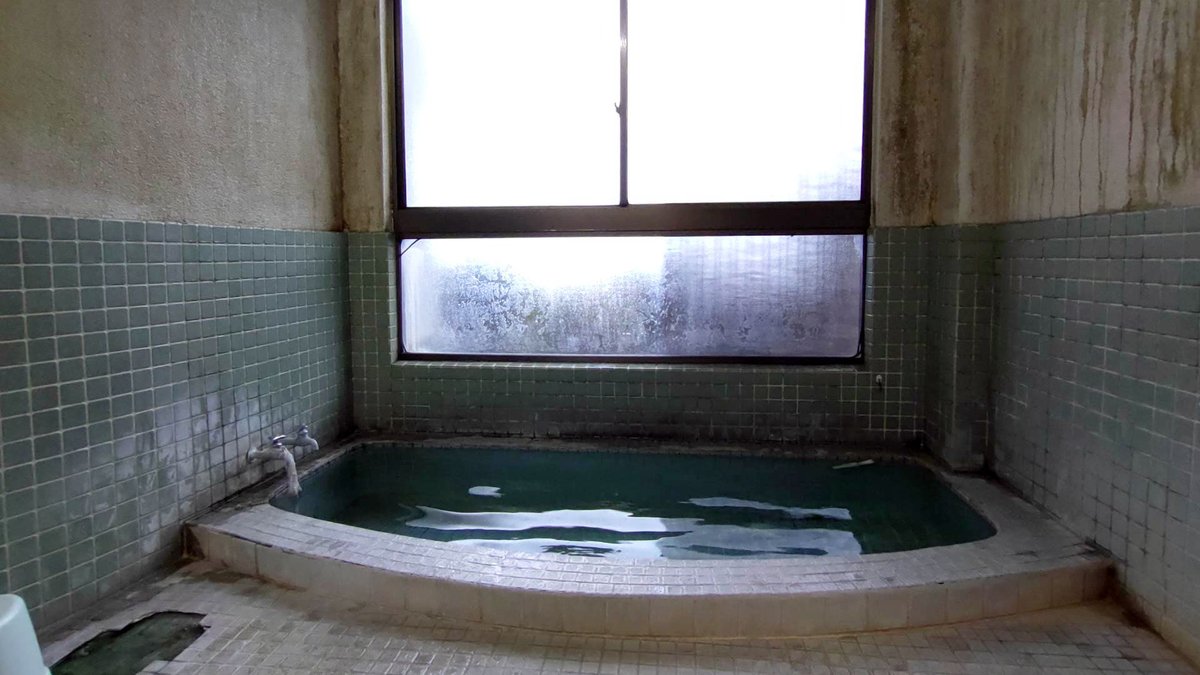 Small tiled hot spring tub with fresh spring water in a retro bathhouse at Ninotaira, Hakone
Afterwards I kept walking to Kowakudani, warm enough not to care about the rain, and had lunch at a Taiwanese cafe up a lane off the main road. A bowl of braised pork rice and a sweet tofu pudding is a strange thing to eat in a Japanese mountain town, and it was exactly right.
Miyanoshita
One stop down the line is Miyanoshita, the old hotel district. Know this before you get off: the station is perched well above the main road. Getting down is easy, but on the way back your legs will remind you that you’ve been soaking all day.
My second bath was a simple communal place down that hill. There are two bathrooms. One has a roomy tub and a window looking out at the slope. The other is a tight, hotter tub that only really fits one. I went back and forth between the two until I’d lost track of time. Walking back up afterwards, the hills were wrapped in fog, and a train came creaking around the curve. That was when the bad weather started to feel like a bonus.
That night I stayed at a small family-run inn within walking distance of Kowakudani. It’s not fancy. You get a quiet room, trees outside the window, a homemade dinner and two private baths you can lock. The spring water comes out scalding, so there’s a tap to cool it down, and I needed it. The food was the sort of slow, slightly sweet country cooking you only find at a place like this, a nice change from the noodle stalls I eat at in Saigon.
Day Two: Ropeway, Volcano, Lake
The next morning dawned cold, clear and bright, so I ran the classic loop backwards and started early. By around half past eight I was on the cable car from Gora up to Sounzan, and from the top the slopes were all rust-red maples and silver pampas grass.
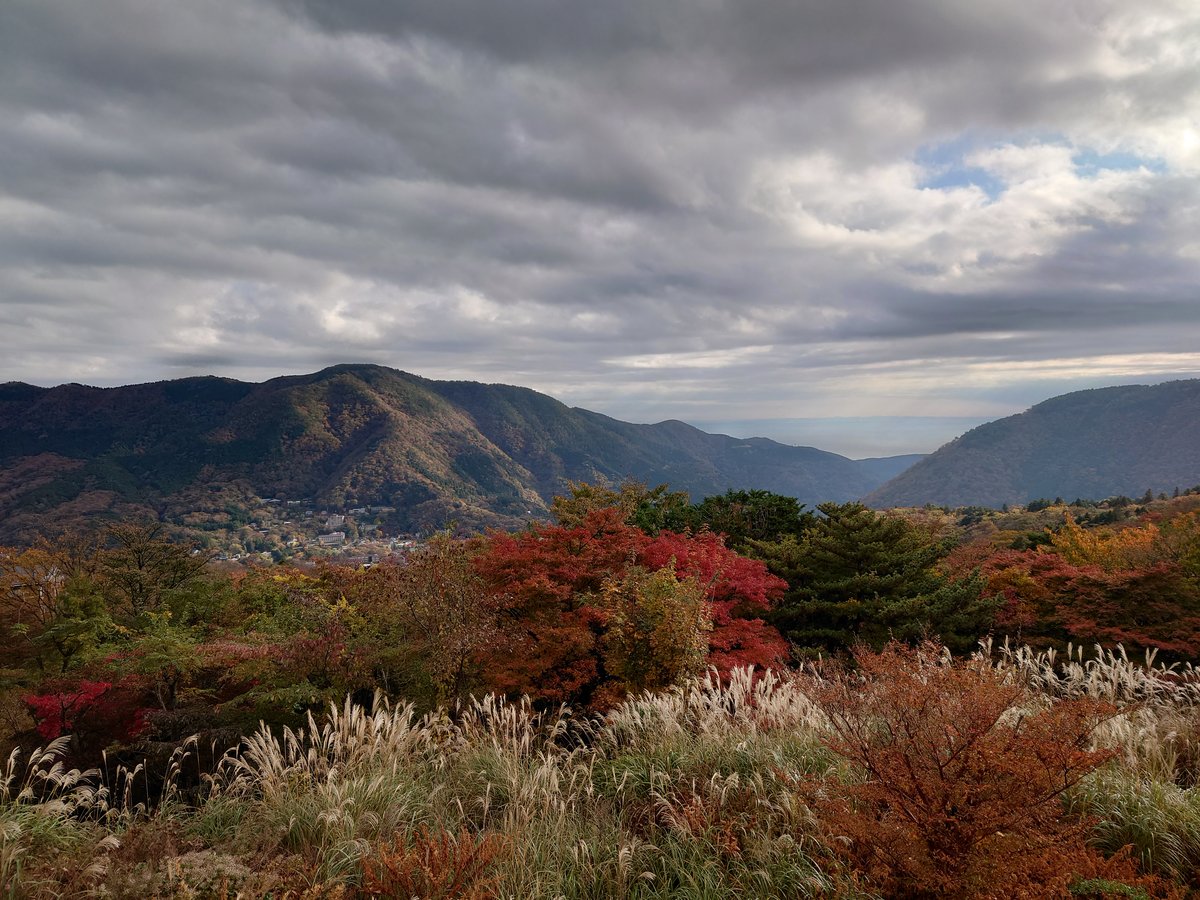 Autumn colours and silver pampas grass on the slopes below Sounzan with mountains and clouds beyond
Starting this early was the best decision of the trip. My ropeway gondola left Sounzan with just a few people aboard, and soon Mount Fuji rose behind the pylons, snow on top, almost too tidy to be real.
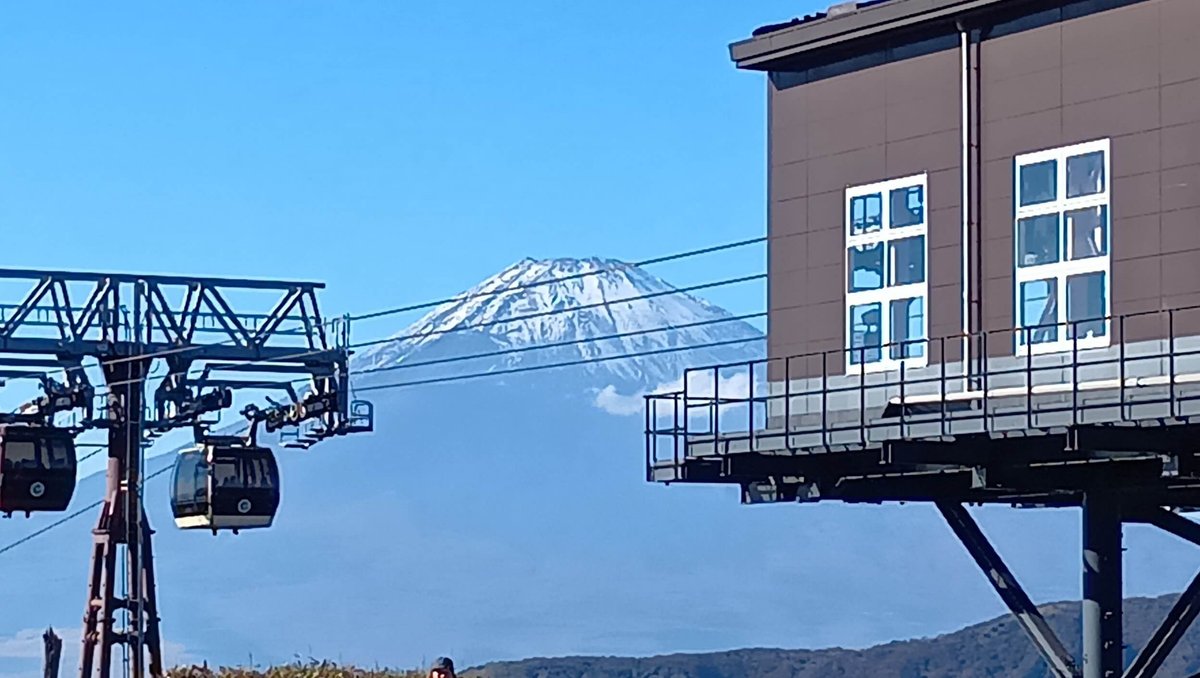 Hakone Ropeway gondola and pylon with snow-capped Mount Fuji under a clear blue sky
Owakudani is where the ground reminds you Hakone is a volcano. Grey rock, yellow crust and plumes of steam, plus a whiff of sulphur. There’s a guided walk deeper into the valley, but it’s reservation only, so plan ahead if you want to do it. Even from the viewing area by the station it’s dramatic. A newer exhibition space next door was already filling up, and so was the line for black eggs.
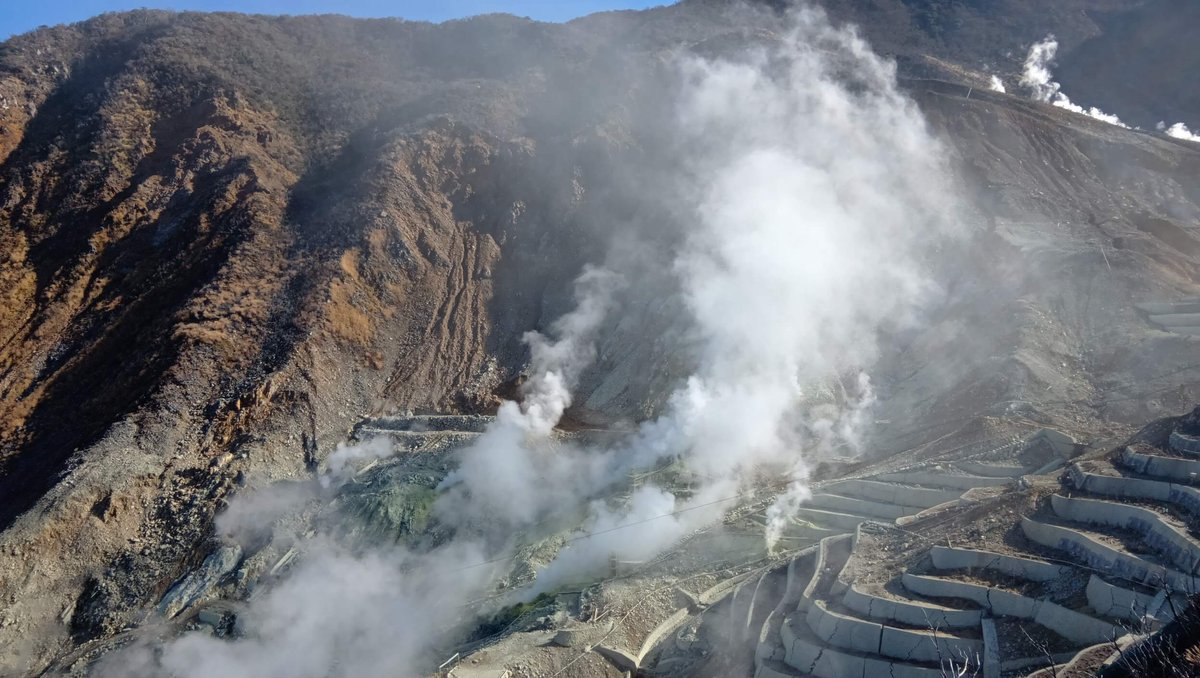 White volcanic steam rising from the rocky slopes of Owakudani in Hakone
Riding on toward Togendai, I looked down at a long line of cars crawling toward the Owakudani car park. That told me everything about how the rest of the day would go.
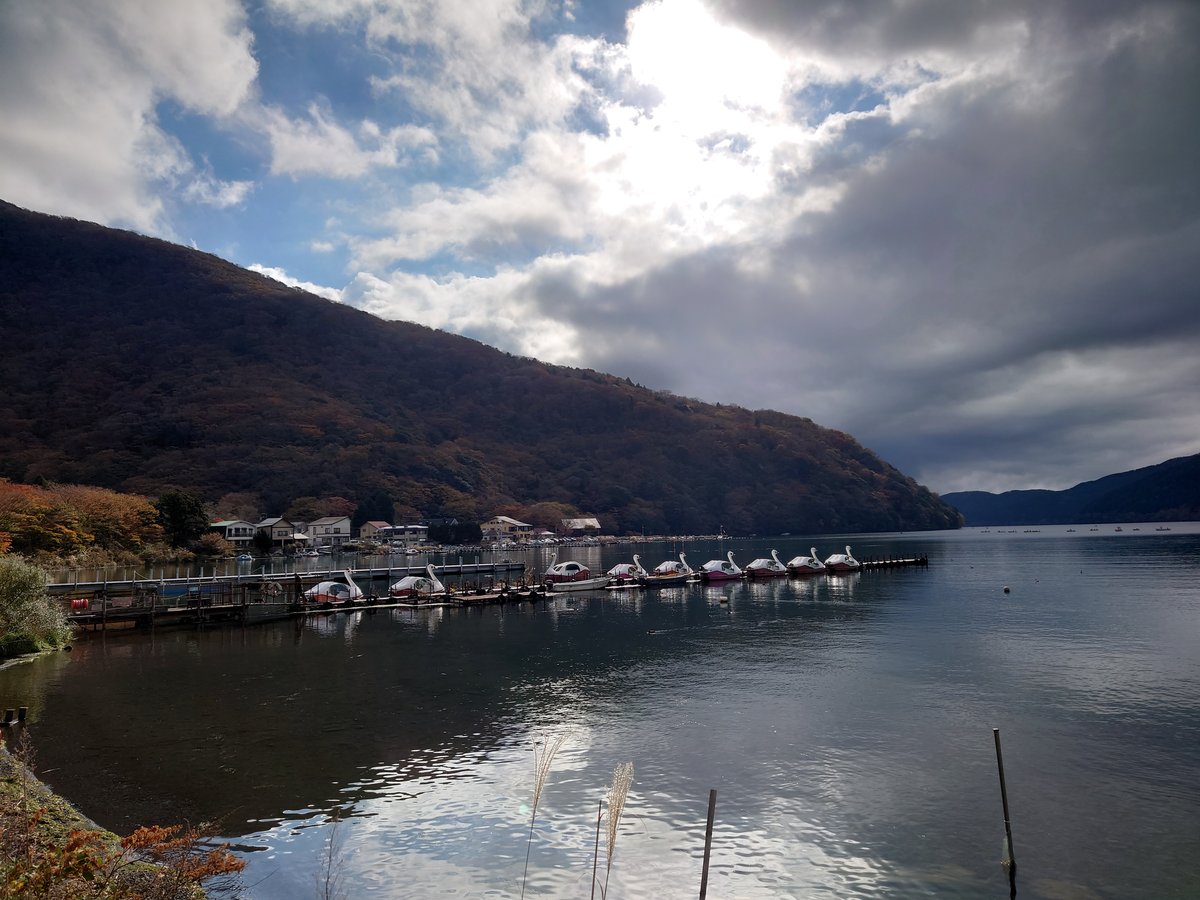 Calm water and moored boats along the Lake Ashi shore at Togendai with forested hills behind
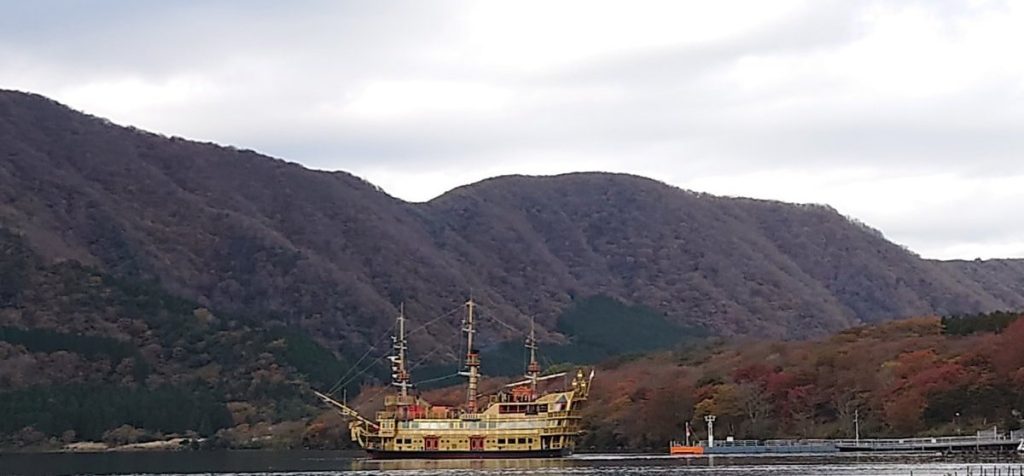
Togendai was still calm. I wandered the shore for a while, watching maples blaze over the dark water, and then caught one of the pirate ships across to Moto-Hakone. The cruise is short, roughly twenty-five minutes. As you come into Moto-Hakone, look out for the red torii of Hakone Shrine standing in the water.
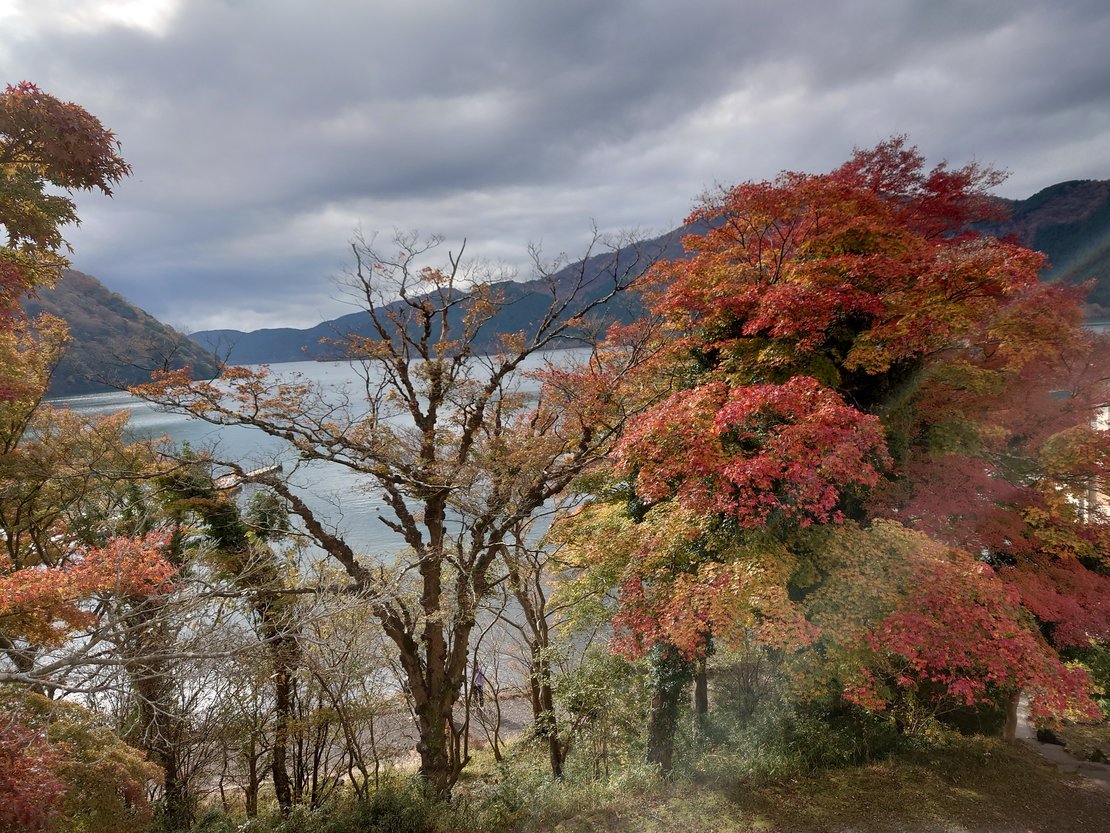 Red and orange maple trees above Lake Ashi near Togendai on an autumn afternoon
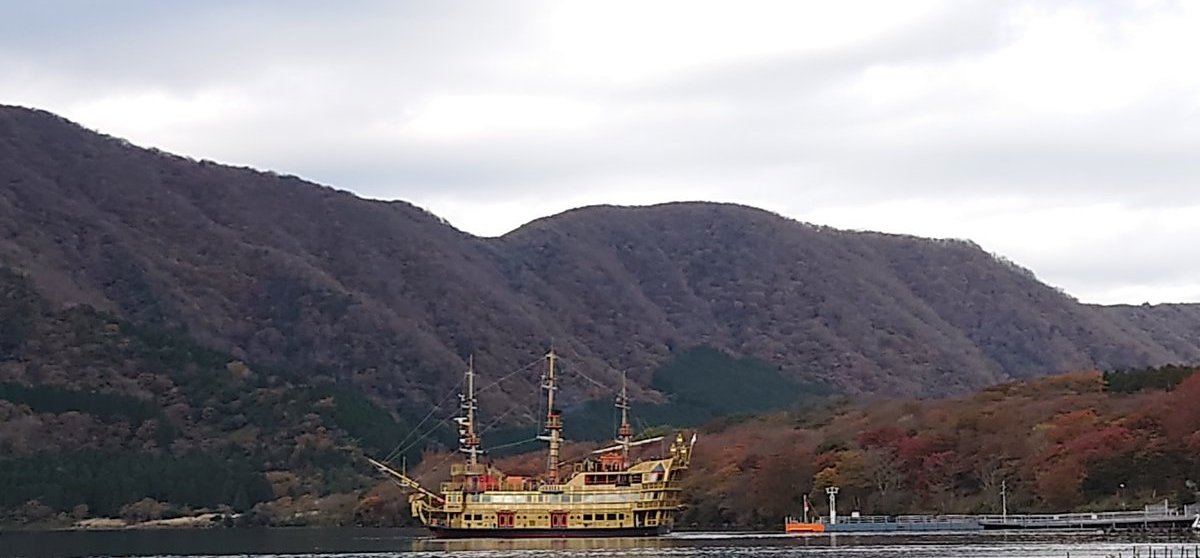 A pirate ship sightseeing cruise on Lake Ashi below hills turning red and brown in autumn
By the time my boat pulled out, the ropeway line at Togendai had swelled into a proper queue. Nobody rides standing, so gondolas go up with seats to spare and the wait grows. Owakudani, it seems, jams up from both directions. From Moto-Hakone I took the bus back down to Hakone-Yumoto.
Tips for Hakone in Autumn
- Start before the crowds. Be on the cable car by about half past eight, then do the ropeway and lake while the day-trippers are still on the road.
- Save the baths for bad weather. The small public bathhouses suit a drizzly day perfectly.
- Book beds early. November weekends fill up weeks ahead.
- Dress warm. It’s mountain country, and mornings by the lake are much colder than Tokyo.
- Leave slack. Buses and boats run late in peak season.
Final Thoughts
Hakone in autumn will never be a secret, but the crowds follow a predictable pattern, and you can work around them. Give the rain to the bathhouses, give the clear morning to the ropeway, and you get mountains, steam, a lake and Fuji in two easy days. If you still have days left for autumn colour, the temples of Kyoto in November are a couple of hours west by Shinkansen. I’m already wondering what it looks like under snow.