
Ipoh had been on my list for years, because every Malaysian I meet says the same thing: go for the food, stay for the coffee. I finally gave it two unhurried days, split between the old town and the limestone hills where temples are built straight into caves.
It turned out to be one of my most relaxed trips in Malaysia. Ipoh is quiet, a little faded, very walkable, and the kind of place where nobody minds if you sit in a coffee shop for an hour doing nothing.
Getting There
After the short flight from Saigon I stayed a night in Kuala Lumpur, then rode the train north. Ipoh is about two and a half hours by rail, which makes it an easy add-on to any KL trip. Check times and buy seats on the KTMB website; weekend trains fill up.
You arrive in style. The station is one of the grandest buildings in town, all white, and the Town Hall facing it is just as bright.
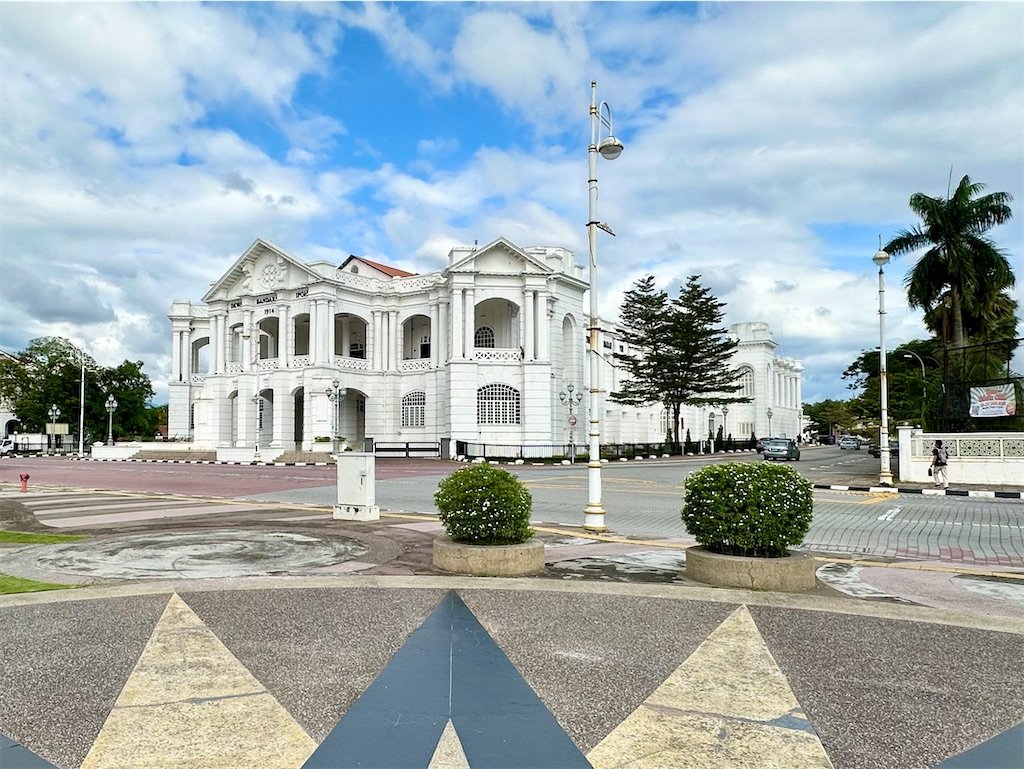 The white colonial facade of Ipoh Town Hall across the road from the railway station
Walking the Old Town
The Kinta River splits Ipoh in two. The old town sits on the west bank, near the station, and the so-called new town is on the east side, though “new” is relative here.
Lanes, Murals and Old Shophouses
Most of my first day was spent getting pleasantly lost. Ipoh’s back lanes are covered in murals: kids playing, local life, animals, and a famous giant painting of an old man holding a blue and white coffee cup on the wall of the Old Town White Coffee outlet. I walked down several wrong alleys before finding it, none of them wasted.
From there the murals more or less lead you toward Concubine Lane, a short alley of restored two-storey houses now filled with small shops, snacks and cafes. I preferred the quieter side streets, where old shophouses with peeling paint make the real Ipoh scene.
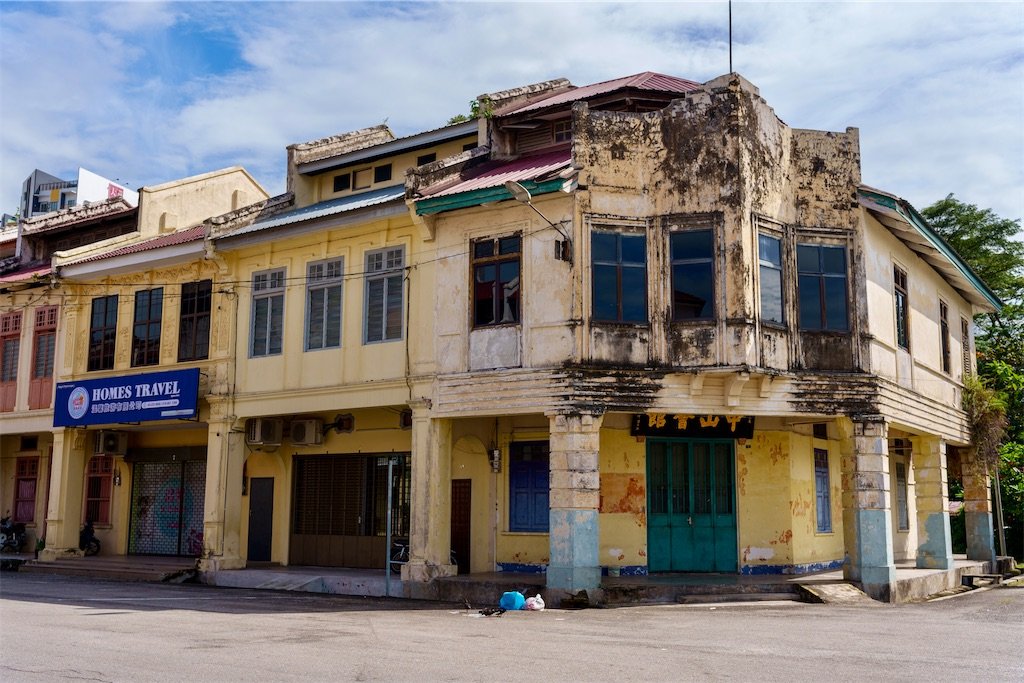 A faded yellow two-storey colonial shophouse on a quiet corner in Ipoh old town
Another landmark worth a short detour is the Birch Memorial Clock Tower, built in 1909. It is about 30 metres tall, with four white figures at its corners representing loyalty, justice, patience and perseverance. A large mosque stands right next to it. Look out, too, for pomelos hanging in bunches outside shops, a local speciality.
White Coffee and a Few Good Meals
You cannot come to Ipoh and skip the white coffee. I went to Nam Heong, the old coffee shop that is considered the original home of the Old Town white coffee brand, I took mine iced and to go, and drank it walking back through the lanes. A cup costs only a couple of ringgit, under half a US dollar. Compared with the strong ca phe sua da I drink at home it is gentle and mellow, which suits the slow pace of the town.
Ipoh’s other famous dish is poached chicken with bean sprouts, and Lou Wong is the name everyone gives you, a walk of around twenty minutes from the station. The chicken was soft and juicy, the seasoning light, and the sprouts were better than I expected. Shops selling soft bean curd pudding are all over the old town if you still have room.
The Cave Temples
The limestone hills a few kilometres outside the city hide some of Ipoh’s most unusual sights: temples built inside natural caves. The three big names are Sam Poh Tong, Perak Tong and Kek Lok Tong, and there are smaller ones next to them.
Sam Poh Tong
Sam Poh Tong is about 6 to 7 km southeast of town. A Grab from the centre took me around ten minutes and cost RM8.45 (≈ US$2). At the entrance there is a small pond and a rock garden in front of a tiered temple building.
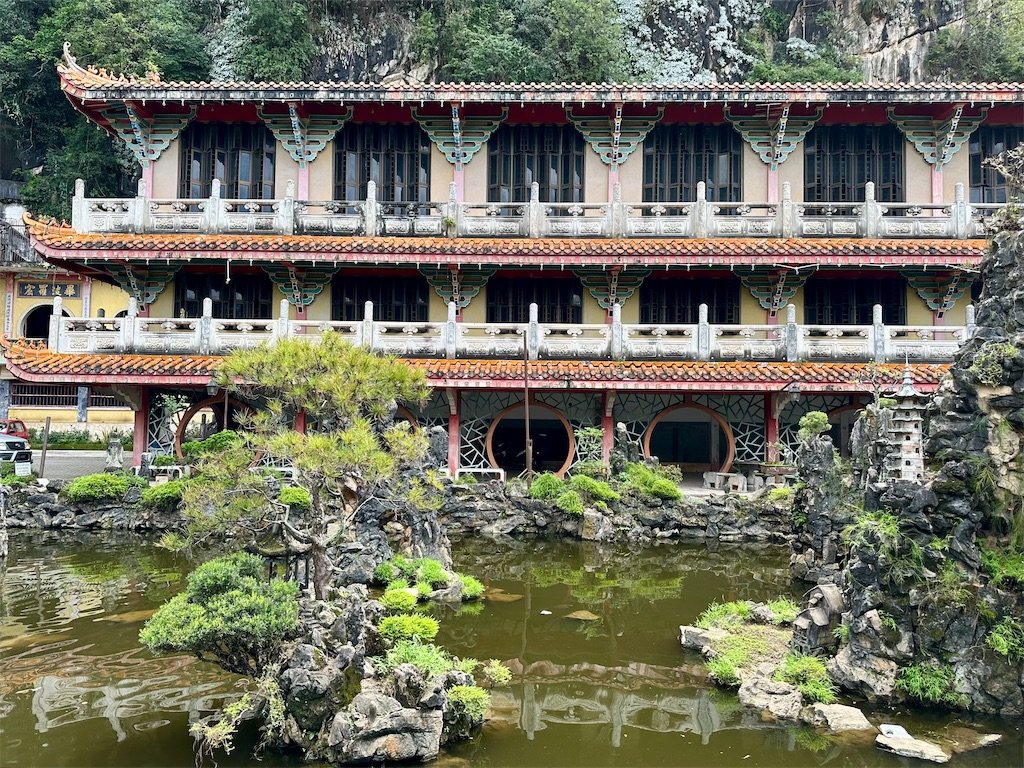 Rock garden and pond in front of the tiered temple building at Sam Poh Tong
The cave halls are lined with Buddha statues, but what makes Sam Poh Tong special is behind them. Keep walking and you come out under open sky in a courtyard sealed off by sheer limestone walls, with a red pagoda-style building in the middle. It is very quiet in there, and it feels like a secret garden nobody told you about.
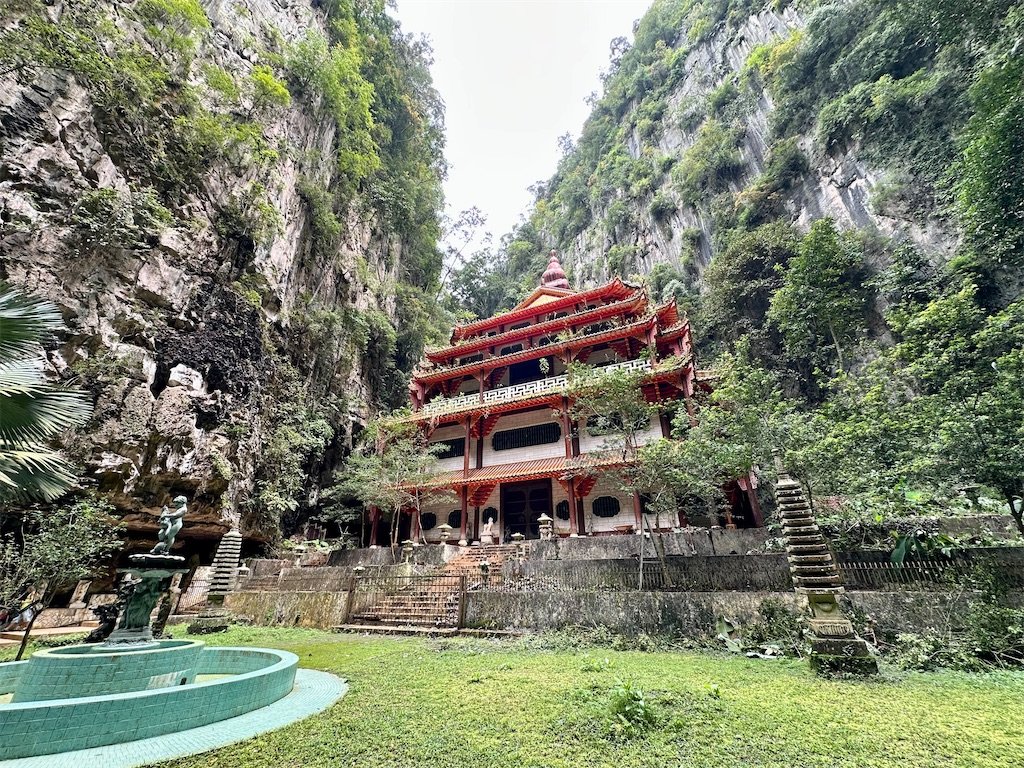 A red pagoda-style building inside the hidden courtyard of Sam Poh Tong surrounded by limestone cliffs
The temple is also known for its tortoises, which live in a pond in the courtyard. Feeding them is part of the visit, and you can buy food for them at the entrance.
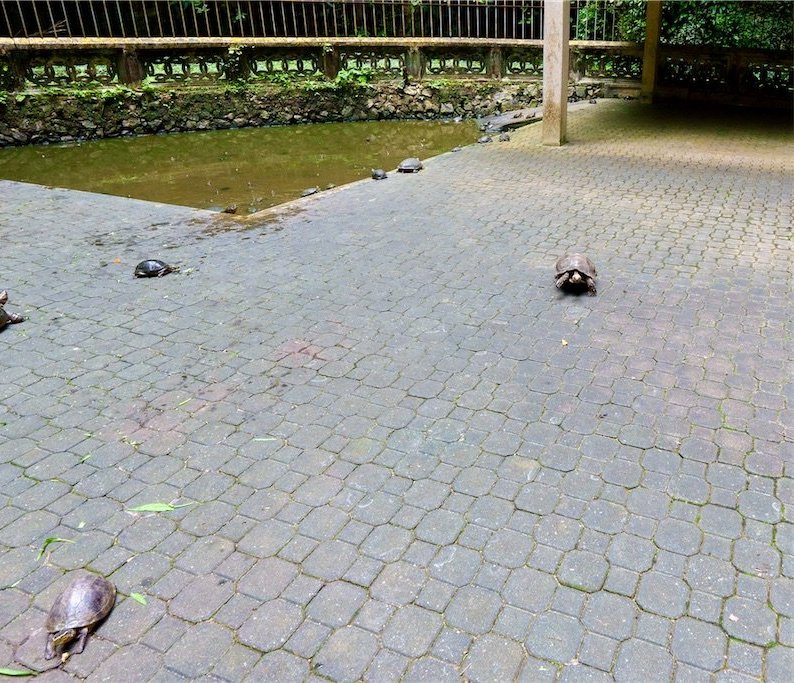 Tortoises crawling across the paved tortoise pond at Sam Poh Tong
Nam Thean Tong and Ling Sen Tong
Nam Thean Tong, right beside it, is mostly Taoist. For me it was the best cave of the group, with statues of Taoist deities set among real stalactites and a long green dragon coiled around the rock. Next to it, Ling Sen Tong is the most colourful of the three, full of bright statues: Guanyin in a grotto, a white elephant, a four-faced Brahma shrine and characters from Journey to the West.
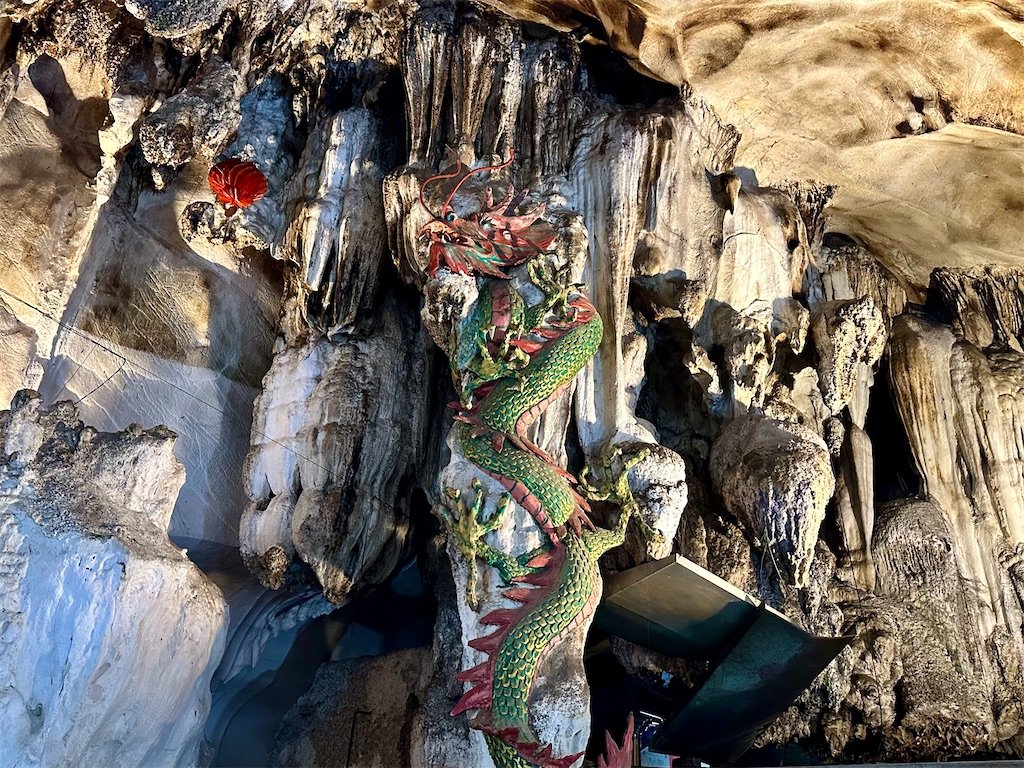 A green dragon statue wrapped around stalactites inside Nam Thean Tong cave temple
Perak Tong
Perak Tong, another of the big three, is a separate Grab ride away and makes a good second-day trip. Its main draw is the climb: a steep staircase runs up the hill from the main cave, and the warning signs at the bottom are worth taking seriously. Watch for monkeys on the way. Do it early, before the sun gets strong, and bring water. The view from the top was my reward.
Tips for Ipoh
- Two days is enough for the old town, food and two or three cave temples without rushing.
- Visit the caves in the morning. Afternoons are hot and rain showers are common at this time of year.
- Carry small cash: Lou Wong is cash only, and temples run on donations.
- Grab is cheap and easy for the cave temples, which are spread around town.
- Wear shoes with grip; cave floors and stairs can be damp.
Final Thoughts
Compared with the busy lanes of George Town or the crowds of Jonker Street in Malacca, Ipoh feels like a town that has not quite noticed it is a destination. If you liked the cave and temple side of Batu Caves, the temples here are quieter and stranger. White coffee in the morning, a hidden cave courtyard in the afternoon and a cheap train from KL: a very good weekend.